

Mounting a flat-screen television on a wall requires a clear understanding of load distribution, structural physics, and material science to ensure a secure installation that protects both your device and your wall. Selecting the right combination of brackets, anchors, and placement techniques prevents structural failures and guarantees optimal viewing comfort.
Analyzing Wall Materials and Load-Bearing Mechanics
Before drilling, you must identify the composition of the wall, as different materials react uniquely to static loads. The weight of the television exerts two primary forces on the wall mounting system: tension (pulling outward) and shear (pulling downward). Understanding these forces determines how you must secure the bracket.
- Solid Brick or Concrete: These materials offer excellent compressive strength. When using expansion anchors, the force applied by screwing into the anchor pushes against the dense surrounding material, creating high friction that resists both tension and shear.
- Drywall and Plasterboard: Drywall has low structural strength. You cannot rely on friction-based plastic plugs in drywall, as the material will crumble under tension. Instead, you must locate the timber studs behind the drywall to anchor directly into the load-bearing frame, or use specialized hollow-wall anchors that distribute the load over a wider surface area on the back of the plasterboard.
The Science of Fasteners: Choosing the Right Anchor
Matching the fastener to the wall type is the most critical step in preventing wall failure. Standard nylon expansion plugs are designed exclusively for solid masonry; when expanded inside concrete, they grip the rough inner surface of the drilled hole. If used in drywall, they will simply pull out, leading to catastrophic failure.
For drywall installations where positioning does not align with a wooden stud, hollow-wall anchors (often called toggle bolts or Molly bolts) are necessary. These anchors feature metal wings that fold flat to pass through the drilled hole and then spring open behind the plasterboard. When tightened, they clamp the drywall securely between the metal bracket on the front and the expanded wings on the back, spreading the shear force across a broad surface area of the drywall panel.
Ergonomics, Sightlines, and Thermal Considerations
Proper positioning goes beyond visual aesthetics; it directly impacts human biomechanics and device longevity. The center of the television screen should ideally align with the viewer's eye level when seated, which is typically between 90 and 110 centimeters from the floor. Mounting a television too high forces the neck into constant extension, leading to muscle strain over extended periods.
Additionally, you must account for thermal dynamics. Electronic components generate heat, which must dissipate freely to prevent internal component degradation. Avoid mounting televisions directly above active heat sources, such as fireplaces or radiators, unless adequate thermal shielding or distance is maintained to ensure the ambient temperature around the chassis does not exceed the manufacturer's operational limits.
Executing the Installation: Precision and Safety Steps
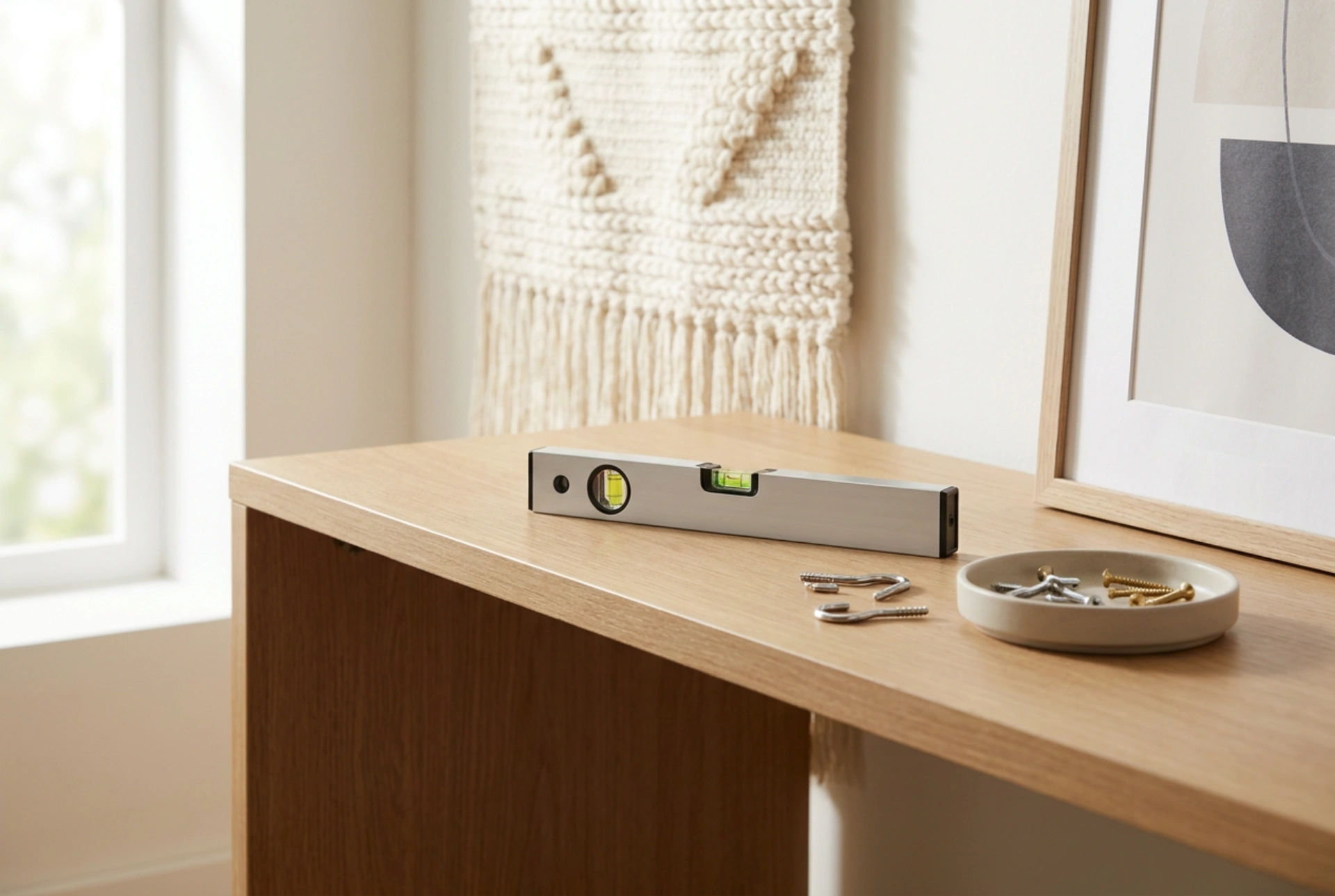
A systematic approach prevents errors and ensures structural integrity during the physical installation process. Begin by using a high-quality spirit level to mark the exact horizontal placement of the bracket; even a millimeter of misalignment at the bracket level will translate to a highly visible tilt across the span of a large screen.
When drilling pilot holes, match the drill bit diameter precisely to the specifications of the anchor. In solid masonry, use a rotary hammer drill with a carbide-tipped masonry bit to create a clean, uniform hole, and ensure all dust is cleared from the cavity before inserting the plug. In drywall, use a standard drill bit without hammer action to prevent tearing the paper backing of the plasterboard, which would compromise its structural integrity. Once the bracket is mounted, apply a manual weight test—gently pulling down on the frame—to verify structural stability before hanging the television.