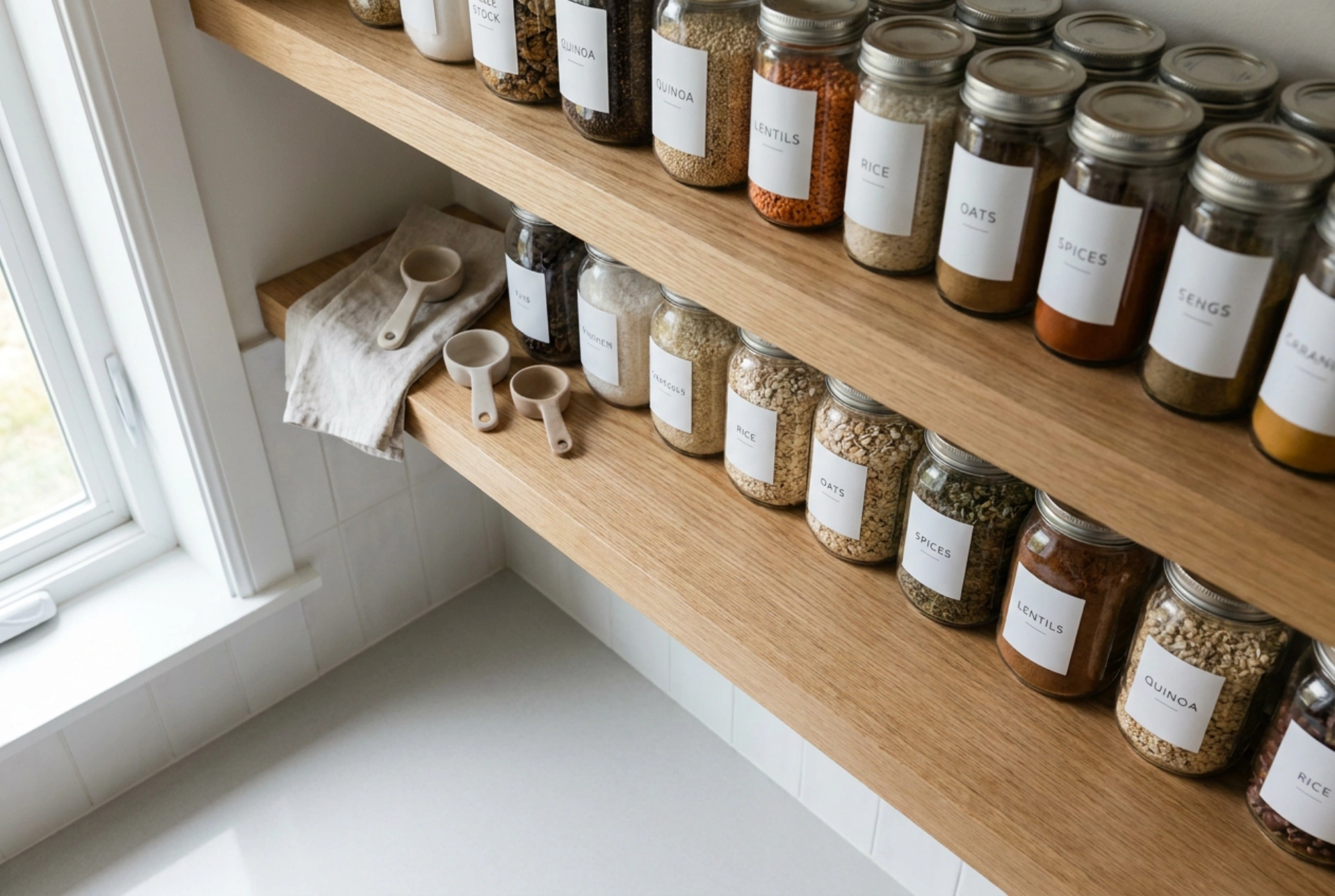


Creating kitchen labels that survive the relentless cycle of steam, washing, and physical handling requires a fundamental understanding of material science, ink chemistry, and adhesive technology. Standard paper labels quickly degrade in high-humidity pantry or kitchen environments; to achieve professional durability, you must choose materials that resist moisture absorption and physical friction.
Selecting the Right Substrate: Why Paper Fails
Standard paper is composed of hydrophilic cellulose fibers. When exposed to humidity or direct contact with water, these fibers absorb moisture through capillary action, causing the substrate to swell, distort, and eventually tear. For durable jar labels, hydrophobic polymer films—such as polypropylene (PP) or polyester (PET)—are essential. These synthetic materials do not absorb water, maintaining their structural integrity and dimensional stability even when submerged or subjected to temperature fluctuations in the kitchen or refrigerator.
Inkjet vs. Laser: The Physics of Ink Adhesion
The durability of the printed image depends heavily on how the colorant bonds to the substrate. Traditional inkjet printers often use water-soluble dye inks, which dissolve and bleed upon contact with moisture. While pigment-based inkjet inks offer superior water resistance due to insoluble particulate colorants, they still require a specialized microporous receiver coating on the polymer film to hold the pigment in place.
In contrast, laser printing relies on electrophotographic technology. The printer deposits fine toner particles—composed of plastic resins and pigments—onto the surface. The fuser unit then applies heat (typically between 150°C and 200°C) and pressure, melting the polymer resins directly into the pores of the synthetic label material. This creates a highly durable, water-impermeable mechanical bond that is naturally resistant to smudging and water exposure.
The Role of Adhesive Chemistry
A label is only as permanent as its adhesive backing. Household adhesives generally fall into two categories: rubber-based and acrylic-based. Rubber-based adhesives offer high initial tack but degrade quickly when exposed to UV light, heat, and moisture. For kitchen canisters and jars, acrylic-based permanent adhesives are the superior choice. Acrylic polymers form strong chemical bonds with glass surfaces and resist degradation from water, oils, and mild household cleaning agents. This ensures the label edges will not peel or flag over time, even with repeated handling.
Protecting Against Friction: Lamination Techniques
Even water-resistant toner or ink can wear away under continuous physical friction or exposure to kitchen oils. To protect the printed layer, you must introduce a physical barrier. Applying a cold laminate film—a thin, clear layer of self-adhesive polypropylene or polyester—over the printed sheet before cutting is the most effective method. This transparent barrier absorbs the mechanical wear of daily handling and prevents oils from breaking down the printed toner underneath.
Step-by-Step Application for Maximum Longevity
- Degrease the glass surface: Glass surfaces often harbor invisible oily residues or fingerprint lipids that prevent the adhesive from wetting the surface. Clean the jar thoroughly using isopropyl alcohol and a lint-free cloth to ensure an optimal chemical bond.
- Apply at room temperature: Most adhesives require a minimum application temperature (usually around 10°C to 15°C) to flow correctly into the microscopic imperfections of the glass. Avoid applying labels to cold jars straight from the fridge.
- Maximize surface contact: Apply the label starting from the center and press outward using a plastic squeegee or a firm cloth. This expels trapped air bubbles, which can act as moisture reservoirs and cause premature adhesive failure.