

Selecting the right desk lamp for your child is a crucial decision that directly impacts their concentration, eye health, and overall well-being. While children often focus purely on the aesthetic design and colour of the fixture, the choice must be guided by optical physics, ergonomics, and photobiology.
The Physics of Light: Luminous Flux and Illuminance
To ensure comfortable reading and writing, it is essential to understand the distinction between luminous flux, measured in lumens, and illuminance, measured in lux. Luminous flux represents the total quantity of visible light emitted by a source, whereas illuminance refers to the concentration of light falling on a specific surface area. For a child's study desk, international standards recommend a minimum illuminance level of 500 lux on the working plane. A lamp emitting between 400 and 600 lumens, positioned approximately 40 centimetres above the desk surface, generally achieves this target. If the light is too dim, the pupillary muscles must constantly adjust, leading to rapid eye fatigue, headaches, and a decline in reading speed.
Colour Temperature and Cognitive Performance
The spectral composition of light influences the human endocrine system and cognitive performance. Light temperature is measured in Kelvins. For a study environment, a neutral white light of approximately 4000K is highly recommended. This specific spectrum stimulates the production of cortisol, a hormone responsible for alertness and active concentration, without causing the biological stress associated with higher, bluish temperatures above 5000K. Avoid using warm light below 3000K for active study sessions, as it triggers melatonin release, signaling the body to relax and prepare for sleep. However, if the task lamp features a dimming and temperature-adjustable function, transitioning to a warmer spectrum in the evening can help preserve your child's natural circadian rhythm before bedtime.
The Colour Rendering Index and Visual Comfort
The Colour Rendering Index, expressed as Ra, measures how accurately a light source reveals the true colours of objects compared to natural daylight. For children, who frequently engage in drawing, reading, and colour-coded educational tasks, high colour fidelity is essential. Standard household bulbs often have an Ra of 80, but for dedicated task areas, look for a lamp with a CRI of Ra 90 or higher. Low CRI values force the brain to work harder to process visual information and differentiate shades, leading to cognitive fatigue, decreased attention span, and optical discomfort during creative activities.
Ergonomics, Beam Angle, and Placement
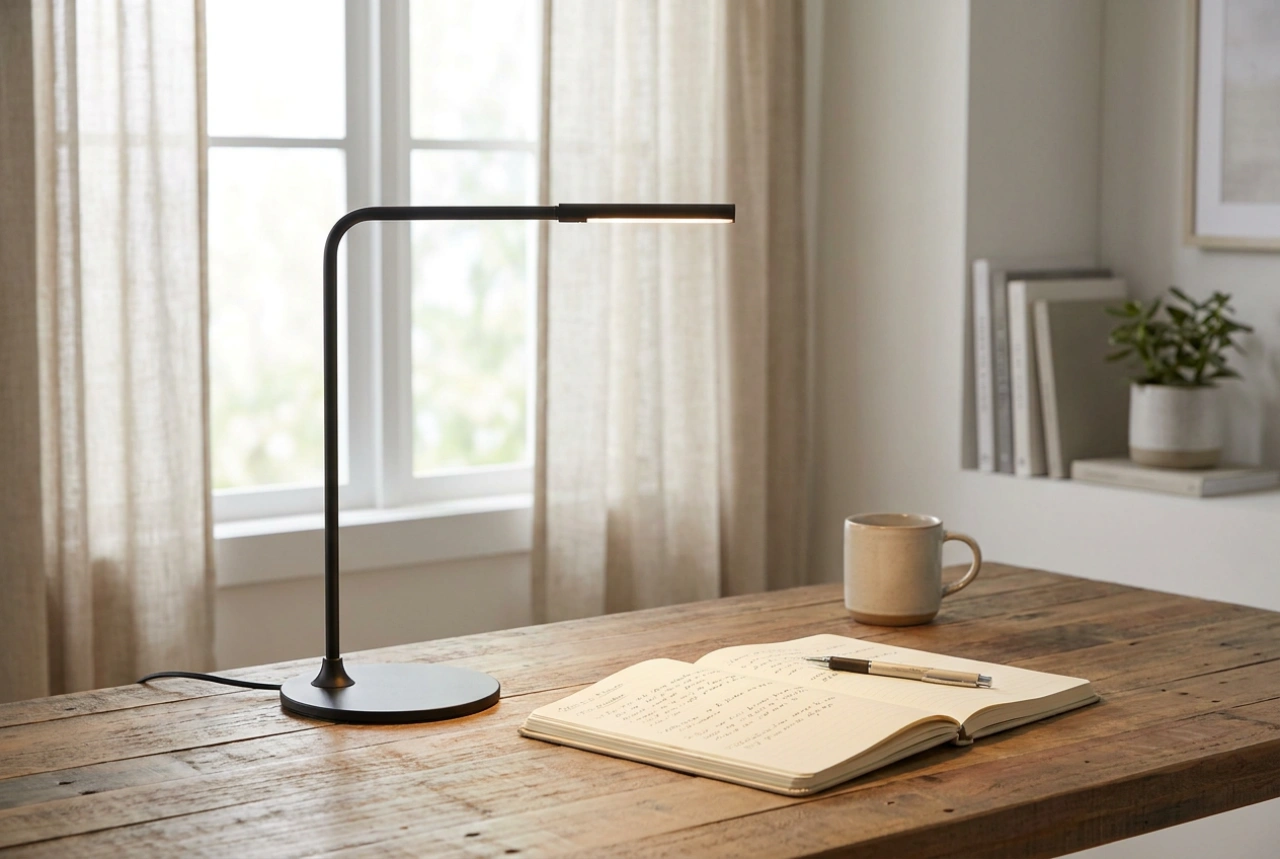
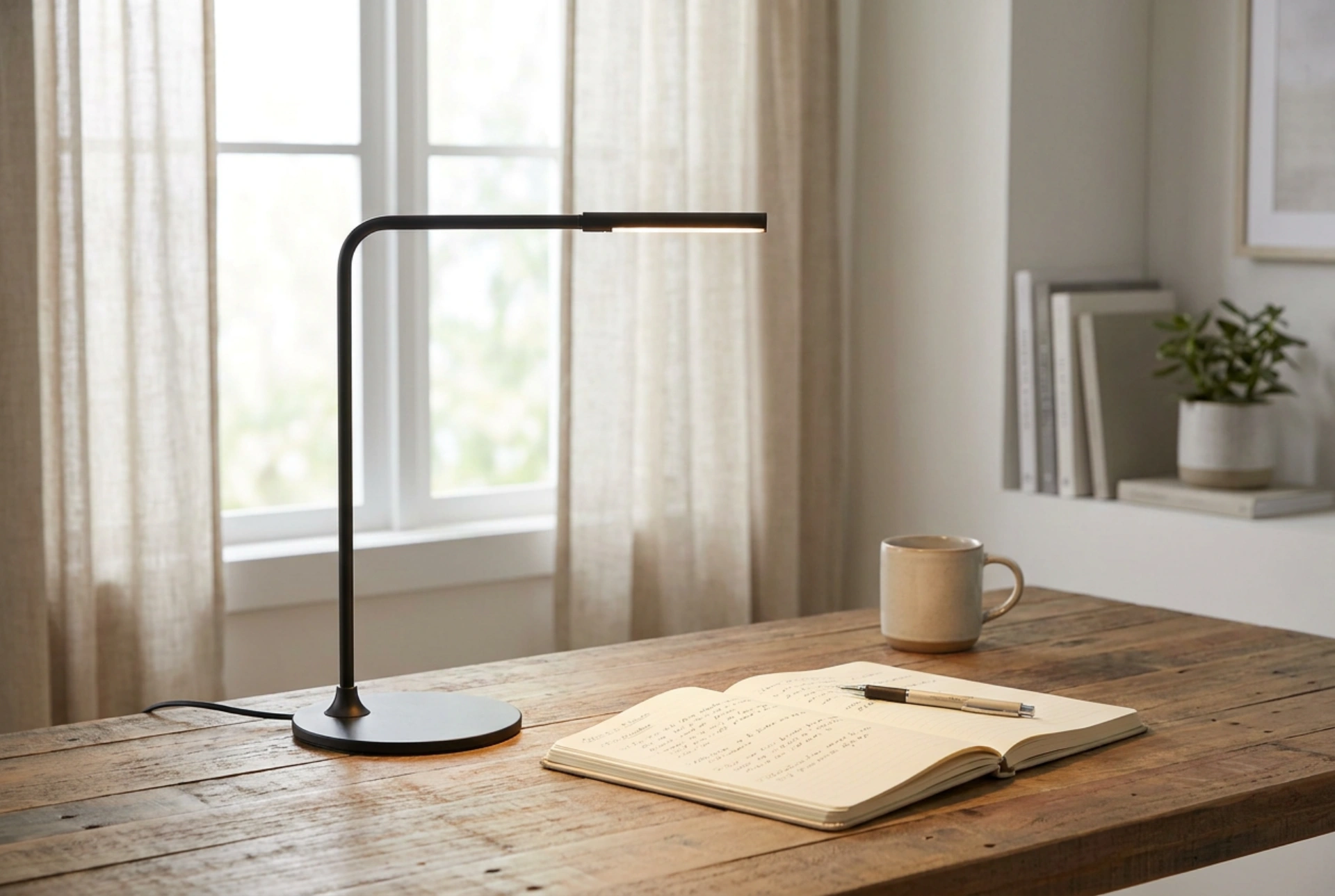
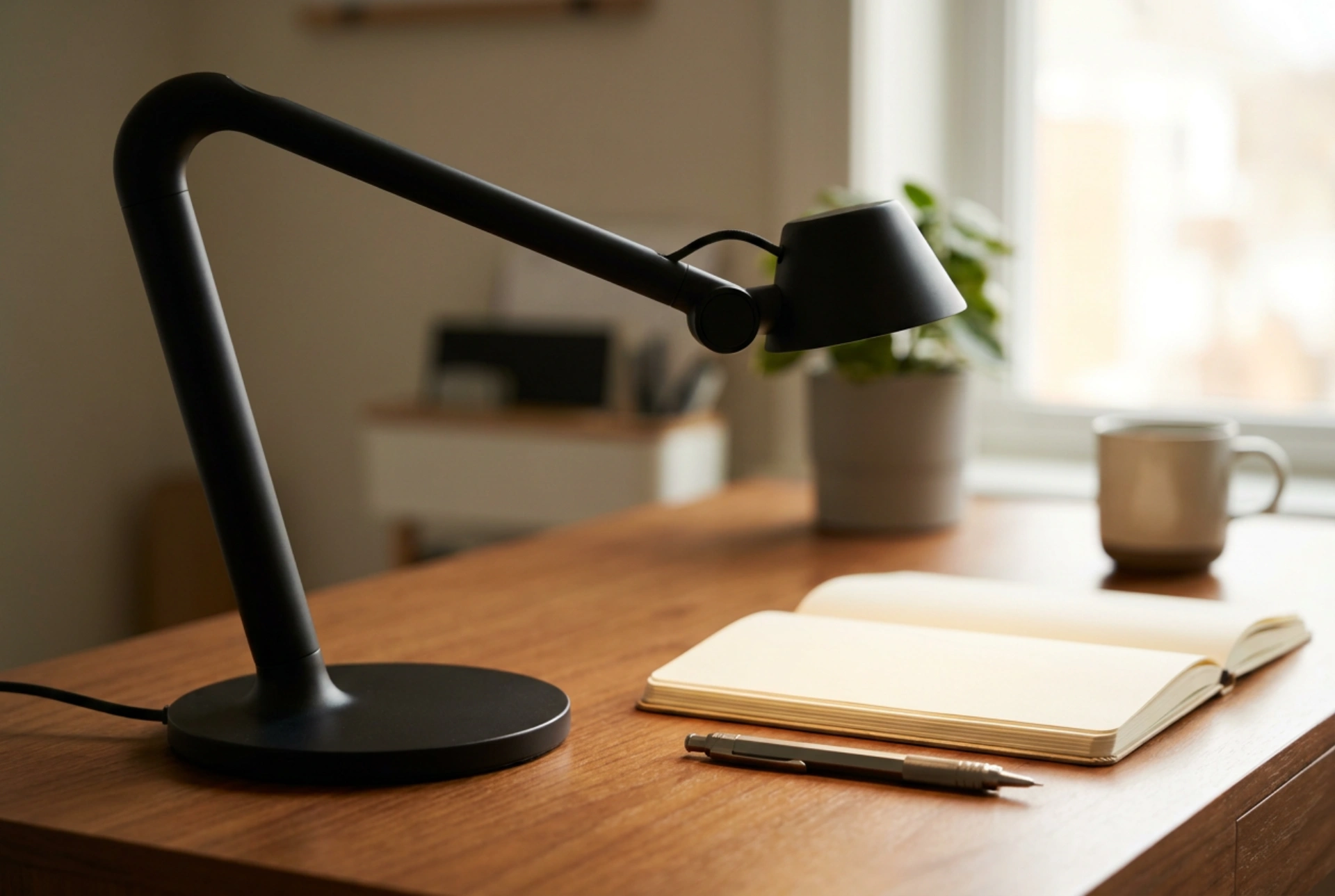
Light distribution and physical placement are critical to preventing both direct and reflected glare. Direct glare occurs when the light source shines directly into the child's eyes, while reflected glare happens when light bounces off shiny paper, computer screens, or polished desk surfaces. To eliminate these issues, choose a desk lamp with an adjustable, multi-axis arm that allows precise control over the beam angle. The light source should be deeply recessed within the shade or utilise a diffuser to scatter the light evenly. Furthermore, position the lamp on the side opposite the child's dominant hand—on the left for right-handed children and on the right for left-handed children—to eliminate distracting shadows cast by their hand during writing.
The Invisible Hazard: Preventing Light Flicker
A major hidden cause of eye strain in modern LED task lighting is high-frequency flickering, which is often a result of low-quality internal drivers. Even when this flicker is imperceptible to the naked eye, the optic nerve and brain still detect and process these rapid fluctuations in light intensity. This constant neural adjustment can lead to unexplained headaches, physical fatigue, and difficulty focusing. Opt for lamps specifically engineered with ripple-free or flicker-free technology, which ensures a continuous, stable electrical current to the LED panel.