

Managing rechargeable AA batteries correctly extends their lifespan and ensures household safety by matching charging parameters with battery chemistry. Understanding the science behind nickel-metal hydride (NiMH) cells and charger behaviour is key to safe, efficient energy storage.
The Chemistry Inside Rechargeable AA Batteries
Most household rechargeable AA batteries use Nickel-Metal Hydride (NiMH) chemistry, which has largely replaced older, toxic Nickel-Cadmium (NiCd) cells. NiMH batteries operate via a reversible electrochemical reaction. During charging, nickel hydroxide in the positive electrode oxidises, while the hydrogen-absorbing alloy at the negative electrode reduces, storing electrical energy as chemical energy.
Unlike standard alkaline batteries that deliver 1.5 volts, NiMH cells have a nominal voltage of 1.2 volts. However, when fully charged, their voltage peaks around 1.4 to 1.45 volts. Standard chargers must handle this specific curve. Attempting to charge non-rechargeable alkaline batteries in an AA charger is highly dangerous; alkaline cells cannot reverse their chemical reactions, leading to internal pressure build-up, gas leakage, or structural rupture.
How Smart Chargers Detect a Full Charge
Modern battery chargers rely on sophisticated microprocessors to monitor the state of the cell. The most reliable method is negative delta-V (-dV) detection. As a NiMH battery reaches 100% capacity, its chemical storage limit is reached, and excess energy converts into heat. This sudden temperature rise causes a slight drop in the battery's internal resistance, resulting in a minor dip in terminal voltage. A smart charger detects this negative voltage variance and instantly stops the high-current flow.
Advanced chargers also utilise thermal sensors (dT/dt, or temperature change over time) as a secondary safety cutoff. If the temperature rises too rapidly, the charger terminates the cycle to prevent thermal runaway. Cheap, timer-based chargers lack these sensors and continue delivering current for a fixed duration, leading to overcharging. Overcharging degrades the electrolyte and degrades the internal separator, permanently reducing the battery capacity.
Optimal Charging Practices and Temperature Control
To maximise the lifespan of your AA batteries, always charge them within an ambient temperature range of 15°C to 25°C. Charging in cold environments (below 10°C) slows down the chemical migration within the cell, leading to pressure build-up. Conversely, high heat (above 40°C) accelerates chemical degradation and shortens overall cycle life.
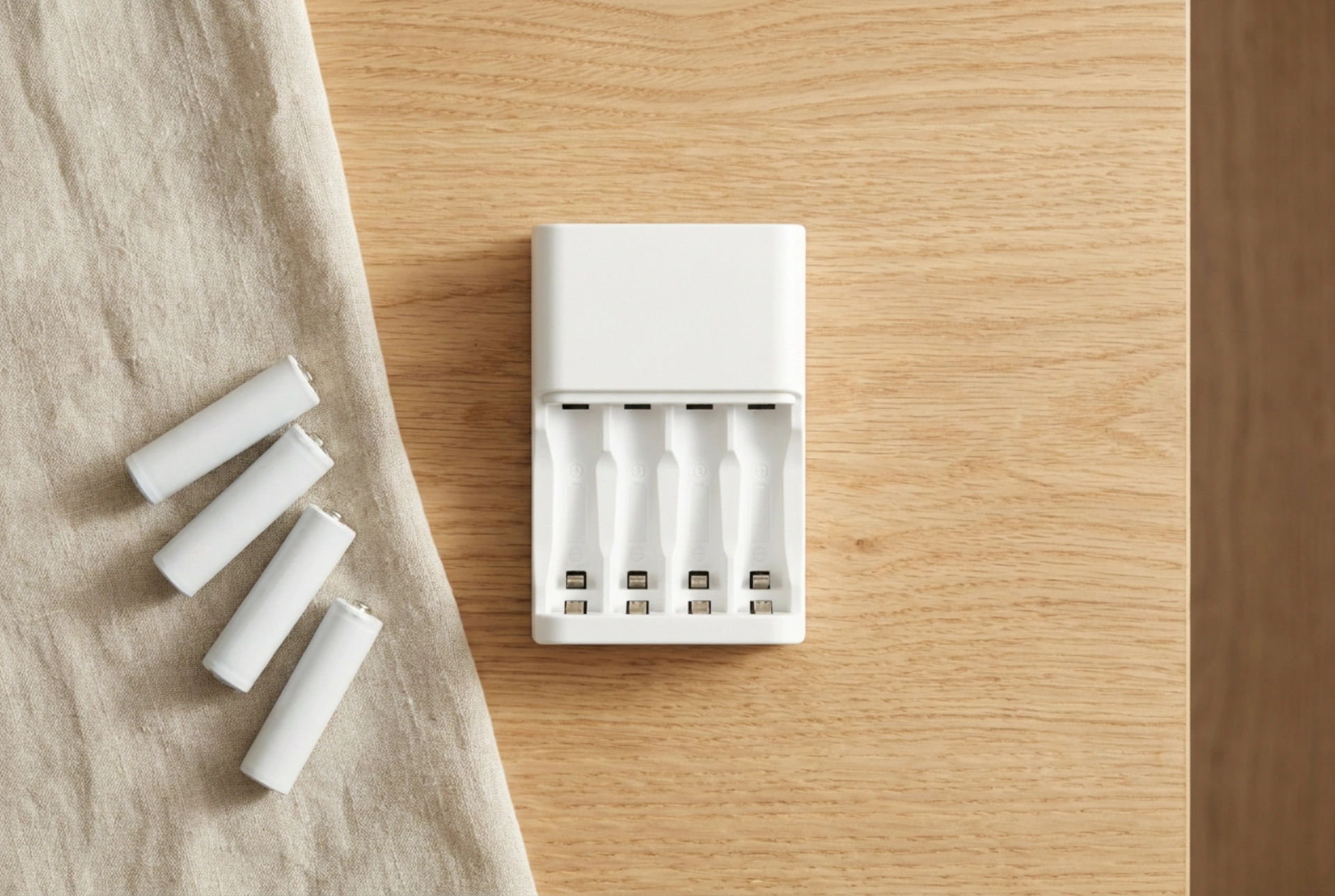
- Use independent channel chargers: Cheap chargers often charge batteries in pairs (in series). If one battery is more discharged than the other, one will either be undercharged or the other overcharged. Independent channels monitor each cell individually.
- Avoid mixing capacities: Do not charge a 1900 mAh battery alongside a 2500 mAh battery in the same circuit, as their charge rates and termination points differ significantly.
- Clean contacts periodically: Oxidisation on battery terminals or charger contacts increases electrical resistance. This causes false delta-V readings and premature charge termination. Clean them gently with a lint-free cloth and a drop of high-purity isopropyl alcohol.
Storage and Long-Term Maintenance
NiMH batteries naturally experience self-discharge, losing a small percentage of their charge every day even when not in use. Low Self-Discharge (LSD) NiMH batteries are designed to retain up to 85% of their capacity over a year. To store batteries long-term, keep them in a cool, dry place at approximately 30% to 50% state of charge rather than completely drained or fully loaded. This reduces chemical stress on the internal components and prevents deep discharge, which can permanently damage the cell's polarity.