

Black outdoor Wi-Fi cameras offer a sleek, modern aesthetic and high-contrast visibility, but their dark surfaces significantly alter thermal dynamics and material wear compared to white alternatives. Understanding the physics of heat absorption and polymer degradation is essential for selecting, placing, and maintaining these security devices effectively.
The Physics of Solar Absorption and Thermal Stress
The primary difference between a black and a white camera casing lies in the albedo effect—the measure of diffuse reflection of solar radiation. While white surfaces reflect most of the visible light spectrum, matte black surfaces absorb up to 90% of electromagnetic radiation, converting it directly into thermal energy. In direct sunlight, a black casing can easily reach temperatures 15 to 20 degrees Celsius higher than ambient air.
This elevated temperature creates a hostile environment for the internal electronics. High thermal loads accelerate the degradation of electrolytic capacitors, which are highly sensitive to operating temperatures. Furthermore, image sensors subjected to persistent heat suffer from increased thermal noise, leading to grainier image quality, particularly during night-time operation when the sensor sensitivity is pushed to its limits. Crucially, the Wi-Fi transceiver may initiate thermal throttling to protect its integrated circuits, resulting in dropped frames, latency, or complete signal loss.
Material Science: How UV and Heat Degrade Casings
The durability of a black outdoor camera depends heavily on the polymer chemistry of its housing. Budget-grade plastics, such as standard ABS (Acrylonitrile Butadiene Styrene), possess weak molecular bonds that break down rapidly when exposed to ultraviolet (UV) radiation and high heat. This photo-oxidative degradation causes the polymer chains to cleave, leading to micro-cracking, brittleness, and a faded, chalky appearance.
To withstand these forces, high-quality outdoor cameras utilize polycarbonate (PC) or ASA (Acrylonitrile Styrene Acrylate), often infused with specialized carbon black additives or UV stabilizers. ASA, in particular, exhibits exceptional resistance to weathering and retains its mechanical properties under intense solar exposure. Additionally, thermal expansion must be considered; as the black casing heats up and cools down daily, it expands and contracts. If the camera uses low-grade rubber seals, this continuous mechanical stress can cause the gaskets to lose elasticity, compromising the Ingress Protection (IP) rating and allowing humidity to penetrate the device.
Contrast, Aesthetics, and Psychological Deterrence
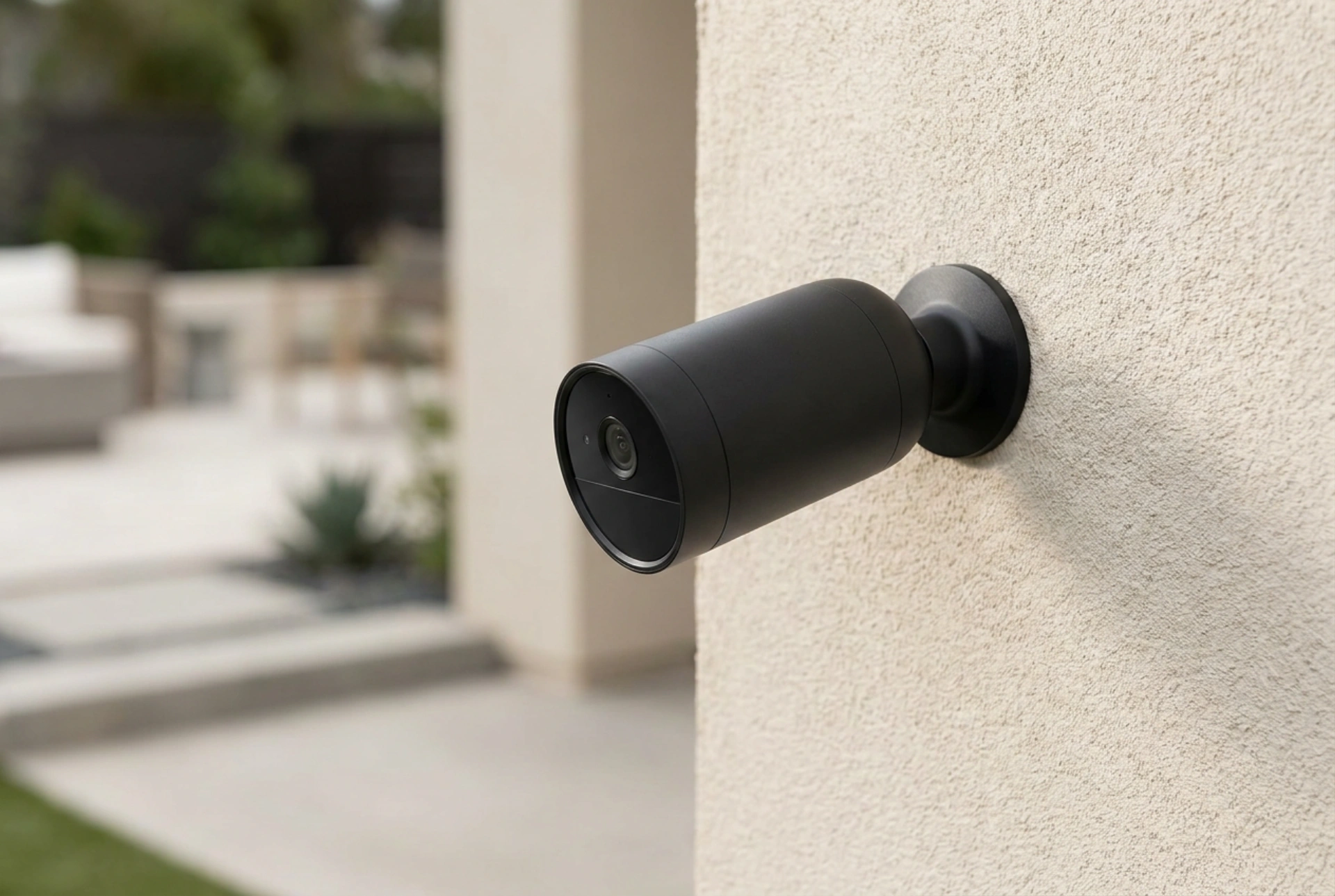
The visual impact of a black camera is determined by its background. When mounted on a light-colored exterior wall, such as white stucco or light beige brick, a black camera creates a sharp visual contrast. This high visibility serves as an active psychological deterrent, signalling to potential intruders that the property is actively monitored. However, from an architectural standpoint, this high-contrast look can disrupt the clean lines of a modern facade.
Conversely, mounting a black camera against dark timber cladding, dark grey siding, or deep under the shadow of a roof eave allows it to blend seamlessly into its surroundings. This covert placement is ideal for homeowners who prefer a discreet security system that does not draw attention to itself. When planning the installation, you must balance the desire for visual deterrence against the aesthetic harmony of your home's exterior.
Strategic Placement and Maintenance Techniques
To maximize the lifespan and performance of a black outdoor Wi-Fi camera, apply the following physical and chemical maintenance principles:
- Passive Shading: Whenever possible, mount the camera under roof overhangs, soffits, or gutters. This blocks direct midday sun, drastically reducing thermal load while protecting the lens from direct rain.
- Aerate the Mounting Base: Avoid mounting the camera flat against highly heat-conductive metal surfaces. Use non-conductive spacers (such as silicone or dense rubber gaskets) to create a small thermal barrier and allow air to circulate behind the mounting plate.
- Mineral Deposit Removal: Matte black finishes make white mineral rings from rainwater (limescale) highly visible. Avoid harsh chemical solvents or abrasive scrubbers that can scratch the protective UV-coating. Instead, wipe the casing with a soft microfiber cloth dampened with a weak solution of citric acid or distilled water to safely dissolve calcium carbonate deposits.