

Correctly positioning safety detectors in your home is a precise science governed by the physical properties of different gases. Placing a sensor even a few feet away from its optimal location can delay trigger times, risking your health and home when every second counts.
The Physics of Smoke Accumulation and Ceiling Placement
Smoke is composed of particulate matter, water vapour, and toxic gases generated by incomplete combustion. Because these components are heated, they are significantly less dense than the surrounding ambient air. This temperature difference creates thermal buoyancy, causing the smoke to rise rapidly toward the highest available surface, where it spreads horizontally across the ceiling in a process known as mushrooming.
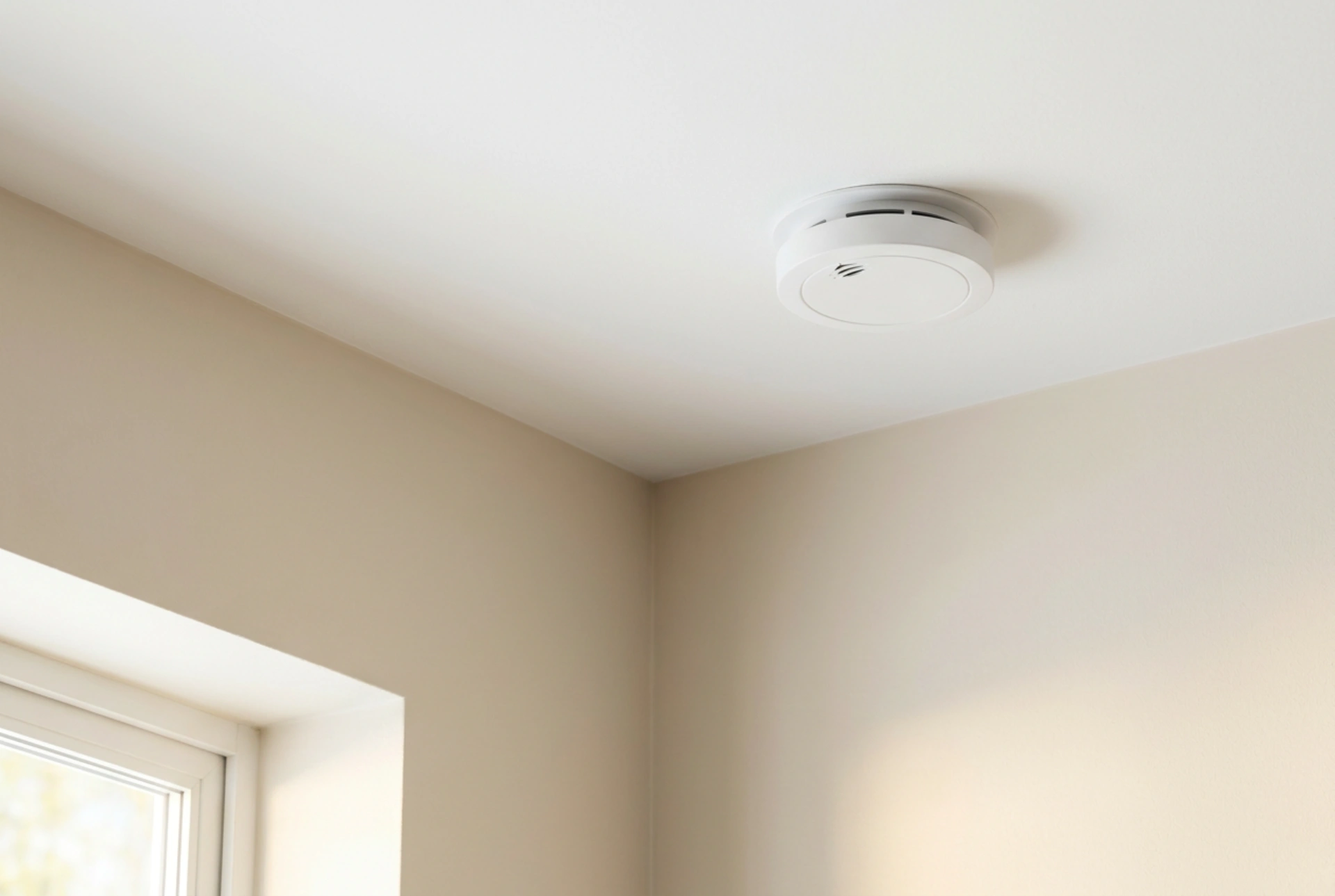
To detect fire at its earliest stage, smoke alarms must be mounted directly on the ceiling. However, you must account for the phenomenon of "dead air space". In the corners where walls meet the ceiling, air circulation is highly restricted, creating a pocket of stagnant air that smoke cannot easily penetrate. To bypass this dead zone, always install smoke detectors at least 10 centimetres away from any wall. If ceiling mounting is impossible and you must use a wall, position the unit between 10 and 30 centimetres below the ceiling line.
Carbon Monoxide: Dispelling the Density Myth
There is a widespread misconception that carbon monoxide (CO) is heavier than air and sinks to the floor, or conversely, that it behaves like smoke and rushes to the ceiling. In terms of molecular weight, carbon monoxide has a molar mass of approximately 28 grams per mole, while ambient air averages around 29 grams per mole. Because their densities are nearly identical, carbon monoxide behaves neutrally, diffusing evenly throughout the volume of a room rather than layering at the top or bottom.
Consequently, carbon monoxide detectors should be placed in the breathing zone of the room. This means mounting the sensor at eye level—approximately 1.5 metres above the floor. If you are placing a detector in a bedroom, it should be positioned at sleeping height (around pillow level) to ensure you are alerted to toxic accumulations while asleep. Ensure the detector is located at least 1 to 3 metres away from fuel-burning appliances like boilers or fireplaces to prevent false alarms caused by harmless, minor trace emissions during startup.
Natural Gas vs. LPG: Tailoring Placement to Gas Weight
Combustible gases do not behave uniformly; their movement depends entirely on their specific chemical composition and molecular weight relative to air. Failing to distinguish between gas types when placing a detector can leave dangerous leaks completely undetected.
- Natural Gas (Methane): Methane has a molecular weight of 16 grams per mole, making it much lighter than air. In the event of a leak, natural gas rises quickly and pools near the ceiling. Therefore, natural gas detectors must be mounted high on the wall, within 30 centimetres of the ceiling, and close to the potential leak source.
- Liquefied Petroleum Gas (LPG): Typically consisting of propane and butane, LPG is significantly heavier than air, with molecular weights exceeding 44 grams per mole. If a leak occurs, LPG flows downward, pooling along the floor, in basements, or in low-lying crevices. LPG detectors must be installed very low, roughly 30 centimetres above the floor surface, to catch accumulating gas before it reaches an ignition source.
Avoiding Dead Zones and Environmental Interference
Even a perfectly positioned detector can fail if environmental factors interfere with its sensors. Air currents from ventilation ducts, ceiling fans, windows, and exterior doors can create draft corridors that blow gases away from the detector, delaying or preventing an alarm. Keep all sensors at least 1 metre away from these high-velocity air pathways.
Furthermore, avoid installing detectors in high-humidity zones such as bathrooms or directly above cooking appliances. Water vapour can condense inside optical chambers, triggering false alarms, while airborne grease and cooking residue can coat chemical sensor elements, desensitising them over time. By understanding the physical behaviour of smoke and gases, you can create a robust, scientifically accurate safety net for your household.