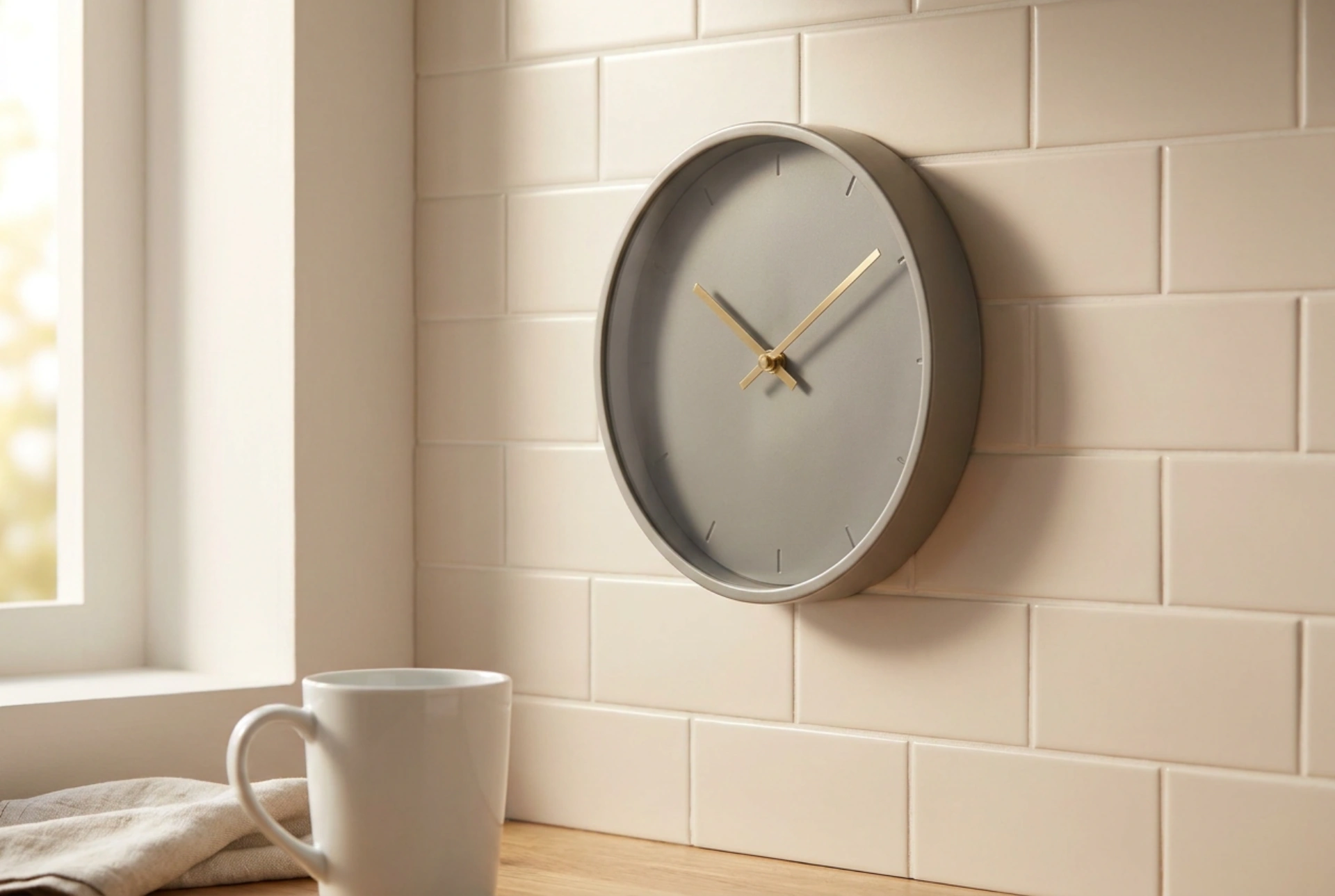


Kitchen environments subject wall timepieces to unique thermodynamic challenges, specifically high humidity, aerosolised grease, and rapid temperature fluctuations. Choosing a modern kitchen clock requires a deep understanding of the materials and sealing mechanisms that prevent ambient moisture from degrading delicate internal movements.
The Physics of Kitchen Humidity and Clock Vulnerability
Cooking releases significant volumes of water vapour into the air. As warm, moisture-laden air circulates, it seeks cooler surfaces on which to condense. Wall-mounted clocks, often positioned higher up where warm air accumulates, are highly susceptible to this condensation. When warm air enters a non-sealed clock case, it cools down, causing water droplets to form directly on the electronic circuitry or mechanical gears.
In standard quartz movements, this condensation causes micro-corrosion on the copper coils and battery contacts, leading to voltage drops and premature battery drain. Furthermore, moisture combined with airborne lipids (grease) creates a sticky residue that increases friction within the gear train, eventually seizing the movement entirely. Therefore, a kitchen clock must act as a barrier against both gaseous water vapour and liquid condensation.
Material Science: Selecting the Right Case and Lens
The outer shell of the clock determines its resilience against the acidic and humid kitchen atmosphere. Traditional materials like untreated wood, medium-density fibreboard (MDF), and low-grade iron are highly unsuitable due to their porous nature and susceptibility to warping or rusting.
- Acrylonitrile Butadiene Styrene (ABS): This engineering thermoplastic is highly hydrophobic, chemically resistant, and dimensionally stable under temperature fluctuations. It does not absorb moisture, making it an excellent casing material.
- Passivated Stainless Steel: For a metallic finish, high-grade stainless steel (such as 304 or 316 grade) is preferred. The chromium content forms a self-healing passive oxide layer that prevents rust even when exposed to salty or acidic steam.
- Tempered Glass vs. Acrylic Lenses: Tempered mineral glass is highly resistant to chemical cleaners and scratch-induced micro-fissures where moisture could accumulate. Acrylic (PMMA) is lighter and impact-resistant but can degrade and become cloudy when exposed to certain cooking aerosol solvents over time.
Sealing Mechanisms and Ingress Protection (IP)
The critical difference between a standard clock and a moisture-resistant clock lies in the sealing technology. To prevent vapour penetration, look for designs that feature elastomeric gaskets. Synthetic rubbers, such as Ethylene Propylene Diene Monomer (EPDM) or silicone, are ideal because they retain their elasticity across a wide temperature range and resist ozone and steam degradation.
These gaskets must be compressed between the glass lens and the casing, as well as around the rear battery compartment. In modern technical specifications, look for an Ingress Protection rating of at least IP44. The second digit indicates water resistance; a rating of 4 ensures protection against splashing water from any direction, which is sufficient to withstand heavy kitchen steam and occasional damp wiping during cleaning.
Dial Design and Anti-Corrosion Hands
Inside the sealed chamber, the dial and hands must also resist ambient degradation. Standard paper or cardboard dials will absorb moisture over time through capillary action, leading to swelling, warping, and mould growth. Opt for dials made of printed PVC, aluminium, or glass.
The clock hands must be lightweight yet rigid to maintain accurate movement. Anodised aluminium is the standard choice here. The anodisation process thickens the natural oxide layer on the aluminium surface, rendering it highly resistant to corrosion and preventing the hands from sticking together due to moisture-induced surface tension.
Optimal Placement and Seal Maintenance
Even with high moisture resistance, placement plays a vital role in longevity. Avoid hanging the clock directly above the hob, kettle, or dishwasher where concentrated thermal plumes can exceed the thermal limits of the seals. Instead, mount the clock on an adjacent wall where air circulation is more uniform. Periodically inspect the rear battery compartment seal during battery replacement, and lightly coat the rubber gasket with silicone grease to maintain its hydrophobic properties and prevent dry rotting.