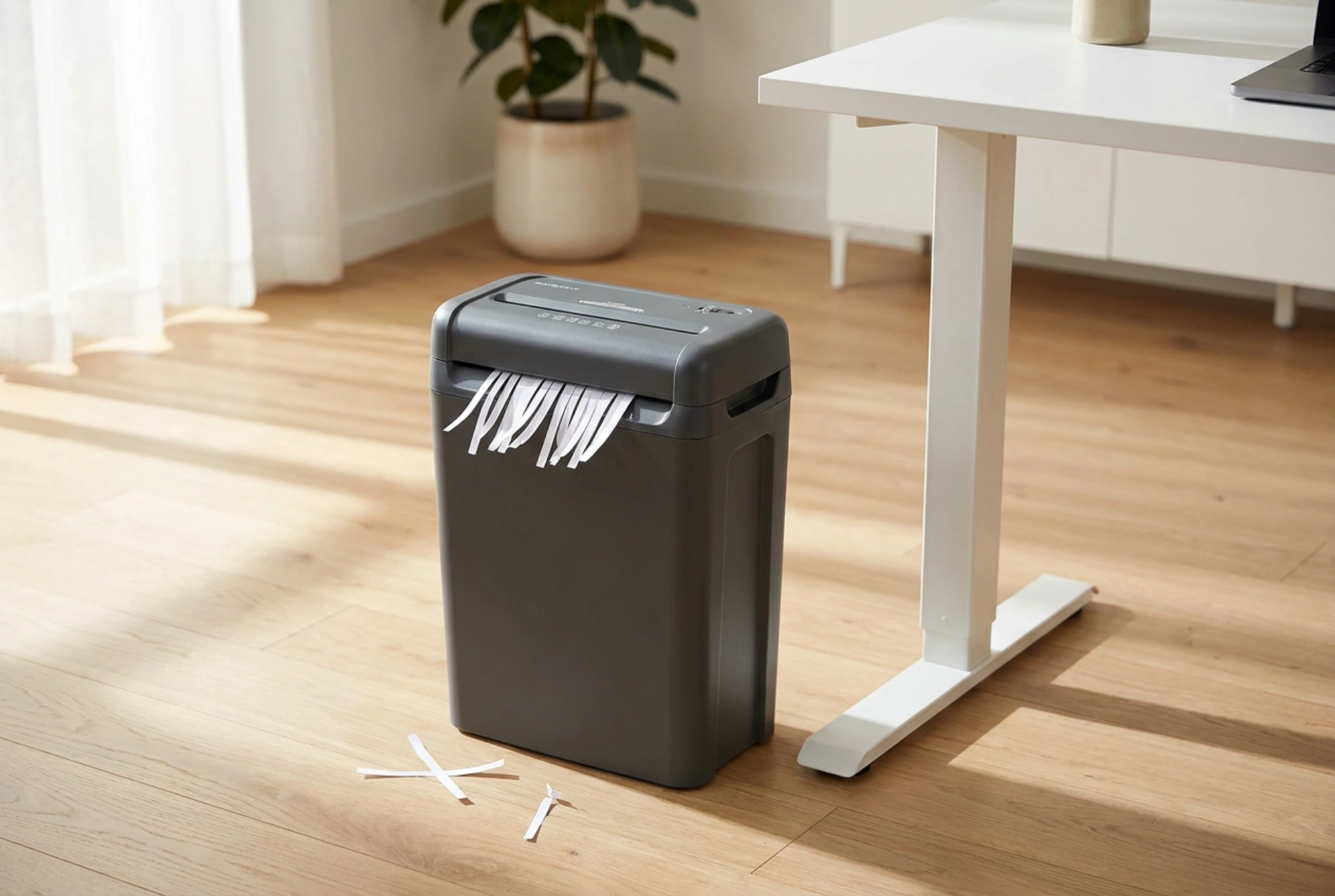


Maintaining document security at home requires a reliable paper shredder, but operating this mechanical device safely and keeping it in optimal working condition demands an understanding of its physical limits and cutting mechanisms.
The Mechanics of Shredding and Thermal Protection
Home paper shredders operate using a series of interlocking metal cutting shafts driven by an electric motor. These shafts pull paper through narrow clearances, shearing the fibers with high torque. Because these motors are compact, they generate significant heat during continuous operation. Most consumer-grade shredders are equipped with a thermal overload switch that automatically cuts power when the internal temperature of the motor reaches a critical threshold.
- Duty Cycle: Every shredder has a specified duty cycle, typically ranging from two to ten minutes of continuous shredding, followed by a mandatory cool-down period of twenty to forty minutes. Exceeding this limit degrades the motor insulation and degrades internal lubricants.
- Sheet Capacity: The stated sheet capacity refers to standard, thin office paper. Shredding at maximum capacity consistently strains the motor and gears, increasing the risk of paper jams and thermal shutdown. It is best to operate at sixty to seventy percent of the maximum rated sheet capacity.
Safe Feeding Techniques and Foreign Materials
Proper physical handling is crucial to prevent mechanical failure and personal injury. The feed slot is designed to pull materials rapidly, meaning any loose objects can be drawn into the cutters before the operator can react manually.
- Physical Clearance: Always keep long hair, neckties, loose clothing, and jewelry far away from the feed entry. When feeding paper, hold the sheets at the edges and let go as soon as the mechanism catches the paper.
- Prohibited Materials: Never feed thick cardboard, plastic packaging, adhesive labels, or metal objects into a standard paper shredder unless the manufacturer explicitly states it is rated for them. Adhesives from self-stick notes or labels transfer to the cutting blades, attracting paper dust and creating sticky deposits that bind the shafts.
- Staples and Paperclips: While some heavy-duty shredders can shear through small staples, larger paperclips and heavy industrial staples will nick, dull, or chip the steel cutting teeth over time, permanently reducing cutting efficiency.
Clearing Jams with Friction and Reverse Action
Paper jams occur when the volume of paper exceeds the torque capacity of the motor or when fibers clump together in the cutting heads. Resolving a jam requires systematic steps to protect the motor and gears from stripping.
When a jam occurs, immediately stop feeding paper. Switch the device to reverse mode to back the jammed sheets out of the cutter. If the paper remains stuck, toggle between forward and reverse modes in short, two-second bursts. This alternating motion rocks the compressed paper fibers back and forth, loosening the physical bind. Always unplug the power cable from the wall socket before attempting to manually pull paper fragments out of the entry or exit chutes.
Lubrication and Blade Maintenance
As paper passes through the cutting shafts, it strips away microscopic amounts of lubrication and deposits fine paper dust. This accumulation increases friction, which raises the operating temperature of the motor and slows down the cutting speed. Regular lubrication is essential to maintain low friction coefficients between the interlocking steel blades.
To lubricate the shredder, apply specialized shredder oil directly onto a sheet of paper in a lateral zigzag pattern, then feed that paper through the machine. Once shredded, run the machine in reverse for ten seconds to distribute the oil evenly across the entire length of the cutting cylinders. Never use aerosol lubricants, WD-40, or vegetable oils; aerosol propellants can ignite due to internal motor sparks, and organic oils will spoil, gumming up the mechanism.