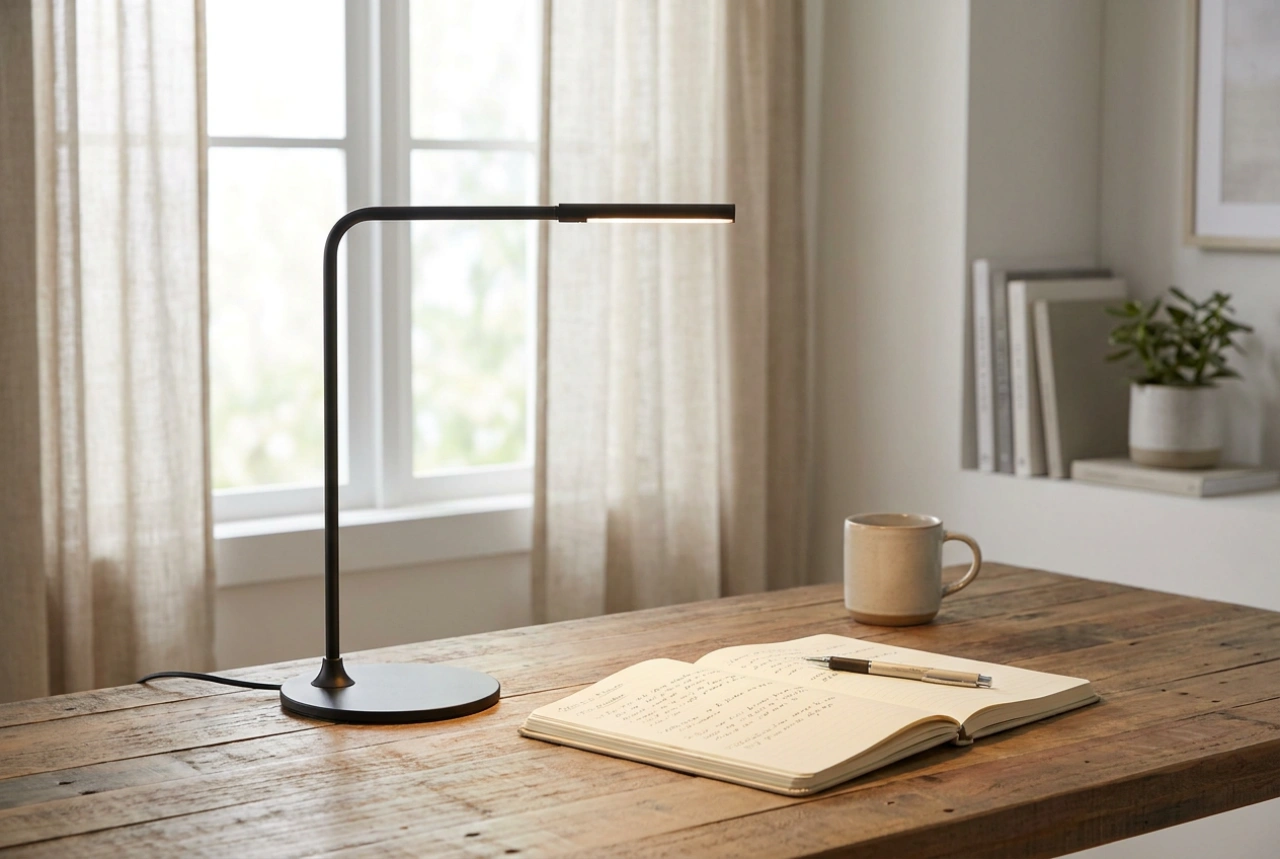


Selecting the right desk lamp for a child's study area is critical for preventing eye strain, maintaining focus, and supporting healthy posture during reading and writing.
The Physics of Light: Brightness and Illuminance Explained
When evaluating a desk lamp, look beyond simple wattage, which only measures energy consumption. Instead, focus on lumens (light output) and lux (illuminance on the working surface). For a child's desk, the target illuminance on the work surface should be between 400 and 500 lux. A lamp emitting around 400 to 600 lumens, positioned correctly, easily achieves this intensity. This level of brightness ensures that the contrast between printed text and white paper is sharp enough to read without squinting, reducing the workload on the ciliary muscles in the eyes.
Correlated Color Temperature (CCT) and Cognitive Focus
Light color temperature, measured in Kelvin (K), directly influences alertness and melatonin production. For studying, reading, and tasks requiring high cognitive focus, light in the range of 4000K to 5000K (cool white daylight) is ideal. This spectrum mimics natural daylight, suppressing melatonin synthesis and promoting alertness. Warm light (under 3000K) is too relaxing and can induce drowsiness, while extremely cool light (above 6000K) can cause visual fatigue and disrupt the evening circadian rhythm if used close to bedtime. Adjustable CCT lamps offer the best versatility, allowing a transition to warmer light for evening reading.
The Importance of the Color Rendering Index (CRI)
The Color Rendering Index (CRI or Ra) measures how accurately a light source reveals the true colors of objects compared to natural sunlight. For children engaging in drawing, reading colored textbooks, or crafting, a high CRI is essential. Choose a lamp with a CRI of Ra 90 or higher. Low CRI light sources (below Ra 80) distort colors, making images look muddy and forcing the brain to work harder to process visual information, which accelerates mental fatigue during study sessions.
Ergonomics, Positioning, and Eliminating Glare
Even the highest-quality light source will fail if positioned incorrectly. To prevent glare and shadows, follow these physical placement rules:
- Anti-Shadow Placement: Position the lamp on the opposite side of the child's dominant hand. A right-handed child needs the lamp on the left side of the desk; a left-handed child needs it on the right. This prevents the hand and arm from casting dark shadows over the writing area.
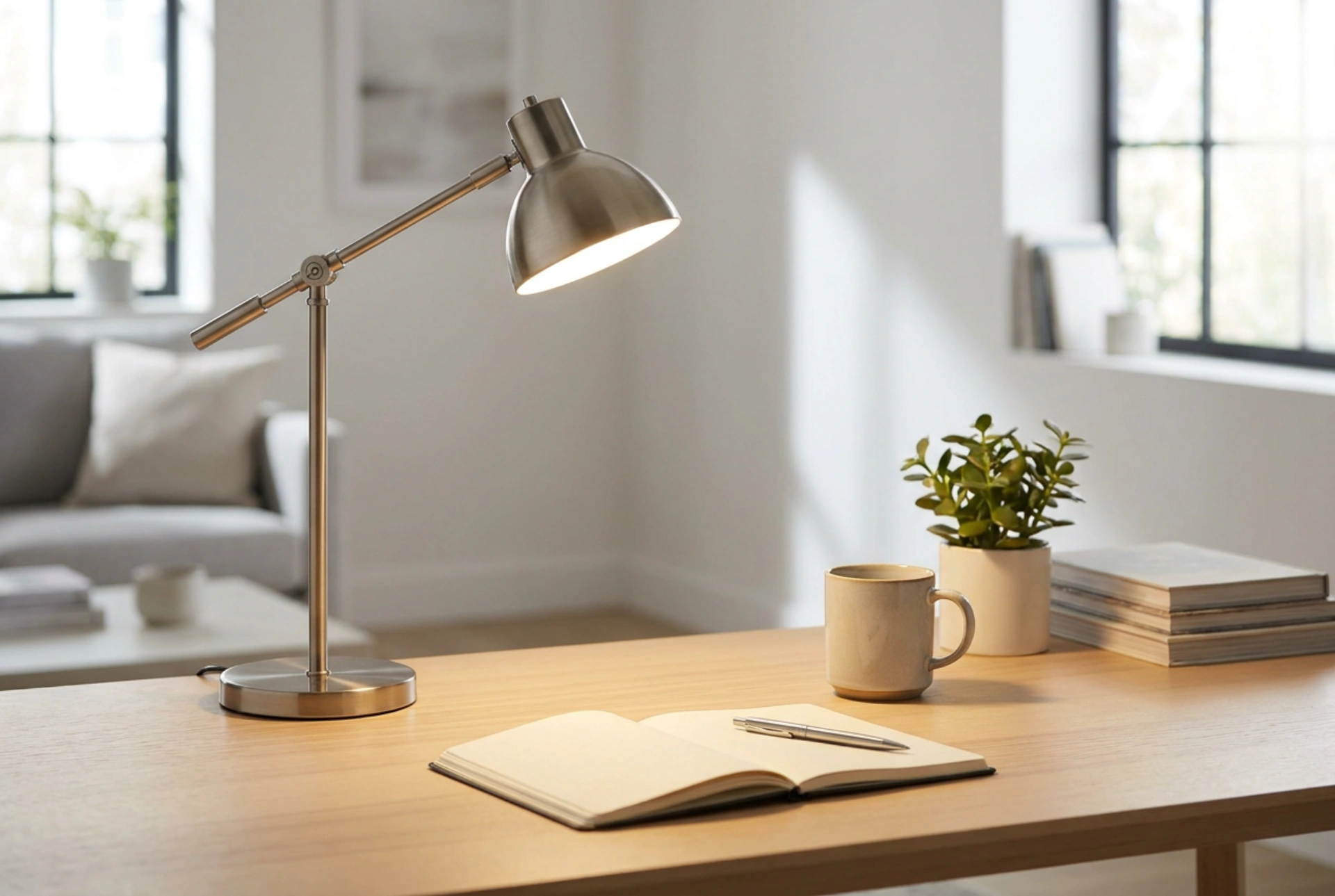
- Height and Angle Adjustment: The light source should be positioned approximately 35 to 50 centimeters above the desk surface. It must be fully adjustable with a multi-axis articulated arm and a tiltable head. This allows the child to direct the light path precisely onto their book or notebook while keeping the direct light source hidden from their direct line of sight.
- Preventing Direct Glare: Ensure the lamp head is opaque and designed to direct light downwards. If the child can see the bare bulb or light-emitting diodes while sitting normally, it will cause discomfort glare, reducing visual acuity and causing headaches.
Eliminating Invisible Flicker and Uniformity of Light
High-quality desk lamps utilize electronic drivers that convert alternating current (AC) to stable direct current (DC). Cheap, low-quality LED lamps often exhibit high-frequency flicker. While this flicker is usually invisible to the naked eye, the eye muscles continuously adjust to the rapid changes in light intensity, leading to rapid eye strain, headaches, and difficulty concentrating. Additionally, look for lamps with built-in diffusers that distribute light evenly across the desk surface, avoiding harsh hot spots and dark corners that force the pupils to constrict and dilate repeatedly as the eyes move across the workspace.