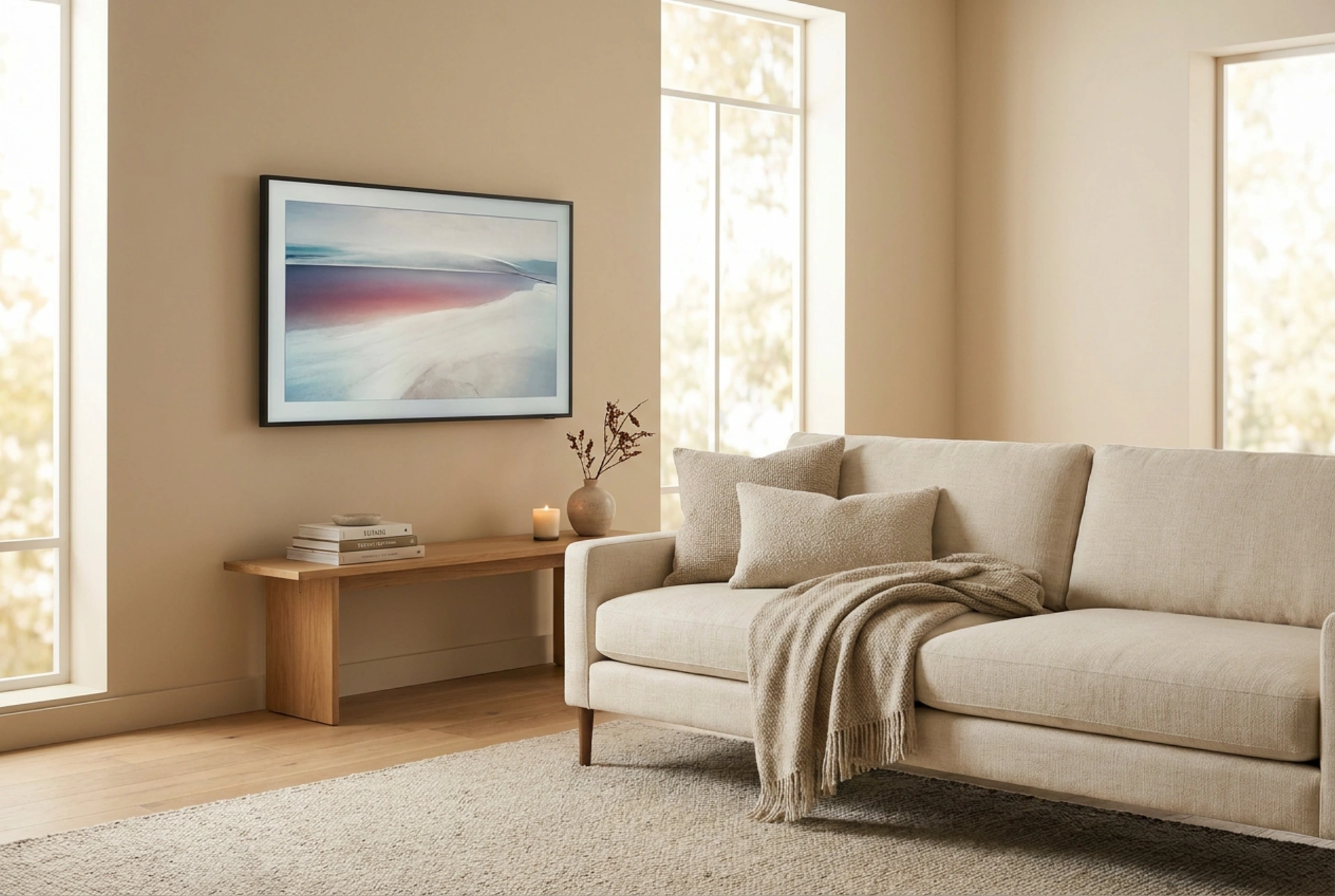


Positioning a television at the correct height is critical to preventing chronic neck strain and ensuring an optimal viewing experience based on human biophysics.
The Science of Viewing Angles and Ergonomics
The primary goal of positioning a screen is to keep the neck muscles relaxed. When sitting on a sofa, your head naturally tilts slightly downward or remains perfectly level. The Society of Motion Picture and Television Engineers (SMPTE) and ergonomic guidelines suggest that the center of the television screen should ideally align with your horizontal eye line when seated in your typical viewing position. In practice, this means your gaze should rest on the top third of the screen when looking straight ahead. This configuration prevents constant upward neck extension, which can lead to cervical muscle fatigue and headaches over extended periods of viewing.
The Core Formula: Step-by-Step Calculation
Determining the exact height for your specific living room setup requires a simple physical measurement rather than general estimation. Follow these precise steps to calculate the perfect mounting height:
- Measure your eye height: Sit on your primary sofa in your natural relaxed posture. Have a second person use a measuring tape to measure the distance from the floor straight up to your pupils. For most standard sofas and average adult heights, this measurement ranges between 95 and 110 centimeters.
- Factor in the screen dimensions: Measure the total vertical height of your television screen (excluding the stand if wall-mounting). Divide this number by two to find the exact vertical center of your display.
- Calculate the mounting point: Subtract half of the screen height from your measured eye height. The resulting number represents the ideal height from the floor to the bottom edge of the television screen. Alternatively, align the calculated eye-height directly with the middle point of your screen.
Adjusting for Viewing Distance and Screen Size
As television screen sizes increase, the vertical viewing angle also expands, necessitating minor adjustments to your calculations. A larger screen (such as 65 inches or greater) covers a wider field of view. If you sit closer to a large screen, the bottom of the screen may need to be lowered slightly to ensure the top of the display does not force your eyes to look upward more than 15 degrees. Conversely, if your sofa is positioned further back, you gain more flexibility in height adjustment, as the angle of elevation decreases with distance.
Special Considerations: Reclining Sofas and Wall Mounts
If your living room features reclining furniture, your natural line of sight shifts upward when the seat is tilted back. In these specific layouts, mounting the television slightly higher—accompanied by a tilting wall mount—is necessary. The screen should be angled downward so that the plane of the panel remains perpendicular to your line of gaze. This perpendicular alignment is essential because modern LCD and OLED panels can suffer from contrast degradation and color shifting when viewed from off-center vertical angles.