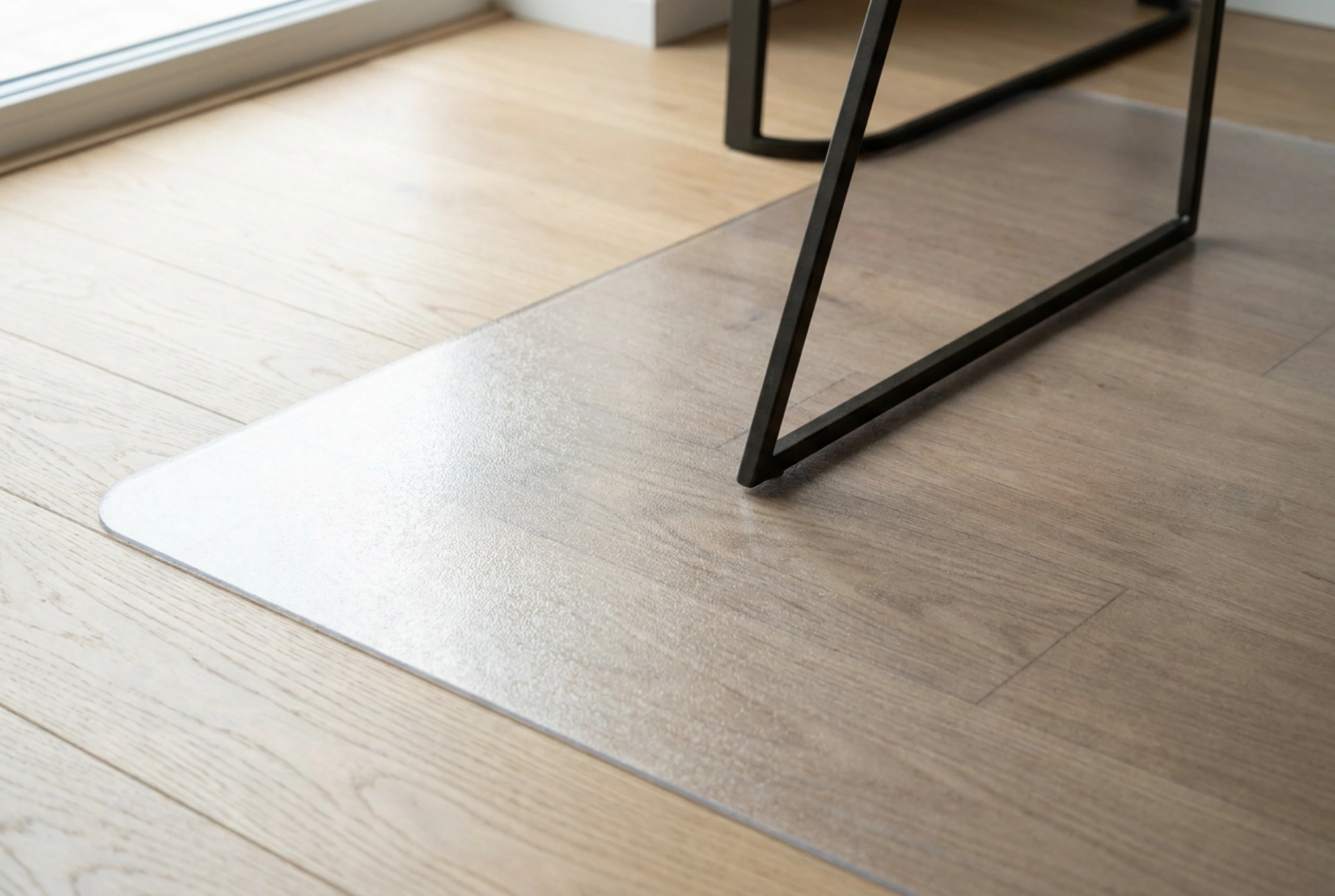


Selecting the correct office chair mat involves understanding how materials distribute weight and resist friction to protect your flooring from localized stress. Matching the mat's polymer composition and backing texture to your specific floor type prevents mechanical wear and chemical discoloration.
The Mechanics of Floor Damage: Point Load and Friction
Office chairs exert significant physical force on a very concentrated area. Standard casters have a tiny contact patch, meaning the combined weight of the chair and the user is converted into high point-load pressure. When the chair moves, this pressure creates lateral shear stress. On hardwood, laminate, or vinyl floors, this repeated stress deforms the surface layers, eventually cracking the protective lacquer or crushing wood fibers. Additionally, ambient dust and micro-grit act as abrasives. When trapped between a hard caster and the floor, these particles are ground into the surface, creating micro-scratches that dull the floor's finish over time. A high-quality floor mat acts as a sacrificial barrier, absorbing these mechanical forces and distributing the weight across a broader surface area.
Material Properties: Polycarbonate, PVC, and PET
The durability and performance of a floor mat depend heavily on its chemical composition. Understanding these polymer differences is crucial for making an informed choice:
- Polycarbonate (PC): This is a premium, highly rigid engineering thermoplastic. Polycarbonate mats offer exceptional impact resistance and dimensional stability. Under high loads, they do not dent, crack, or curl. Their rigid nature ensures that office chairs roll smoothly with minimal resistance, making them ideal for both hard floors and deep carpets. Additionally, polycarbonate does not yellow over time when exposed to UV radiation.
- Polyvinyl Chloride (PVC): PVC mats are flexible and cost-effective, achieved through the addition of chemical plasticizers. However, these plasticizers can migrate out of the material over time, causing the mat to become brittle, crack, or curl at the edges. More importantly, migrating plasticizers can chemically react with certain floor polyurethane finishes, leaving permanent yellow stains.
- Polyethylene Terephthalate (PET): PET serves as a middle ground. It is stiffer than PVC and completely free of plasticizers, eliminating the risk of chemical discoloration. It offers good clarity and recyclability, making it an environmentally stable option for moderate daily use on hard floors.
Matching Backing Textures to Your Flooring Type
The underside of the mat determines its stability and the safety of the underlying floor. Using the wrong backing can cause physical damage or slip hazards.
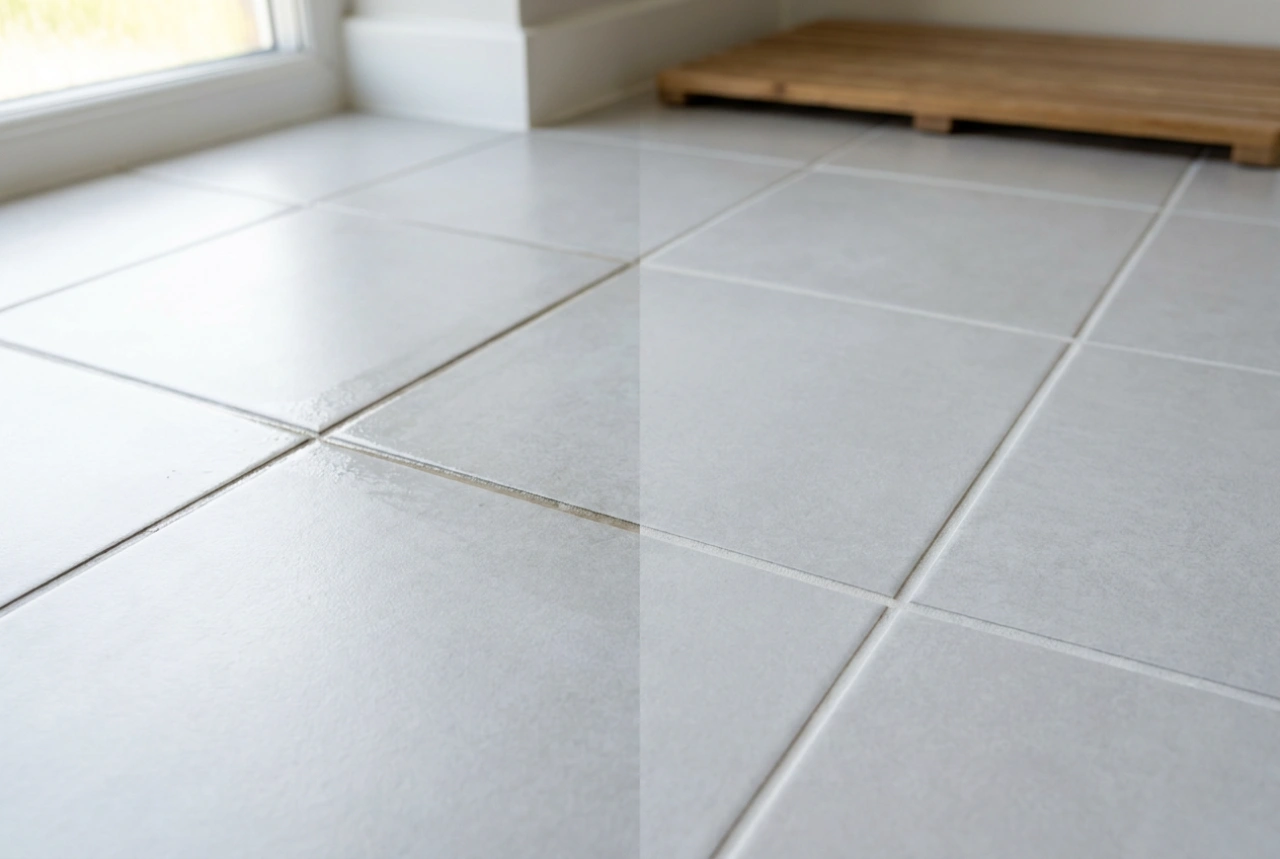
For hard surfaces like oak planks, polished concrete, or ceramic tiles, a completely smooth backing is required. Spikes or rough textures will scratch the hard surface under the weight of the chair. Smooth mats rely on friction and surface-to-surface adhesion to stay in place. It is critical to thoroughly clean and dry the subfloor before laying down a smooth mat. Any trapped moisture can lead to mold growth or finish degradation, while trapped grit will act like sandpaper under pressure.
For carpeted floors, mats must feature integrated cleats or spikes on the underside. These spikes lock into the carpet pile, preventing the mat from shifting when you roll the chair. The length of the spikes must match the depth of the carpet pile. Low-pile carpets require short, dense cleats, whereas plush, high-pile carpets require longer, robust spikes to prevent the mat from sinking and warping under load.
Optimizing Chair Rollability and Maintenance
To maximize the lifespan of both your floor and the protective mat, clean the underside of the mat and the floor surface monthly. Wipe the mat with a damp microfiber cloth using a mild, pH-neutral soap solution. Avoid harsh chemical solvents or abrasive cleaners that can degrade the polymer structure. Ensure both surfaces are completely dry before reassembling to prevent moisture trapping, which can ruin wooden floor finishes.