

Achieving perfectly streak-free windows relies less on commercial miracle sprays and more on understanding the physics of evaporation and the chemistry of residues. By mastering the right mechanical techniques and chemical ratios, you can eliminate the microscopic films that cause visible haze and streaks.
The Science Behind Window Streaks
To prevent streaks, we must first understand what they are. Streaks are primarily composed of two things: undissolved mineral deposits left behind by evaporated water (often referred to as hard water spots) and leftover surfactant residues from cleaning agents. When you spray a cleaning solution onto warm glass, the water molecules evaporate rapidly, leaving these solid materials suspended on the surface in irregular patterns.
Additionally, static charge plays a significant role. Rubbing glass vigorously with dry paper towels or microfiber cloths generates a negative electrostatic charge. This charge acts like a magnet for airborne dust particles, causing them to bond immediately to the freshly cleaned pane. To avoid this, the glass must be cleaned with minimal friction and dried using a professional squeegee technique rather than dry buffing.
Choosing the Right Chemical Agents
Most commercial cleaners contain excessive amounts of artificial colorants, fragrances, and heavy surfactants. While these ingredients create foam and a pleasant scent, they are highly prone to leaving a microscopic film that causes streaking. For an optimal, residue-free solution, you can utilize simple, scientifically effective substances:
- Distilled Water: Tap water contains calcium, magnesium, and silica. When tap water evaporates, these dissolved minerals remain on the glass. Distilled water lacks these minerals, preventing mineral spotting.
- Acetic Acid (White Vinegar): A mild acid that effectively breaks down alkaline deposits, such as mineral buildup and grease, without degrading the glass structure.
- Isopropyl Alcohol: Mixing a small amount of isopropyl alcohol into your solution lowers the freezing point and accelerates the evaporation rate of the liquid uniformly, preventing droplets from pooling and drying in spots.
- Anionic Surfactants (Dish Soap): If the window has heavy grease or organic dirt, a single drop of a simple, dye-free dishwashing liquid reduces surface tension, allowing the water to sheet off the glass rather than form beads.
The Step-by-Step Streak-Free Method
Achieving a professional finish requires a systematic approach to washing and drying. Follow this precise order of operations to ensure no residues or moisture lines remain.
1. Pre-Cleaning and Dusting
Before applying any liquid, use a dry, soft-bristled brush or a vacuum with a brush attachment to remove loose dust, pollen, and cobwebs from the window frame, sill, and glass. Skipping this step turns dry dust into a muddy slurry when liquid is applied, making it significantly harder to clean.
2. Application of the Solution
Apply your distilled water and acetic acid solution using a microfiber washer sleeve or a soft sponge. Work in a circular motion, applying gentle pressure to emulsify dirt, grease, and bird droppings. Ensure the entire pane is wet, but not dripping excessively onto the sills.
3. Squeegee Technique and Angle of Attack
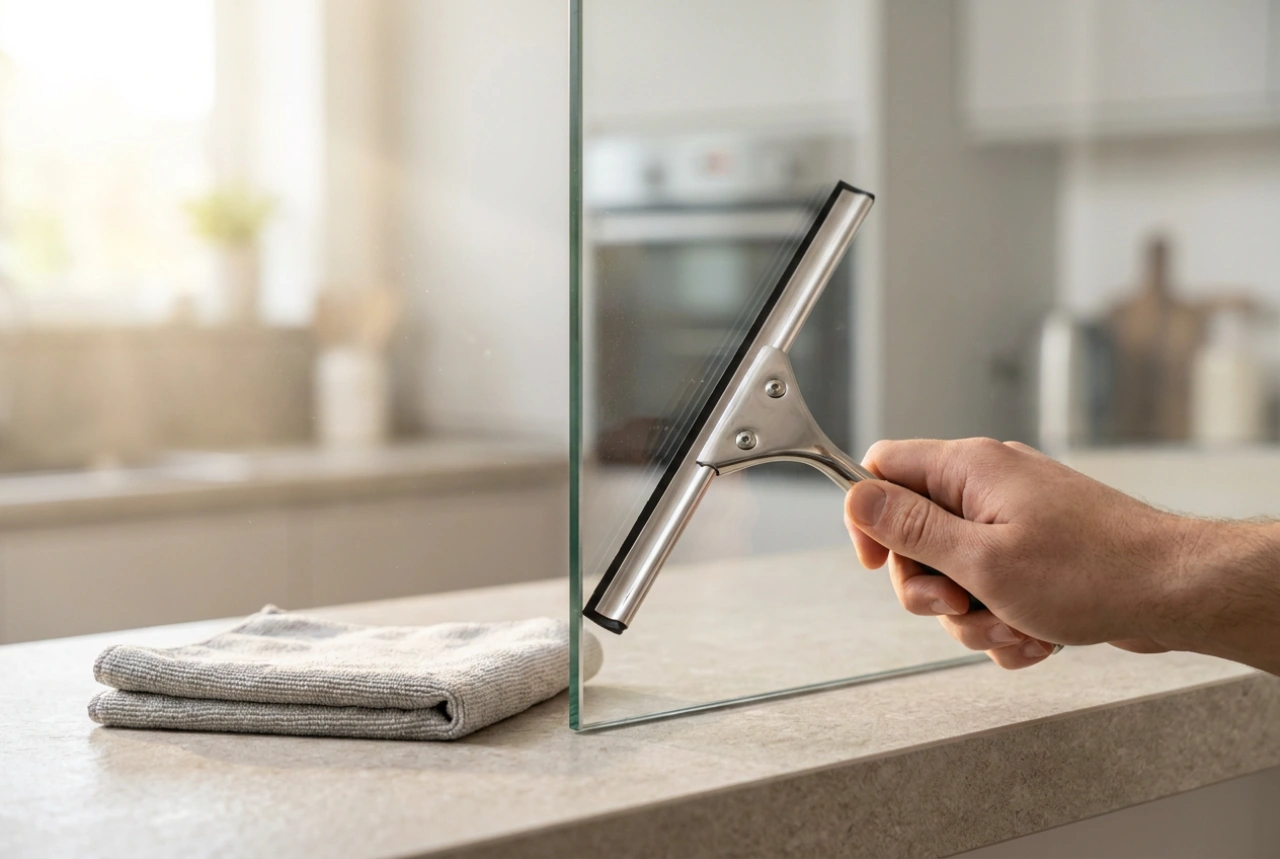
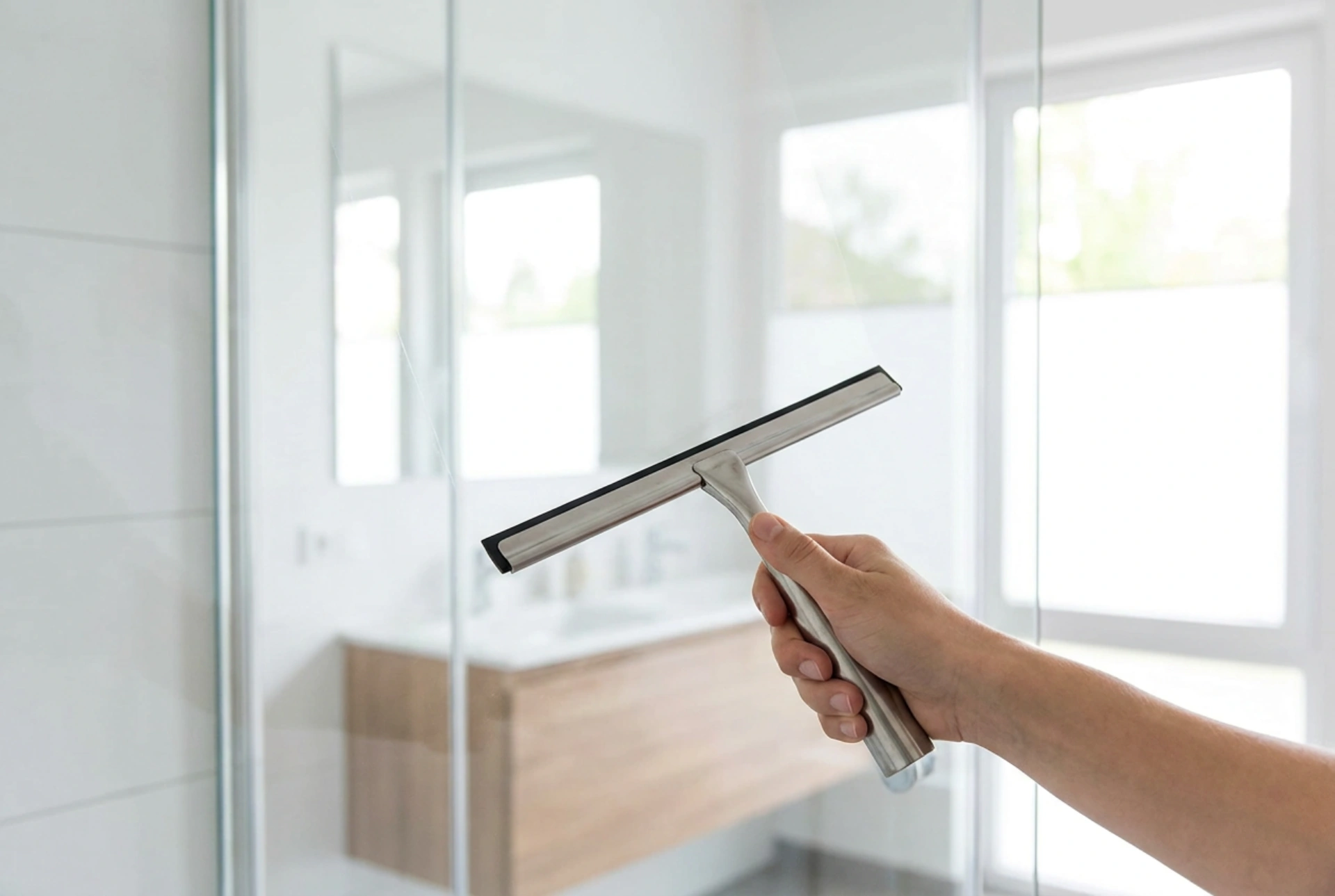
The squeegee is the most critical tool for a streak-free finish. Ensure the rubber blade is sharp, clean, and free of nicks. Wipe the blade dry with a lint-free cloth before starting. Tilt the squeegee at a 45-degree angle relative to the glass, keeping only the edge of the rubber blade in contact. Pull the squeegee from the top corner down to the bottom in single, smooth, continuous strokes. Alternatively, use the professional 'S' technique, snaking the blade across the window without lifting it. After every single pass, wipe the rubber blade completely dry with a clean microfiber cloth to prevent water from being dragged back onto the clean glass.
4. Detailing the Edges
A small amount of water will naturally collect along the rubber seals and wooden or vinyl frames. Do not use your squeegee on these edges. Instead, wrap a dry, lint-free microfiber or cotton cloth over your finger and run it along the outer perimeter of the glass pane to absorb any remaining moisture before it can run down and dry into streaks.
The Impact of Temperature and Sunlight
Environmental conditions dictate your success rate. Cleaning windows in direct sunlight or on hot summer days is highly discouraged. Solar radiation heats the glass surface, causing the cleaning solution to evaporate almost instantly. This rapid evaporation prevents you from squeegeeing the liquid away in time, leaving dry chemical residues baked onto the pane. Ideally, clean your windows on cloudy days, in the early morning, or late in the evening when the glass is cool to the touch. This keeps the cleaning solution in its liquid phase longer, allowing you to control and remove it completely.