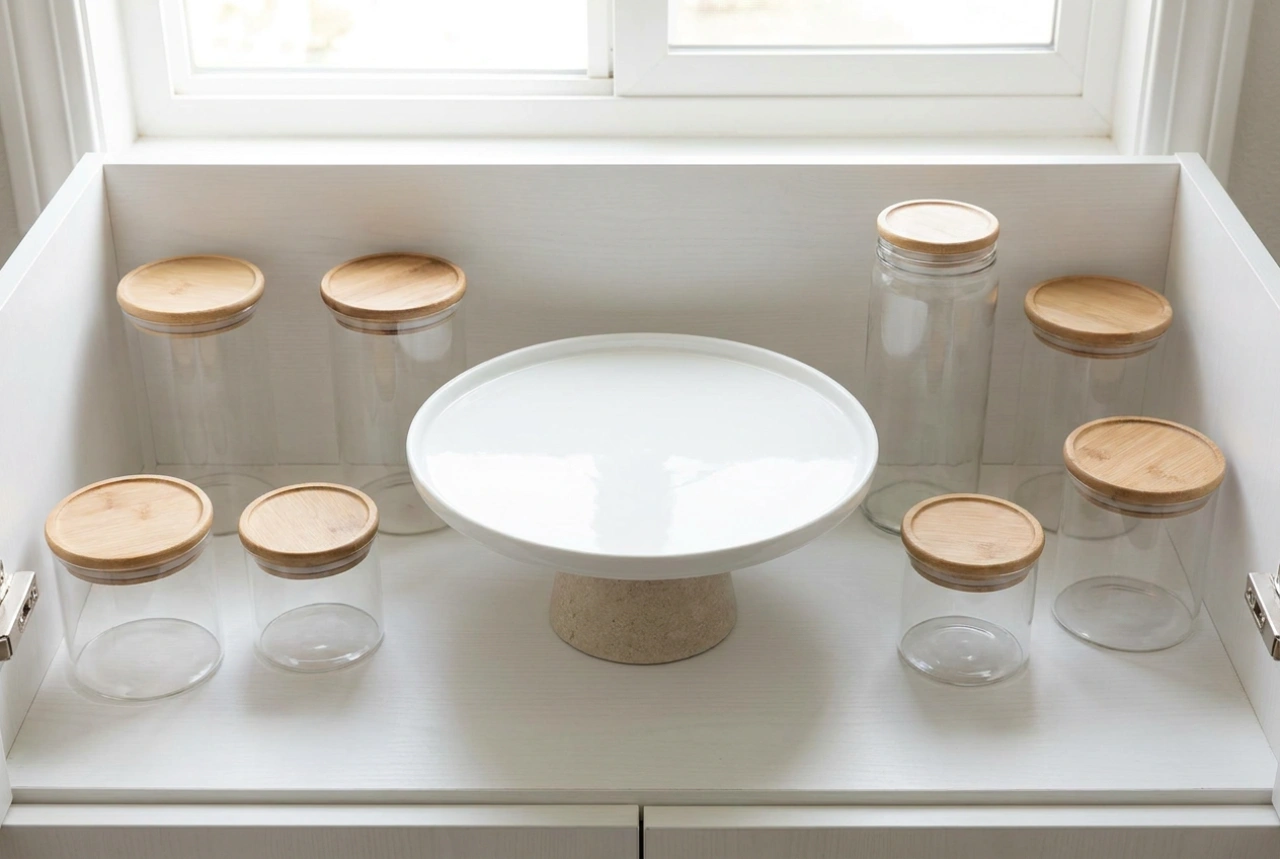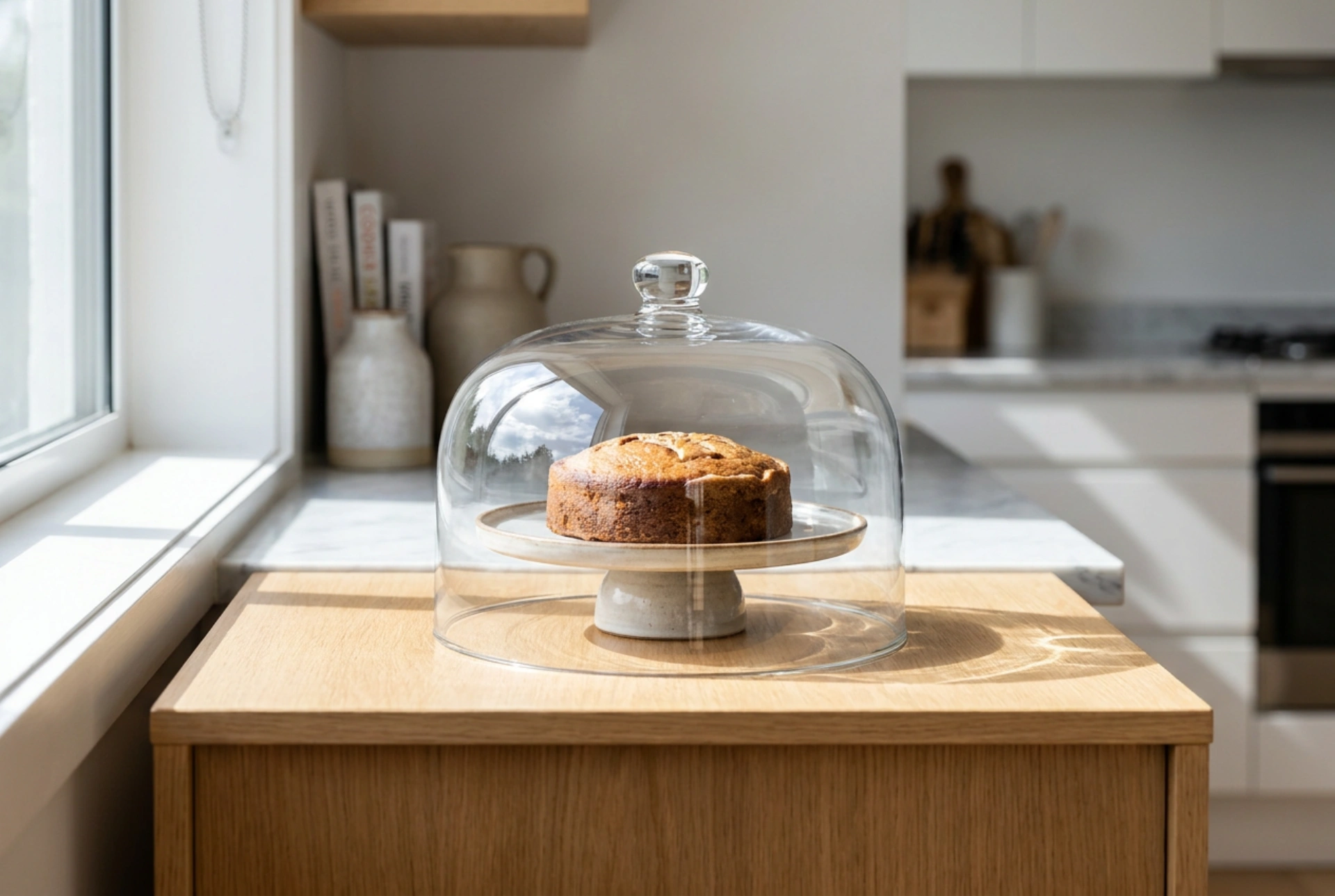


A glass cake dome is both a beautiful kitchen centrepiece and a functional shield against dust and pests, yet maintaining its pristine, streak-free appearance and hygienic interior requires a systematic approach to temperature, moisture, and material chemistry.
The Physics of Condensation and Humidity Management
When warm baked goods are placed under a glass dome, they release moisture in the form of water vapour. As this warm air rises and hits the cooler glass surface, it loses heat energy and condenses back into liquid droplets. This high-humidity environment accelerates the growth of mould and degrades the texture of delicate crusts, making them soggy.
To prevent condensation, always allow cakes, pastries, or bread to cool completely to room temperature before placing them under the dome. For items with high moisture content, placing a small sheet of unbleached parchment paper or a reusable food-grade silicone mat beneath the baked good acts as a barrier, preventing oils and moisture from seeping directly into the base plate, particularly if the base is made of wood or unglazed ceramic.
The Chemistry of Eliminating Grease and Water Spots
Glass is highly prone to showing greasy fingerprints and water spots, which are mineral deposits left behind when tap water evaporates. To clean a glass dome effectively without scratching, you must use the correct order of operations and chemical solutions. Avoid harsh scrubbing pads; a soft microfibre cloth is sufficient to lift surface oils.
To clean your glass dome thoroughly, follow these steps:
- Wash: Use warm (not hot) water mixed with a mild, fragrance-free surfactant (dishwashing liquid) to break down fats and surface grease.
- Rinse: To neutralise mineral deposits and restore absolute clarity, rinse the glass with a solution of warm water and a small amount of acetic acid (white vinegar) in a ten-to-one ratio. The acid dissolves the alkaline calcium carbonate deposits left by hard tap water.
- Dry: Never let the glass air-dry, as this allows gravity and evaporation to create unsightly water spots. Instead, immediately dry the dome with a clean, dry waffle-weave microfibre cloth or a lint-free linen tea towel. Use firm, circular motions to buff the surface to a high shine.
Managing Porous Bases: Wood and Ceramic Care
Many cake stands feature bases made of wood or ceramic, which require entirely different maintenance protocols than glass. Wood is highly porous and can absorb fats, moisture, and yeast spores, leading to structural warping, cracking, or bacterial accumulation.
Wooden bases should never be submerged in water. Clean them by wiping the surface with a damp cloth wrung out in warm water and a drop of neutral soap, then dry immediately with a clean towel. To preserve the wood's moisture barrier, periodically rub a food-grade mineral oil into the grain using a soft cloth, allowing it to cure for several hours before wiping away the excess. This prevents fats from baked goods from staining the wood. Glazed ceramic can be washed similarly to glass, but avoid sudden thermal shocks (moving from a cold fridge to a hot wash), which can cause the glaze to develop fine cracks, known as crazing.
Deodorising and Safe Storage
Baked goods containing dairy, eggs, or spices can leave lingering volatile organic compounds (VOCs) that cling to the interior of the dome. To eliminate these stubborn odours, create a paste of sodium bicarbonate (bicarbonate of soda) and water. Sodium bicarbonate is a mild alkali that chemically neutralises acidic odour molecules. Apply the paste gently to the inside of the dome or base, let it sit for ten minutes, and rinse thoroughly with cool water.
When storing the cake stand, place a thin layer of felt or a clean linen napkin between the glass dome and the base plate. This prevents microscopic vibrations from scratching the glass rim and eliminates the risk of vacuum seal suction, which can make removing the dome difficult and increase the chance of accidental breakage.