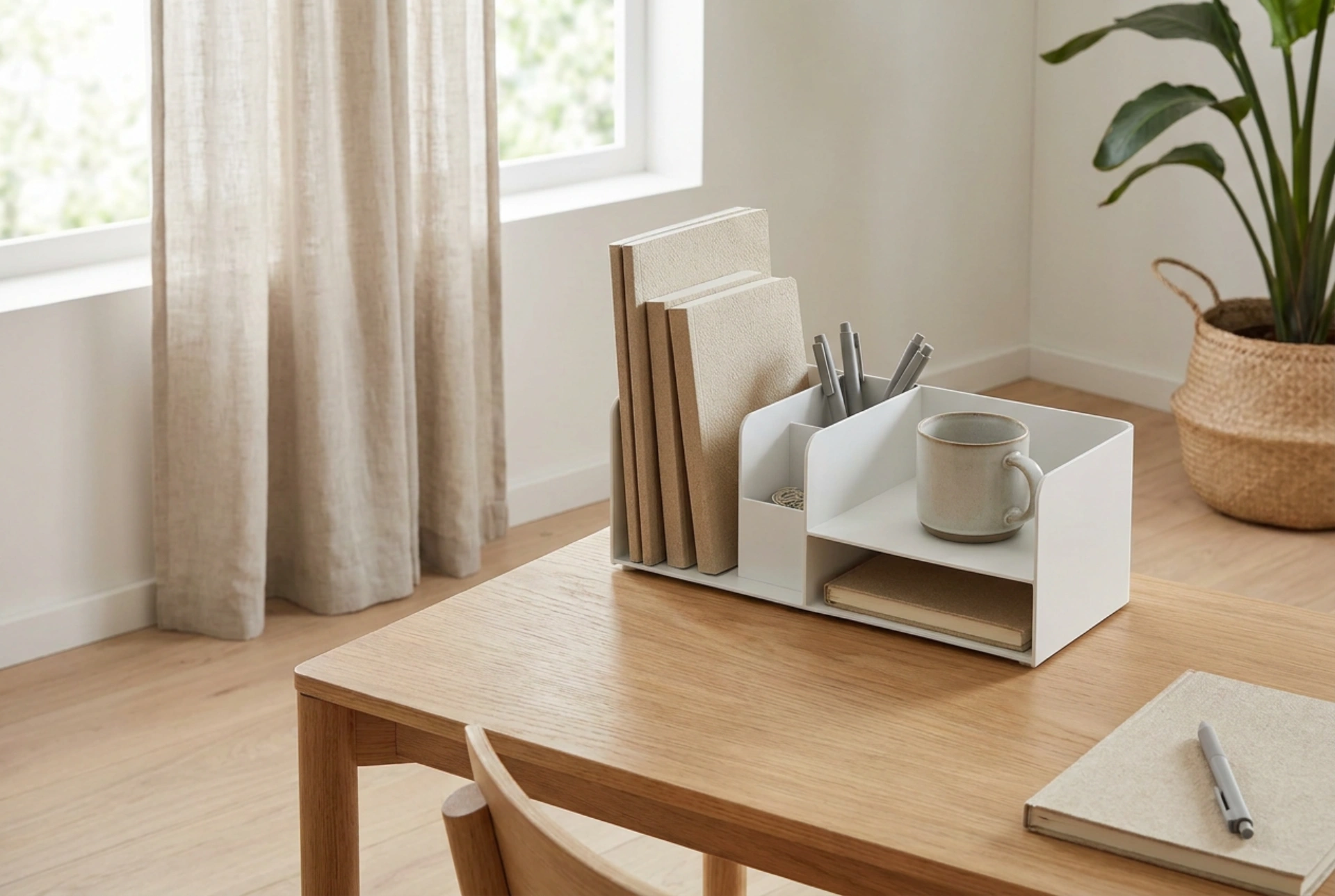


An optimized study desk minimizes cognitive load by ensuring that essential tools are immediately accessible while secondary items remain out of sight.
The Psychology of Friction and Proximity
Every time you search for a pen, paperclip, or sticky note, you break your mental focus. In productivity science, this is known as friction. To eliminate it, you must organize your drawer organizer based on the frequency of use. Items you touch multiple times an hour belong in the most accessible, dominant zones, while tools used once a day or once a week belong in deeper or lower compartments.
Mapping Your Organizer: The Three-Zone System
Divide your drawer organizer into three distinct spatial zones based on physical reach and visual priority.
Zone 1: The Immediate Access Zone (Top Drawers or Front Compartments)
This area is reserved for the absolute essentials of your current study session. Typically, this includes two writing instruments (such as a black or blue gel pen and a pencil), a high-quality eraser, and a single block of adhesive notes. Keeping this zone sparse prevents visual clutter, which directly correlates with reduced anxiety and improved concentration.
Zone 2: The Secondary Utility Zone (Middle Drawers)
This compartment houses tools required for specific tasks rather than continuous writing. Place your highlighters, correction tape, index cards, and a ruler here. Grouping these items together ensures that when you transition from reading to active summarizing, you can retrieve the necessary tools in a single, fluid motion without rummaging.
Zone 3: The Archive and Supply Zone (Bottom or Back Drawers)
The deepest sections of your organizer are reserved for replacements and low-frequency tools. This includes spare lead refills, ink cartridges, paperclips, a compact stapler, and adhesive tape. Because you rarely need these items mid-sentence, storing them out of your primary line of sight keeps your immediate working environment clean.
Material Weight and Ergonomics
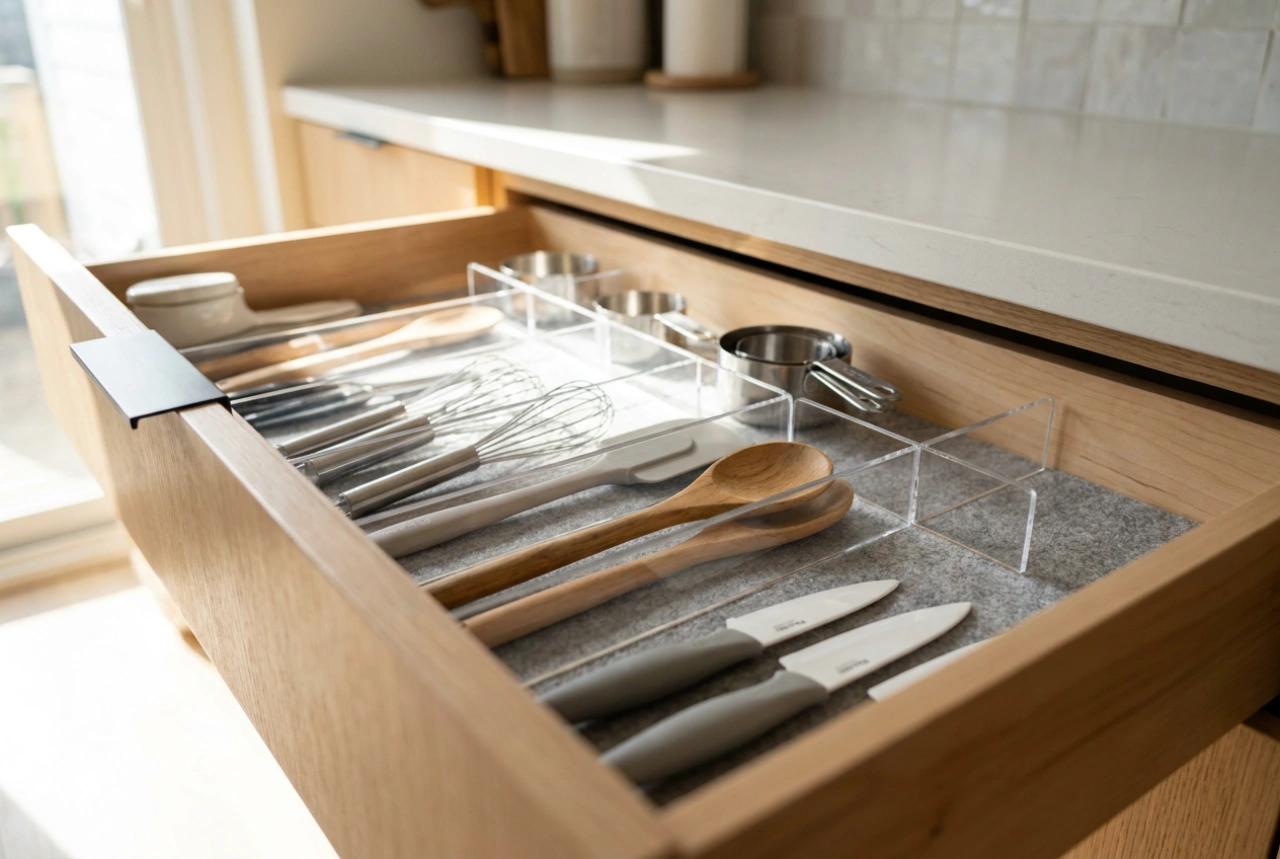
The physical properties of the items dictate their placement within the organizer. Always place heavier items, such as metal staplers or thick stacks of index cards, in the lowest compartments. This lowers the center of gravity of the organizer, preventing it from sliding or tipping when you pull out a drawer. Additionally, line plastic compartments with a thin layer of felt or silicone sheeting. This simple modification dampens acoustic vibration, eliminating the distracting clatter of rolling pens when you work.
Maintaining the System with the Five-Second Rule
An organization system is only effective if it is sustainable. Implement a strict rule: every tool must be able to be returned to its designated compartment within five seconds using only one hand. If a compartment is too packed or difficult to open, the system will fail. Periodically audit your organizer to purge dried-out pens, broken leads, and accumulated paper scrap to maintain optimal physical and mental workflow.