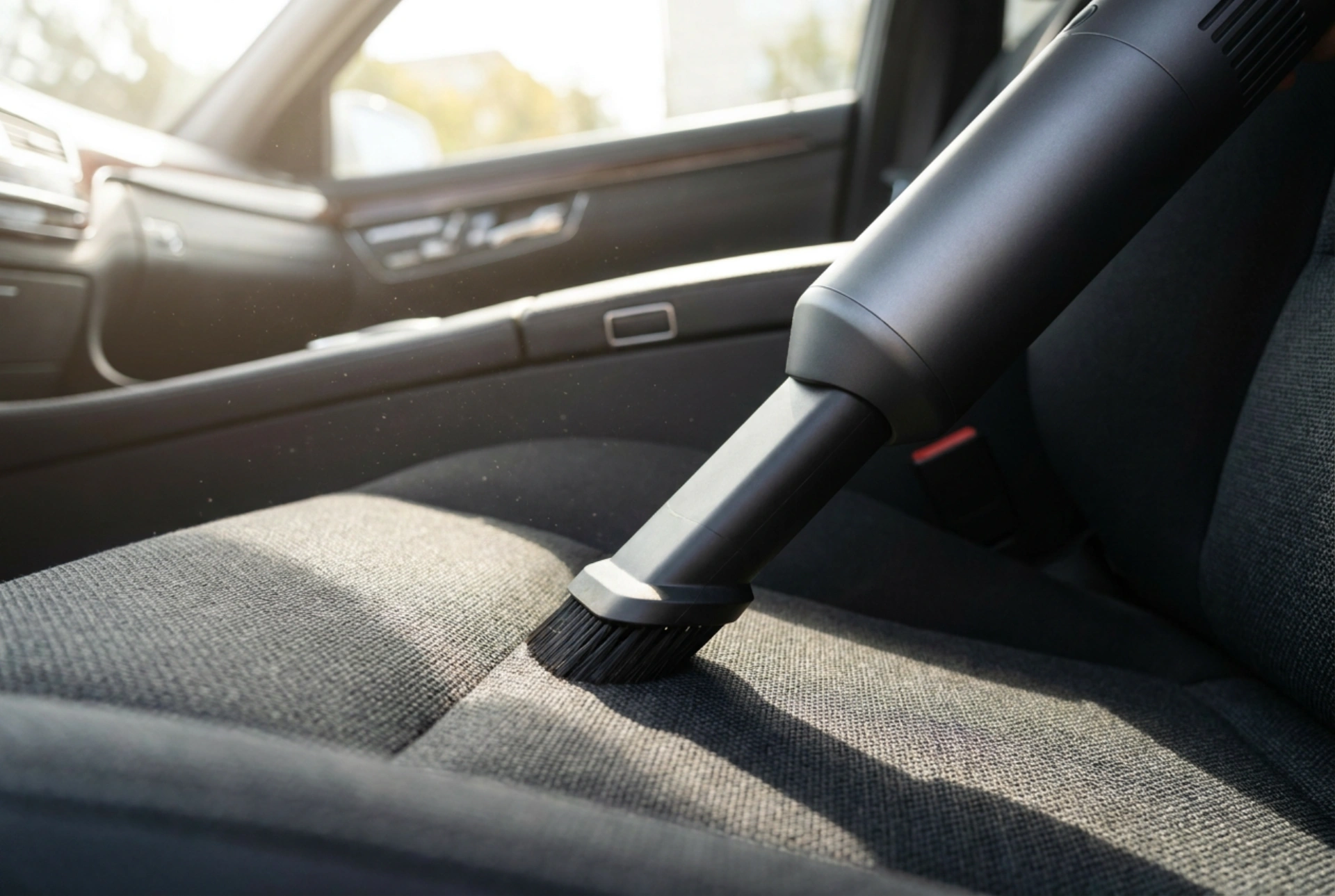


Achieving a professional-grade clean in your vehicle using a cordless vacuum cleaner requires understanding the physical forces at play, specifically mechanical agitation, static electricity, and airflow velocity. Because cordless models operate with finite battery capacity and highly variable air watt ratings, success depends on a strategic approach and optimal mechanics rather than brute force.
The Physics of Car Dust: Static Charge and Fiber Friction
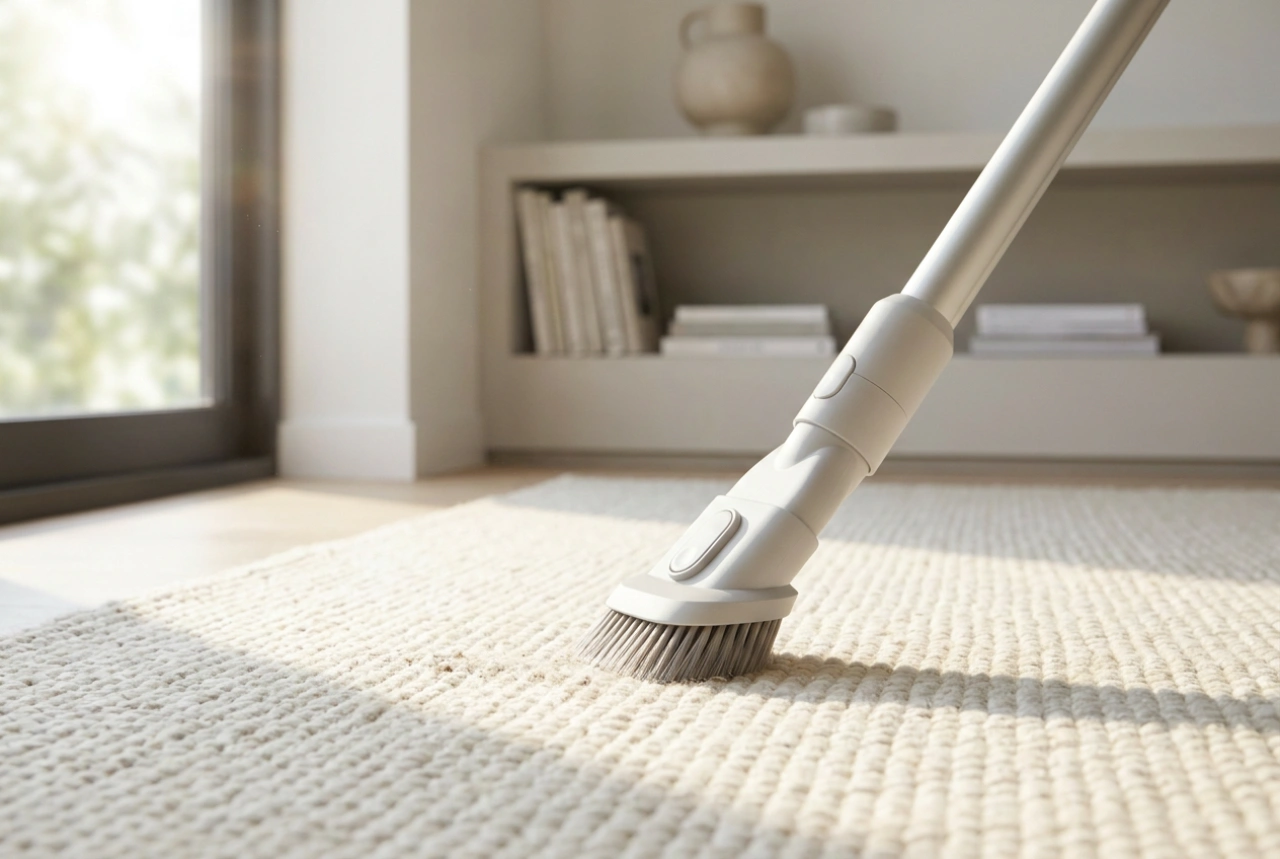
Car interiors are dominated by synthetic polymers, such as polyester upholstery and nylon carpets. When passengers slide in and out of seats, friction generates a triboelectric effect, building up a static electrical charge on the fabric surfaces. This electrostatic charge actively attracts and binds fine dust particles, making them resistant to suction alone. To overcome this, physical agitation is necessary. By using a stiff-bristled utility brush in a circular motion, you physically break the electrostatic bonds holding the dust to the fibres. Once freed, these airborne particles can easily be captured by the vacuum’s nozzle. Additionally, cordless vacuum cleaners rely on compact, high-RPM digital motors. These motors generate high static lift but lower cubic feet per minute (CFM) of airflow compared to large industrial canister models. To compensate for lower CFM, you must maximize velocity pressure by keeping the nozzle close to the surface, concentrating the air stream directly on the dirt.
The Top-to-Bottom Strategy and Gravity
An efficient vacuuming sequence must work in harmony with gravity. Starting from the floor and moving upwards is a common error that leads to double-handling. Begin by clearing all loose items and removing the floor mats, placing them aside for separate treatment. Start vacuuming at the highest point: the rear parcel shelf, followed by the headliner (using extremely light pressure to avoid delaminating the adhesive), and then the dashboard. As you brush dust off these upper surfaces, gravity pulls the larger particles down onto the seats and floor. Next, clean the seat upholstery, paying close attention to the seams and crevices where crumbs and organic debris accumulate. Finally, address the footwells. By following this top-to-bottom sequence, you ensure that any dislodged debris falling from upper surfaces is systematically captured in the final passes, preserving precious battery run-time.
Nozzle Mechanics and Agitation Techniques
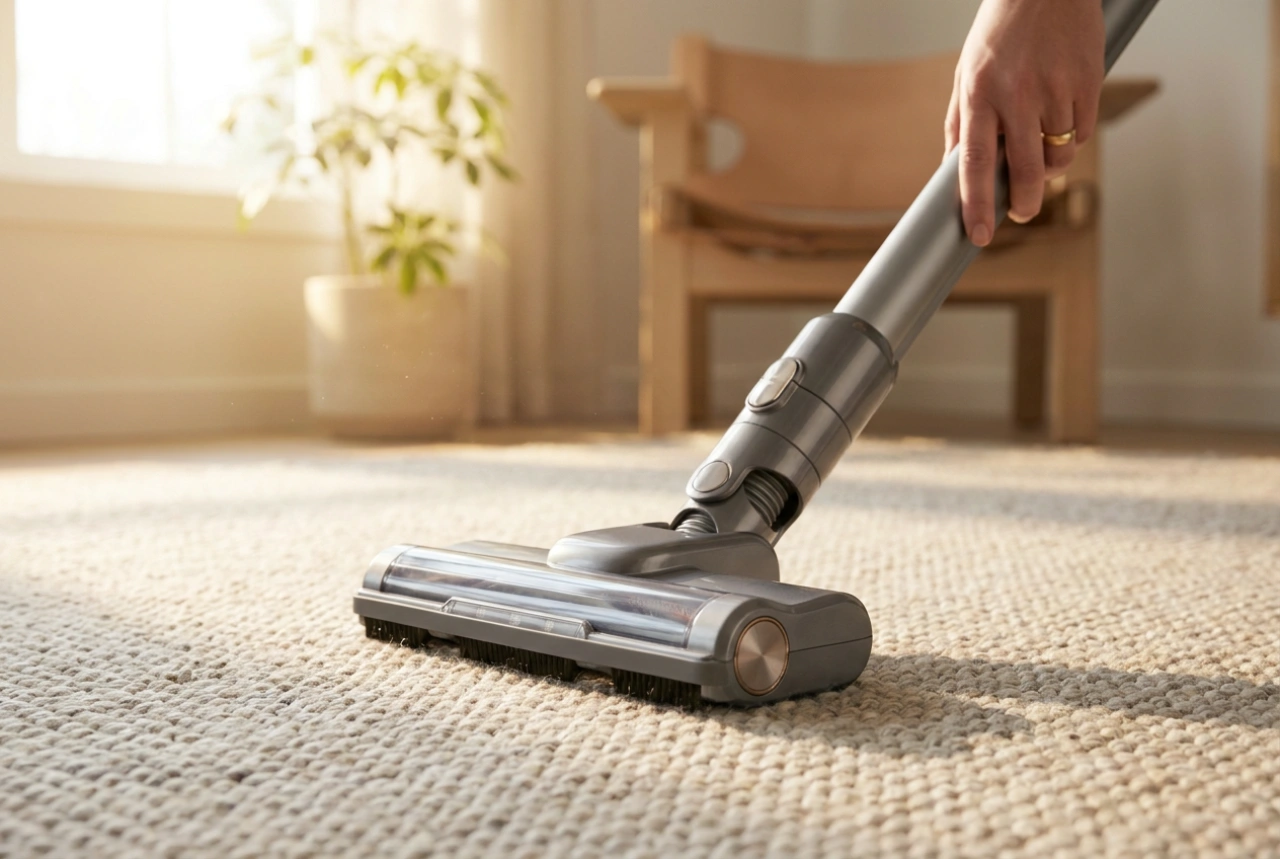
To extract deeply embedded silica sand and soil from thick car carpets, relying solely on vacuum suction is inefficient and quickly drains a cordless battery. Instead, employ the "rake and pull" technique. Using a crevice tool or a small, firm-bristled brush attachment, tilt the tool at a 45-degree angle. Press the nozzle firmly into the carpet pile and pull it towards you in short, deliberate strokes. This mechanical action compresses the carpet fibres, squeezing the embedded grit to the surface where the localized high-velocity airflow can capture it. For stubborn pet hair, which weaves itself into the woven loops of fabric, use a rubber-bladed squeegee tool or a specialized rubberised nozzle. The high coefficient of friction of rubber pulls the hair out of the weave, clumping it together for easy extraction. Never scrub back and forth erratically; systematic, unidirectional strokes prevent the fibres from fraying and maintain consistent airflow dynamics.
Optimising Cordless Efficiency and Filter Maintenance
The performance of a cordless vacuum is directly linked to the state of its filtration system. As fine dust coats the primary filter, it creates a physical barrier that restricts airflow. In a cordless system, a 20% reduction in airflow can lead to a 50% drop in cleaning efficiency, forcing you to use high-power modes that deplete the battery within minutes. To prevent this, empty the dust canister frequently—ideally when it reaches half capacity—and shake out the fine dust filter after every cleaning session. Wash the filter regularly with cold water, avoiding detergents that can degrade the synthetic fibres, and allow it to dry completely for at least 24 hours to prevent moisture from reaching the high-speed motor. Additionally, manage your battery thermals: avoid using the "max" or "turbo" mode continuously, as the excessive heat generated reduces battery longevity and limits run-time. Use standard power for loose debris on hard plastics and reserve high-power mode strictly for deep carpet extraction.