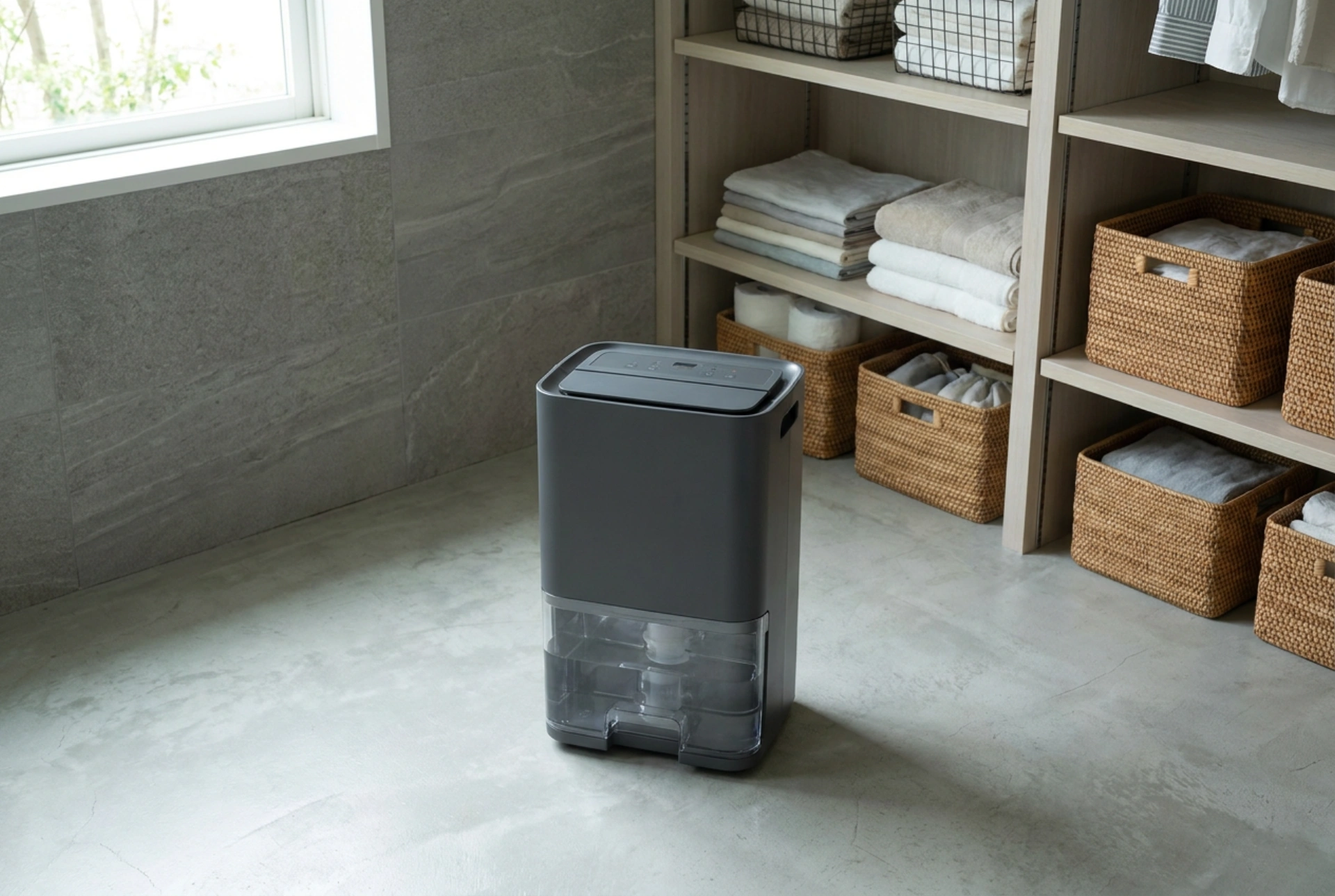


Using a chemical or mechanical moisture absorber in a damp basement can temporarily lower humidity levels, but deploying it without addressing the underlying source of water ingress only masks a structural issue.
The science of basement dampness and how absorbers work
Basements are naturally prone to high humidity due to their subterranean location. Surrounding soil transfers moisture through masonry walls via capillary action, a process known as rising damp or lateral penetration. Additionally, when warm, humid air from the outside enters the cool basement, it hits its dew point on cold concrete surfaces, leading to condensation.
Moisture absorbers typically rely on hygroscopic salts, such as calcium chloride, which physically attract and bind water molecules from the air, turning them into a liquid brine. While highly effective at drying out a small, enclosed volume of air, these passive devices cannot compete with a continuous thermodynamic process like active water seepage or heavy condensation. Understanding this limitation is key to maintaining a structurally sound home.
Diagnostic steps before deploying dehumidification
Before relying on moisture traps, you must determine whether your humidity problem is caused by internal condensation or external water penetration. A simple condensation test can clarify this:
- Dry a small patch of the basement floor or wall with a hairdryer.
- Tape a square piece of heavy plastic foil tightly over the area, sealing all edges with waterproof tape.
- Leave the foil in place for forty-eight hours.
- Inspect the plastic: if water droplets have formed on the underside (facing the wall), moisture is penetrating from the outside. If droplets are on the outer surface, the issue is condensation from humid ambient air.
If the test indicates external penetration, relying solely on moisture absorbers will only mask the deterioration of your masonry. In such cases, structural repairs, exterior waterproofing, or drainage corrections are necessary.
How to correctly position and use moisture absorbers
For mild condensation or seasonal dampness, chemical absorbers can be highly beneficial when placed and maintained with scientific precision.
Optimize airflow and placement
Hygroscopic salt crystals require constant air contact to function. Place the absorber unit on a flat, stable surface at least thirty centimeters away from walls and furniture to ensure unobstructed convective airflow. Avoid placing the units near open windows or drafts, as they will simply draw moisture from the outdoor air, saturating the chemical charge prematurely without drying the basement structure.
Manage the temperature variable
Chemical moisture absorption slows down significantly as temperatures drop. In cold basements below ten degrees Celsius, calcium chloride crystals lose their efficiency. In these conditions, mechanical dehumidifiers or mild, controlled heating of the space is required to raise the dew point and allow the desiccant to work effectively.
Establishing a long-term maintenance routine
Never leave a saturated moisture absorber unattended. Once the hygroscopic crystals have fully dissolved into the reservoir, the chemical reaction stops, and standing water in the container can evaporate back into the basement air. Empty the collected liquid regularly and wash the reservoir with clean water to prevent salt buildup, which can corrode nearby metallic surfaces or damage concrete floors if spilled.