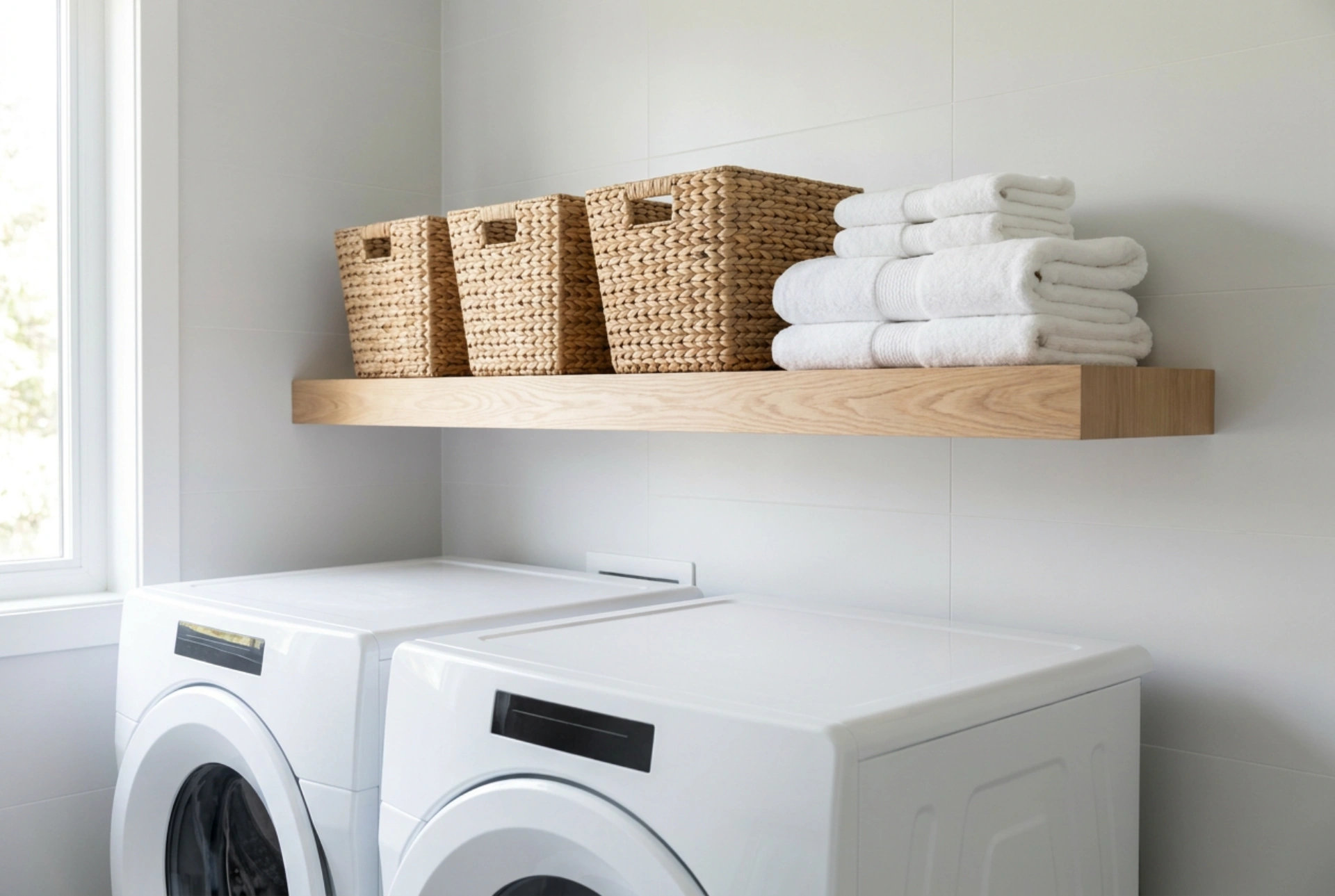


Maximising the vertical space above a washing machine and tumble dryer requires careful consideration of structural stability, material science, and ergonomics. This guide outlines how to design and install shelving that withstands dynamic vibrations, high humidity, and heavy chemical loads while maintaining a clean, organised workspace.
Understanding Appliance Dynamics: Vibrations and Ventilation Clearances
Washing machines operate on high-speed spin cycles that generate significant centrifugal forces and kinetic energy. These forces translate into mechanical vibrations that can easily transfer to adjacent walls or overlapping furniture. When planning a shelf directly above these appliances, a physical clearance of at least 50 to 75 mm must be maintained between the top of the machine and the underside of the shelf. This buffer zone prevents the appliance from striking the shelf structure during unbalanced load cycles.
Furthermore, condensation dryers and washing machines release heat and moisture during operation. Restricting airflow above these units can lead to heat build-up, reducing appliance efficiency and accelerating the degradation of nearby wall finishes. A generous air gap allows hot, moist air to dissipate through natural convection, safeguarding both your appliances and your cabinetry.
Material Selection: Resisting Moisture and Chemical Exposure
The microclimate directly above a laundry set is characterised by fluctuating relative humidity and potential exposure to alkaline substances like detergents. Standard medium-density fibreboard (MDF) or untreated softwoods are highly hygroscopic; they readily absorb atmospheric moisture, leading to swelling, warping, and eventual structural failure. For long-term durability, materials must be selected based on their resistance to vapour and chemical spills.
- Sealed Hardwood: Oak or beech shelves must be treated with a high-performance, water-resistant polyurethane sealer or marine varnish to block moisture ingress into the wood grain.
- Phenolic Compact Laminates: Highly dense and completely impervious to water, these materials do not delaminate or support mould growth, making them ideal for high-humidity zones.
- Exterior-Grade Plywood: Utilising water-boil-proof (WBP) adhesives, this material offers excellent structural strength and resistance to delamination, provided the edges are thoroughly sealed.
Structural Load-Bearing and Anchoring Mechanics
Shelves in utility zones often hold heavy liquid detergents, fabric softeners, and baskets of damp laundry, resulting in substantial static loads. When paired with the subtle, continuous micro-vibrations from nearby appliances, the mounting system faces both shear and tension forces. Securing brackets requires a precise understanding of your wall substrate.
In solid masonry walls, expansion anchors or heavy-duty nylon wall plugs provide exceptional grip by friction against the brick or concrete. For stud walls (timber framing behind plasterboard), securing brackets directly into the wooden studs using heavy-duty wood screws is imperative. Relying solely on hollow-wall plasterboard fixings is risky, as continuous micro-vibrations can gradually enlarge the plasterboard drill holes, causing the fixings to loosen over time. Heavy-duty steel brackets with multiple screw points help distribute the load evenly across the vertical plane.
Optimal Ergonomics and Order of Operations
A functional shelf layout is determined by frequency of use and the physical weight of stored items. Heavy containers, such as large bottles of laundry detergent or oxygen bleach, should be stored on the lowest shelf to minimise the lift height and lower the centre of gravity of the shelving system. This reduces the mechanical leverage on the wall brackets in case of accidental overloading.
Dry, lightweight items like folded towels and empty baskets can occupy higher shelves. When organising cleaning agents, store liquids in secondary containment trays (such as plastic or silicone liners) on the shelf. This prevents corrosive chemical spills from directly contacting wood or metal surfaces, protecting the material integrity of your storage system over time.