

Maintaining a professional espresso machine in pristine hygienic condition is critical for both the longevity of the equipment and the sensory quality of the brew. Coffee beans contain lipids, proteins, and organic acids that, when exposed to high temperatures and oxygen, degrade and form stubborn, rancid deposits inside the group heads and portafilters.
The Chemistry of Coffee Oils and the Backflushing Process
During extraction, coffee beans release essential oils and lipids. Under the high pressure (typically 9 bar) and temperature (around 90 to 95 degrees Celsius) of a professional machine, these oils coat the shower screens, internal pre-infusion chambers, and three-way solenoid valves. Over time, heat causes these organic compounds to polymerise, creating a bitter, sticky varnish that ruins flavour and clogs delicate water channels.
To dissolve these polymerised oils, water alone is insufficient because lipids are hydrophobic. A specialised, oxygen-based backflushing powder is required. When dissolved in hot water, this powder releases active oxygen and alkaline agents that break down the lipid chains through saponification, converting them into water-soluble compounds. Backflushing should be performed daily by inserting a blind basket into the portafilter, adding the cleaning agent, and engaging the pump in 10-second intervals. This forces the pressurised cleaning solution backwards through the group head and out of the discharge valve, stripping away the accumulated oils.
Managing Milk Protein and Fat Buildup in Steam Wands
Milk is a complex emulsion of water, fats, and proteins such as casein and whey. When steam is injected into milk, the temperature must be carefully monitored. Above 65 degrees Celsius, proteins denature, forming tough, insoluble films that bake onto the hot stainless steel surface of the steam wand. If not purged immediately, milk is drawn back into the wand as the steam cools and creates a vacuum, providing a perfect breeding ground for bacteria.
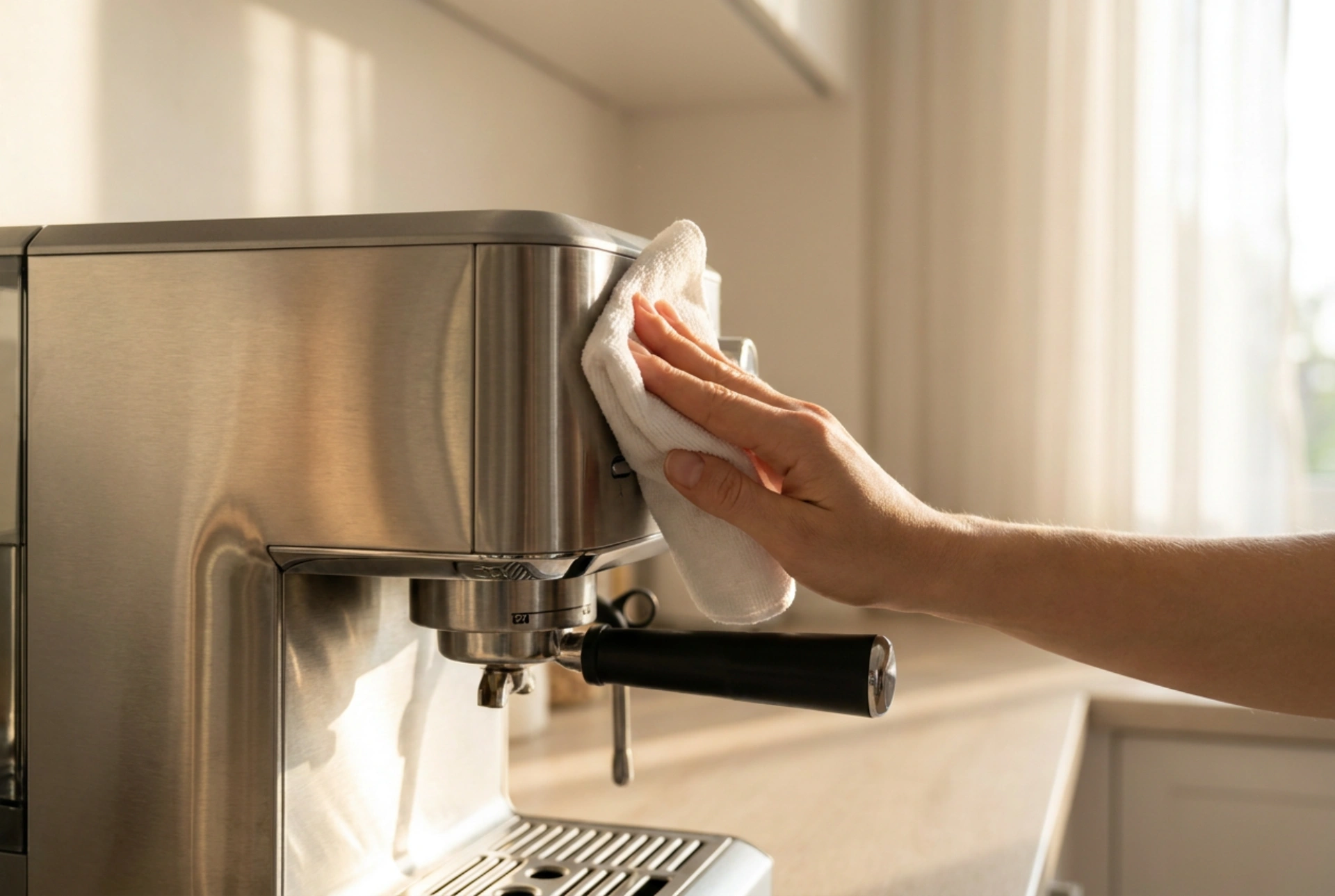
Preventative hygiene requires two steps. First, the steam wand must be purged before and immediately after every use, followed by a thorough wipe with a damp, clean microfibre cloth to prevent the milk from drying. Second, a daily deep clean using a specialised milk system cleaner is essential. These cleaners use a blend of surfactants and chelating agents to dissolve stubborn milk fats and proteins. Alternating between alkaline cleaners to dissolve proteins and acidic cleaners to prevent milk stone or calcium-protein deposits ensures the steam paths remain completely sterile.
Scale Control: The Physics of Mineral Deposition
Water heated inside a professional espresso machine copper or stainless steel boiler undergoes chemical changes. Soluble calcium and magnesium bicarbonate decompose under heat, releasing carbon dioxide and forming insoluble calcium carbonate, commonly known as limescale. This scale acts as an thermal insulator, forcing the heating elements to work harder, and can clog the flow restrictors that regulate brewing pressure.
To combat scale without corroding the internal copper, brass, or stainless steel components, a controlled descaling procedure using mild organic acids, such as citric or sulfamic acid, is necessary. These acids donate hydrogen ions to the carbonate, converting it back into highly soluble carbon dioxide gas and water-soluble calcium salts. It is vital to use the correct concentration and temperature to prevent the acid from eating away at the boiler walls or destroying delicate rubber gaskets.
Daily Mechanical Cleaning of Group Heads and Portafilters
Chemical cleaning must be complemented by mechanical action. At the end of each operational day, portafilters should be disassembled by removing the filter baskets. Both parts must be soaked in hot water mixed with a coffee-oil solvent to dissolve any remaining residues. A soft-bristled group head brush must be used to scrub the rubber group gaskets and the brass diffusers, removing trapped coffee grounds that prevent a proper portafilter seal.