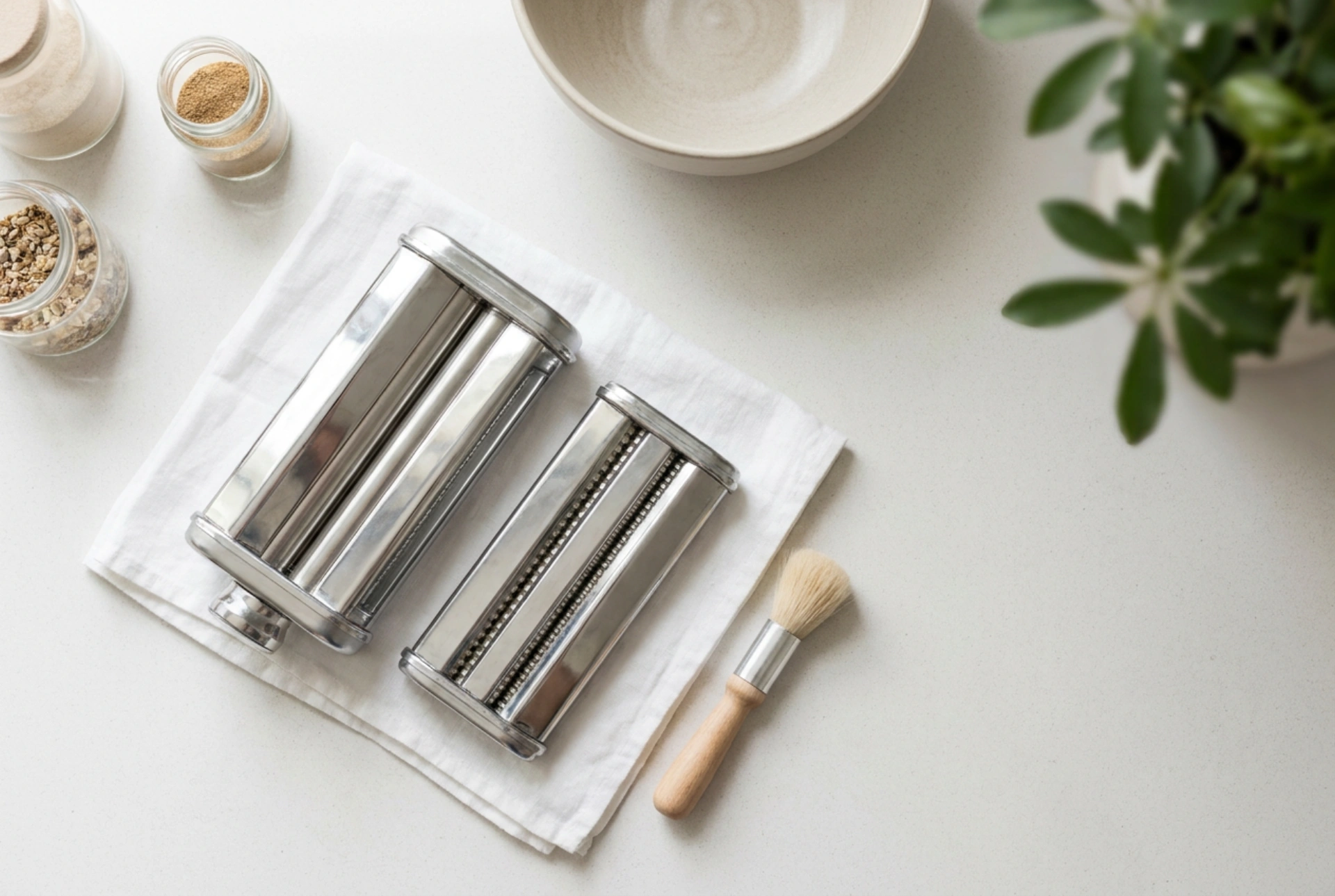


Maintaining a manual rolling dough machine in pristine condition requires a specific approach that avoids water to prevent internal rust and gear binding. Understanding the mechanical components and the physical behavior of flour moisture is key to preserving the smooth operation of your kitchen equipment.
The Golden Rule: Why Water is the Enemy
The internal drive gears, rollers, and scraper blades of a dough roller are typically constructed from chrome-plated steel or carbon steel. Introducing water into these tight mechanical tolerances triggers oxidation, leading to rust that can seize the gears and contaminate future dough batches. Water also mixes with residual flour particles inside the casing, creating a sticky paste that hardens into a cement-like obstruction once dry. This hardened paste increases friction, placing unnecessary strain on the manual crank or motor attachment.
Step-by-Step Dry Cleaning Technique
The most effective way to clean your rolling machine is to allow any remaining dough fragments to dry completely before attempting removal. Once dried, the flour loses its elasticity and can be easily dislodged without smearing.
1. Dislodging and Brushing
Begin by securing the machine to your work surface. Rotate the crank handle slowly in a clockwise direction while using a stiff, dry natural-bristle pastry brush to sweep flour out of the rollers and receiving tray. The mechanical movement helps eject hidden particles from the scraper plates located directly beneath the main rollers.
2. Using the Dough Cleansing Method
To capture fine dust and microscopic debris from deep within the rolling mechanism, prepare a small piece of dry, firm dough. Roll this sacrificial dough through the machine several times, adjusting the thickness settings from the widest to the narrowest. The physical tackiness of the fresh dough acts as a magnet, lifting away loose flour, metal micro-shavings, and residual oils from the roller surfaces.
3. Clearing the Scraper Blades
Turn the machine upside down to access the underside. Use a thin wooden skewer or a toothpick to carefully scrape along the edges of the metal scraper blades. Avoid using metal knives or screwdrivers for this task, as they can easily scratch the polished rollers, creating microscopic grooves where future dough will stick.
Lubrication and Long-Term Maintenance
Over time, the gears may begin to squeak or feel stiff during rotation. To restore smooth mechanical action, apply a small drop of food-grade mineral oil to the outer ends of the rollers where they meet the housing. Do not use vegetable oils, as they oxidize and become highly viscous and sticky over time, eventually clogging the gears. After applying the mineral oil, turn the crank handle several times to distribute the lubricant evenly, then wipe away any excess oil with a clean microfiber cloth to prevent it from transferring to your dumpling dough.