

Removing stubborn brown tea stains from borosilicate glass teapots requires understanding the chemistry of tannin deposits rather than relying on harsh abrasive scrubbers that can permanently scratch the delicate glass surface.
Why Tea Stains Form on Glass Surfaces
The unsightly brown film that develops inside your glass teapot is not merely dried tea; it is a complex chemical matrix. Tea leaves are rich in polyphenols, specifically tannins, which are organic compounds that bind readily to minerals present in municipal tap water. When hot water extracts these tannins, they react with dissolved calcium and magnesium ions. This reaction precipitates a resilient organomineral polymer that adheres strongly to the smooth surface of the glass.
Borosilicate glass, while highly thermal-shock resistant, possesses microscopic surface irregularities. Over time, these mineral-tannin complexes settle into these micro-crevices, creating a layer that resists standard dishwashing liquid. To remove this layer safely, we must break the chemical bonds holding the matrix together without compromising the physical integrity of the glass.
The Role of Mild Acids in Dissolving Mineral Bonds
To dismantle the calcium-tannin structure, we must introduce an acid that can chelate the calcium ions, making the deposit soluble again. Two highly effective, household-safe weak acids are acetic acid (found in white vinegar) and citric acid. Citric acid is generally preferred for kitchenware as it is completely odourless and highly effective at lower concentrations.
When you introduce a citric acid solution to the stained glass, the acid donates hydrogen ions that displace the calcium from the tannin complex. Once the calcium ions are sequestered, the organic tannin compounds lose their binding structure and easily detach from the glass surface. This chemical dissolution eliminates the need for forceful scrubbing, which is the primary cause of micro-scratches on glass vessels.
Using Non-Abrasive Physical Agents for Stubborn Residue
For particularly old or thick deposits, chemical action alone might require prolonged soaking. You can accelerate this process safely using sodium bicarbonate (baking soda). Sodium bicarbonate acts as an extremely mild, water-soluble abrasive. On the Mohs hardness scale, sodium bicarbonate rates at approximately 2.5, whereas borosilicate glass ranges between 5.5 and 6. This significant difference ensures that sodium bicarbonate crystals can mechanically dislodge the loosened stains without any risk of scratching the glass substrate.
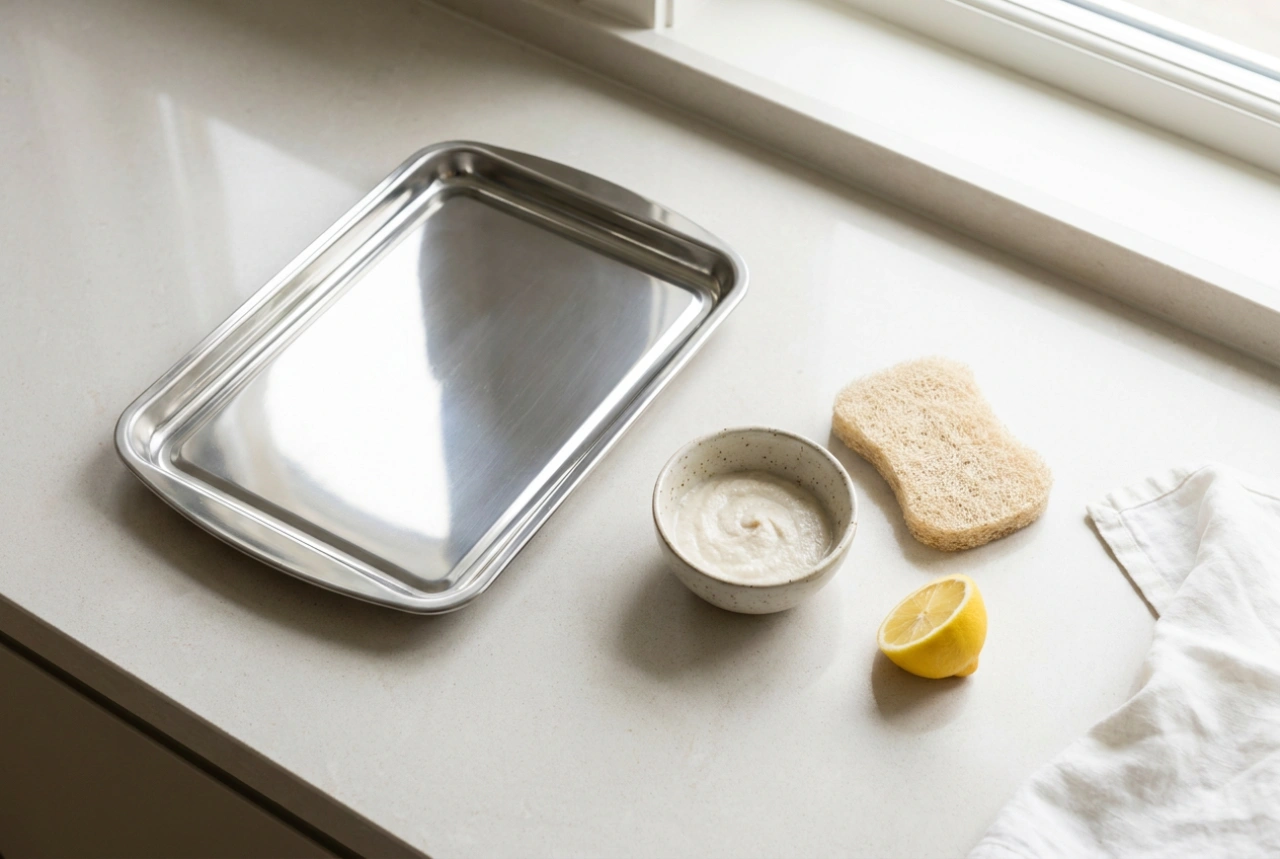
To use this method, you should create a thick paste using sodium bicarbonate and a tiny amount of water. Applying this paste with a soft microfibre cloth or a dedicated silicone sponge allows you to apply targeted physical pressure safely. Avoid using steel wool, stiff nylon brushes, or abrasive scouring pads, as these materials often contain minerals or metals hard enough to scratch the glass, creating permanent dull patches where stains will accumulate even faster in the future.
A Step-by-Step Restoration Protocol
To restore your glass teapot to its original crystal-clear state, follow this precise sequence of physical and chemical operations:
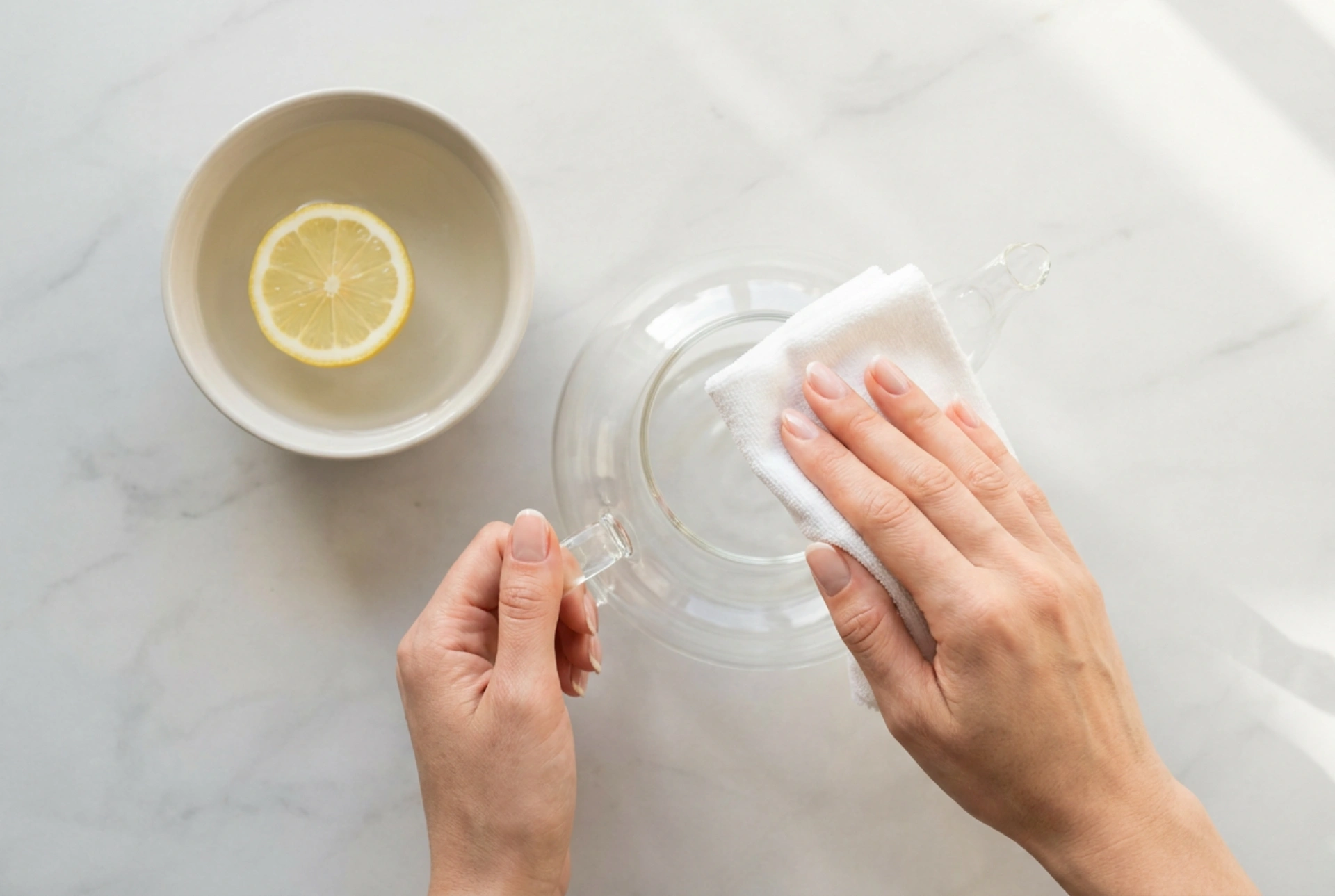
- Step 1: The Acidic Soak. Fill the teapot with warm water at approximately 60°C. Avoid boiling water to prevent thermal stress and excessive evaporation. Dissolve one to two tablespoons of citric acid powder into the water. Allow the solution to react for 20 to 30 minutes. You will observe the brown layer beginning to flake or lighten.
- Step 2: Localised Agitation. Empty the solution, leaving the glass damp. Apply a small amount of sodium bicarbonate paste to a clean, damp microfibre cloth. Gently work the paste over any remaining dark rings around the water line or spout filter. Use circular, light movements.
- Step 3: Thorough Rinsing. Rinse the teapot multiple times with clean water. To prevent the formation of new calcium water spots during drying, perform a final rinse with distilled or demineralised water.
- Step 4: Mechanical Drying. Dry the interior and exterior immediately using a clean, lint-free microfibre cloth. Air-drying can leave mineral rings from evaporating water droplets.
Long-Term Prevention Strategies
Maintaining the clarity of a glass teapot is far easier than restoring it. To minimise tannin build-up, always empty the teapot immediately after use and rinse it with hot water. Leaving tea sitting in the vessel overnight allows the polymerisation process to complete, hardening the stain. Additionally, using filtered or softened water for brewing significantly reduces the concentration of calcium ions, preventing the chemical reaction that forms the stubborn scale in the first place.