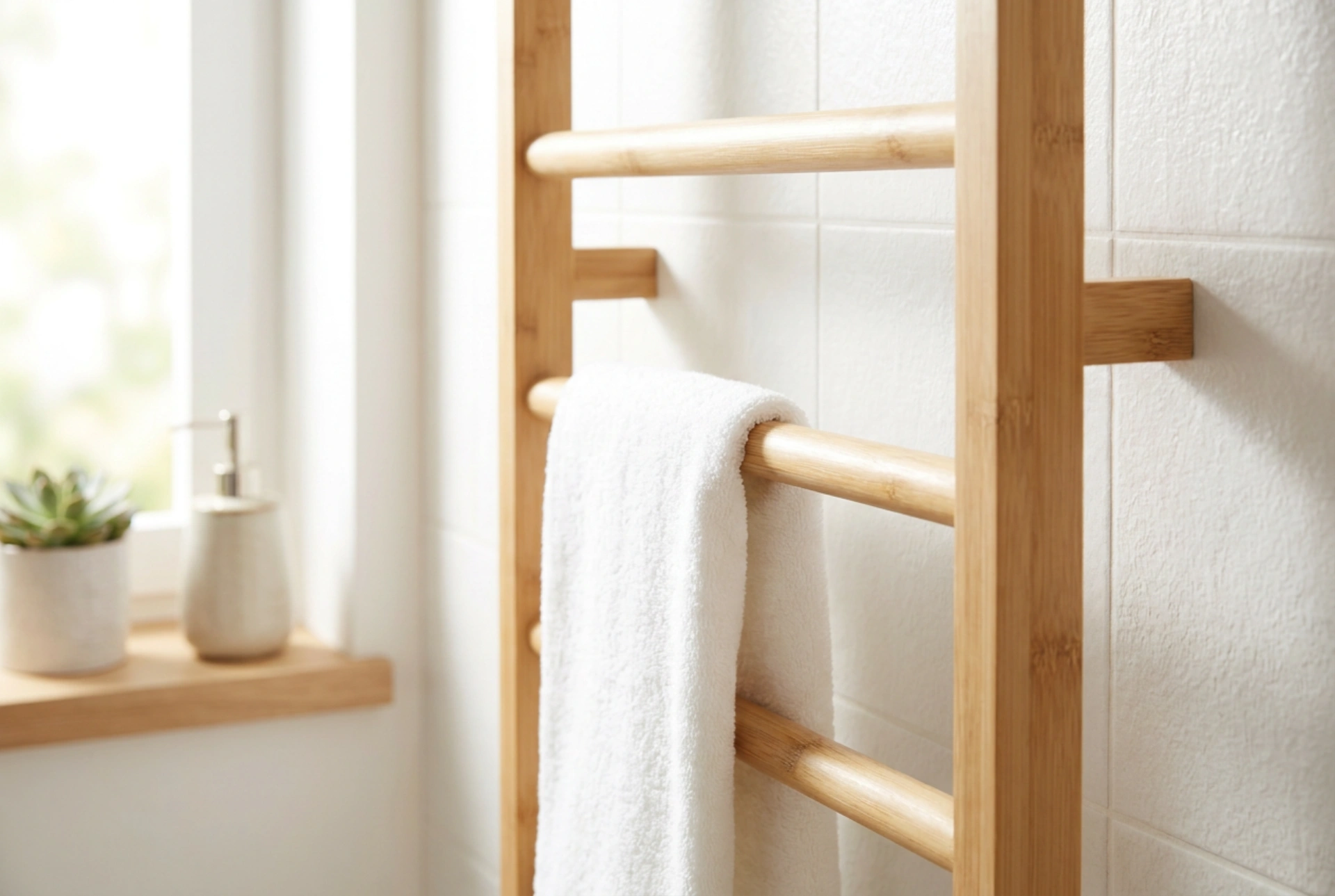


Bamboo towel racks add an elegant, organic touch to modern bathrooms, but surviving in high-humidity environments requires understanding how this unique grass responds to moisture.
The Unique Structure of Bamboo and Moisture
Although often treated like hardwood, bamboo is technically a giant grass. Its anatomical structure consists of dense vascular bundles running longitudinally, surrounded by parenchymal tissue. This composition makes bamboo exceptionally strong along its grain, but also highly anisotropic, meaning it expands and contracts unevenly when exposed to water. In a damp bathroom, raw bamboo absorbs airborne moisture through capillary action. If the material remains saturated, the natural starches and sugars within the fibres become breeding grounds for mould spores and mildew, leading to dark discolouration and structural degradation. Preventing this requires maintaining a protective hydrophobic barrier that seals the porous vascular structure while allowing the material to breathe slightly.
Routine Cleaning and Chemical Compatibility
To clean a bamboo towel rack without stripping its natural protective oils, avoid harsh synthetic detergents, alkaline cleaners, and chlorine-based bleach. Highly alkaline substances break down the lignin that binds the bamboo fibres together, causing the surface to become splintered, dull, and brittle. Instead, use a mild, pH-neutral solution of warm water and a small amount of vegetable-based soap. Wipe the surfaces using a soft, non-abrasive microfibre cloth, following the direction of the natural grain. Physical friction should be minimal; never use steel wool or abrasive scrubbing pads, which create micro-scratches in the protective topcoat and allow moisture to penetrate directly into the inner tissue.
The Mechanics of Drying and Venting
The lifetime of a bamboo rack in a bathroom is determined by the rate of evaporation. After hanging damp cotton towels on the rack, moisture transfers from the fabric to the bamboo frame. To prevent fungal growth, the moisture must evaporate quickly. Ensure your bathroom has adequate ventilation, utilizing mechanical exhaust fans to lower the ambient relative humidity below sixty percent. When cleaning the rack, never leave it to air-dry while wet. Immediately follow any damp wipe-down with a dry, lint-free cloth to absorb standing water. For deep moisture extraction, temporarily place the rack in a well-ventilated room with indirect sunlight; direct ultraviolet radiation should be avoided as it breaks down the natural cellulose fibres and causes premature fading.
Rejuvenating and Sealing Natural Bamboo
Over time, the protective factory finish on a bamboo rack can wear thin due to friction and humidity. Periodically reapplying a thin layer of natural drying oil, such as tung oil or linseed oil, restores the hydrophobic barrier. These oils penetrate the porous surface and undergo polymerization when exposed to oxygen, drying to a tough, water-resistant solid finish. To apply, ensure the bamboo is completely dry and clean. Rub a tiny amount of oil into the fibres using a soft cotton cloth, let it sit for twenty minutes to allow absorption, and then vigorously buff away any excess surface oil with a clean cloth. This ensures a thin, non-sticky protective layer that prevents water from pooling on the wood grain.