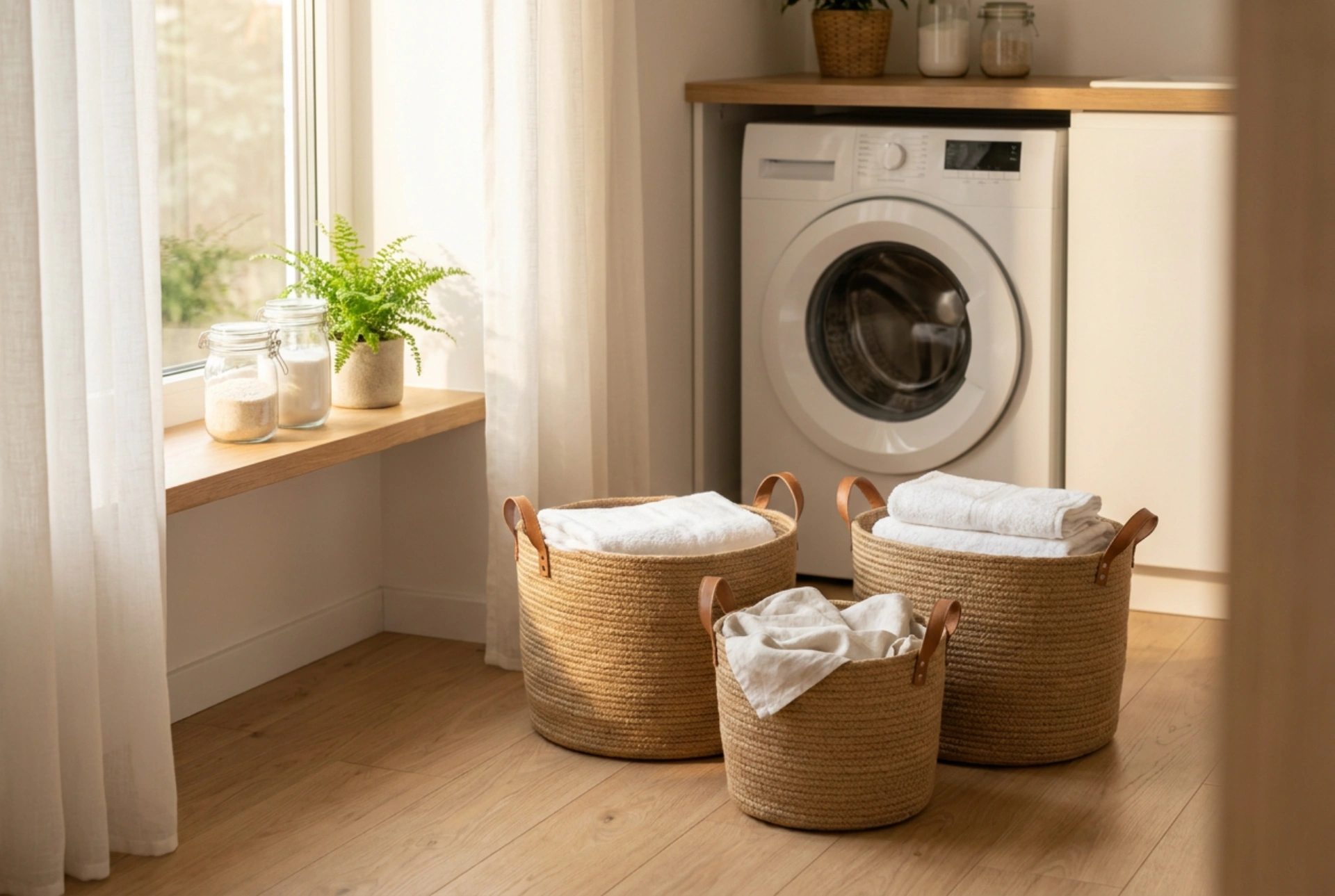


An efficient laundry system relies on reducing the physical friction of sorting, transporting, and storing soiled textiles before they reach the washing machine.
The physics of laundry accumulation and placement
The success of any laundry organization system depends on placing collection points exactly where clothes are naturally shed. In household physics, human behavior follows the path of least resistance; if a laundry receptacle is more than a few steps away from the point of undressing, garments inevitably pool on floors, chairs, or bed corners. Analyze your household's daily routines to identify these natural drop zones. The primary collection points are almost always located within wet zones, such as bathrooms, or private zones, like bedrooms and walk-in wardrobes.
Zonal segregation and material preservation
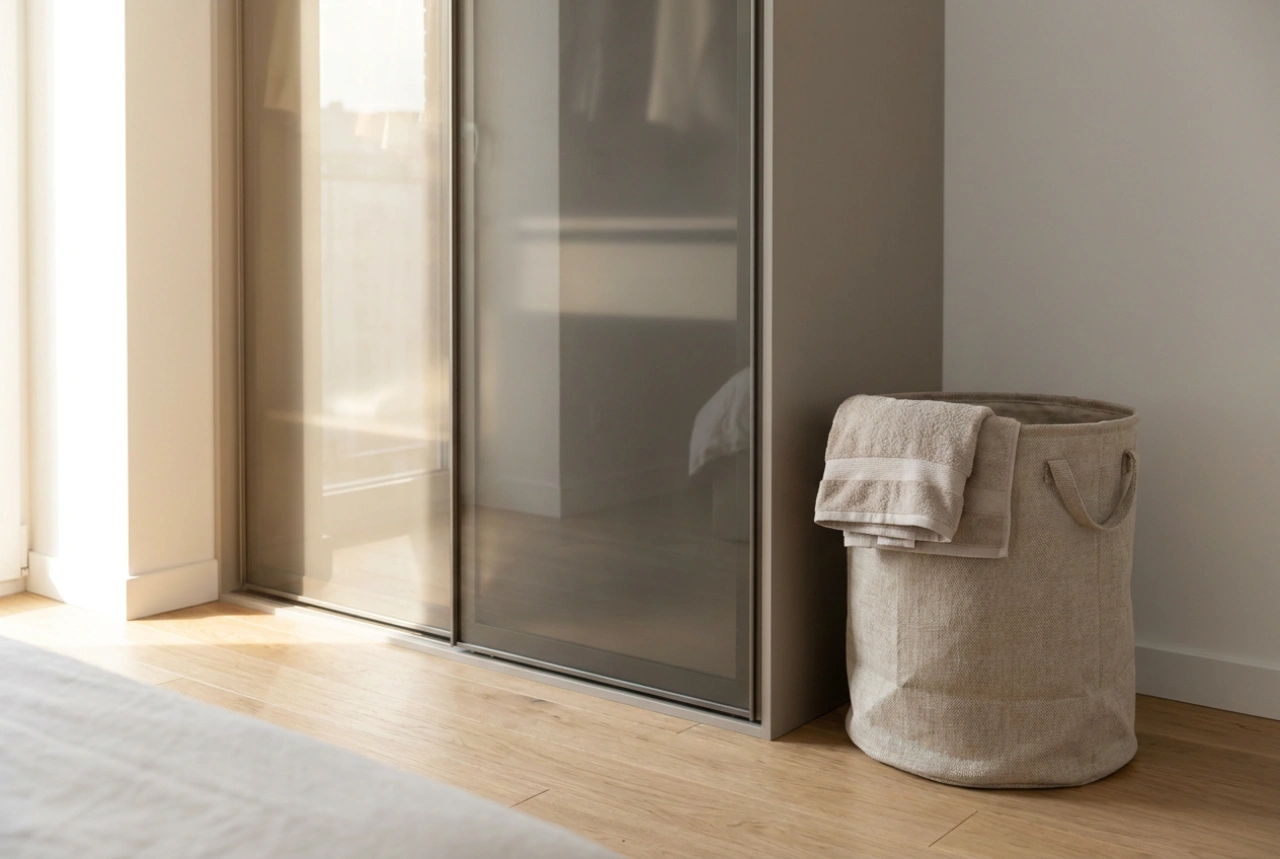
Microclimates within the home dictate where certain textiles should be stored. Bathrooms are convenient because they are where we undress for showers, but they are also high-humidity environments. Damp towels and sweat-soaked athletic wear left in a closed basket in a humid bathroom create the ideal breeding ground for mildew, mold spores, and anaerobic bacteria, which cause persistent sour odors. To prevent lipid degradation and fungal growth, keep high-humidity laundry in well-ventilated, open-weave baskets made of natural fibers or perforated polymers, and process them quickly. Dry garments, such as daily streetwear, are better suited for solid or canvas-lined bins located in bedrooms or dressing areas where humidity levels remain stable and low.
The multi-basket sorting strategy
To optimize the wash cycle, sorting should happen at the point of disposal rather than at the washing machine. Implementing a multi-compartment system or placing distinct bins side-by-side streamlines this process. Grouping garments by washing temperature and color sensitivity prevents accidental dye transfer and fiber damage. A standard three-way division includes light fabrics, dark fabrics, and high-temperature items like bedding and towels. For households with delicate woolens or technical activewear, a dedicated smaller bin prevents these sensitive synthetics and protein fibers from being subjected to aggressive cotton cycles.
Vertical and hidden storage solutions
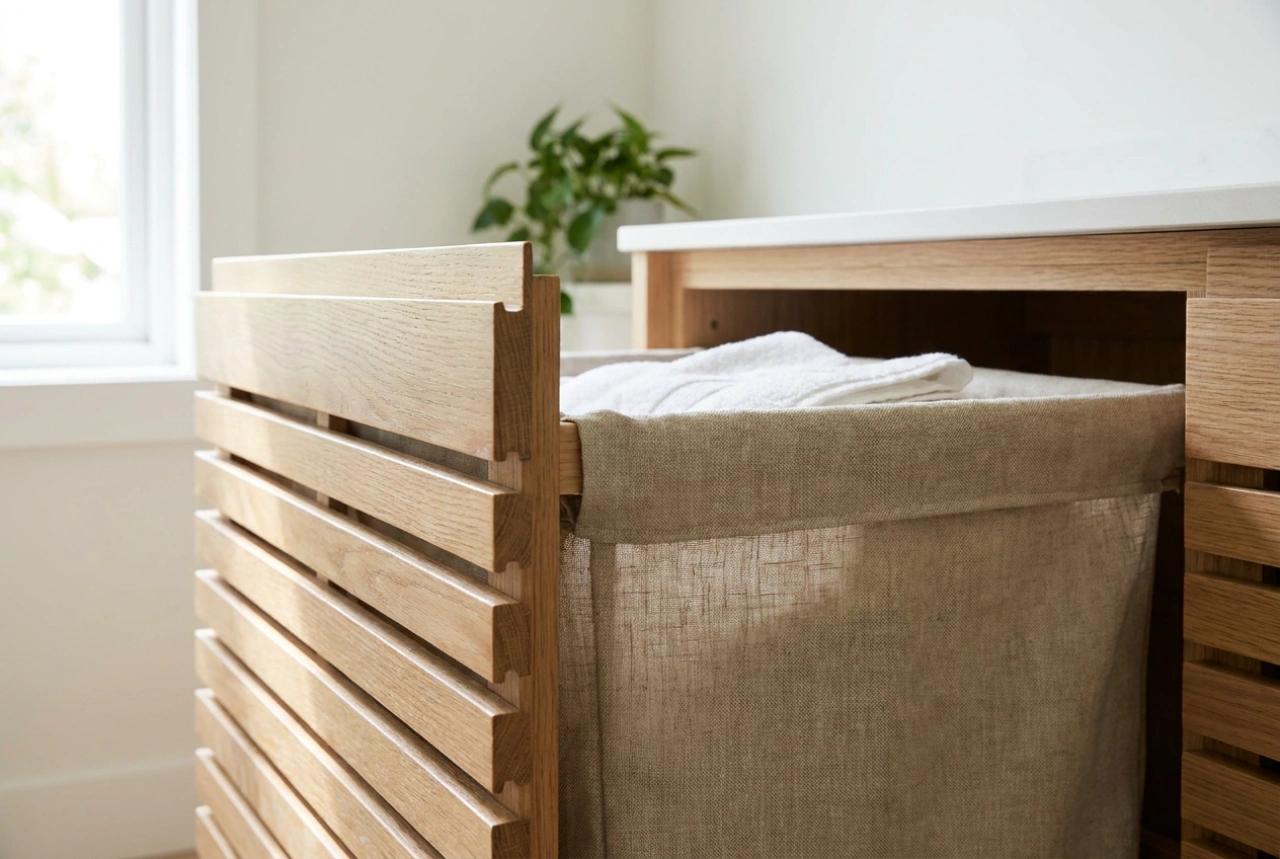
When floor space is limited, utilizing vertical space prevents visual clutter and maintains clear pathways. Wall-mounted canvas laundry bags hanging on the inside of wardrobe doors or sturdy hooks utilize dead space effectively. For a seamless aesthetic, integrated pull-out laundry drawers can be built directly into bathroom vanities or utility room cabinetry. If you use deep drawers, ensure they feature ventilation slots or wire baskets inside to maintain airflow and prevent moisture buildup, which can damage both the cabinetry and the textiles inside.
Optimizing the path to the washing machine
The final consideration in basket placement is the ergonomics of transit. Baskets should be lightweight, rigid enough to hold their shape under load, and equipped with ergonomic handles positioned close to your center of gravity. If your laundry setup spans multiple floors, consider dedicated sorting baskets on the upper level and a secondary holding station in the utility room. This minimizes the physical strain of carrying heavy, unsorted loads down stairs and ensures a smooth, predictable flow of textiles through your washing and drying appliances.