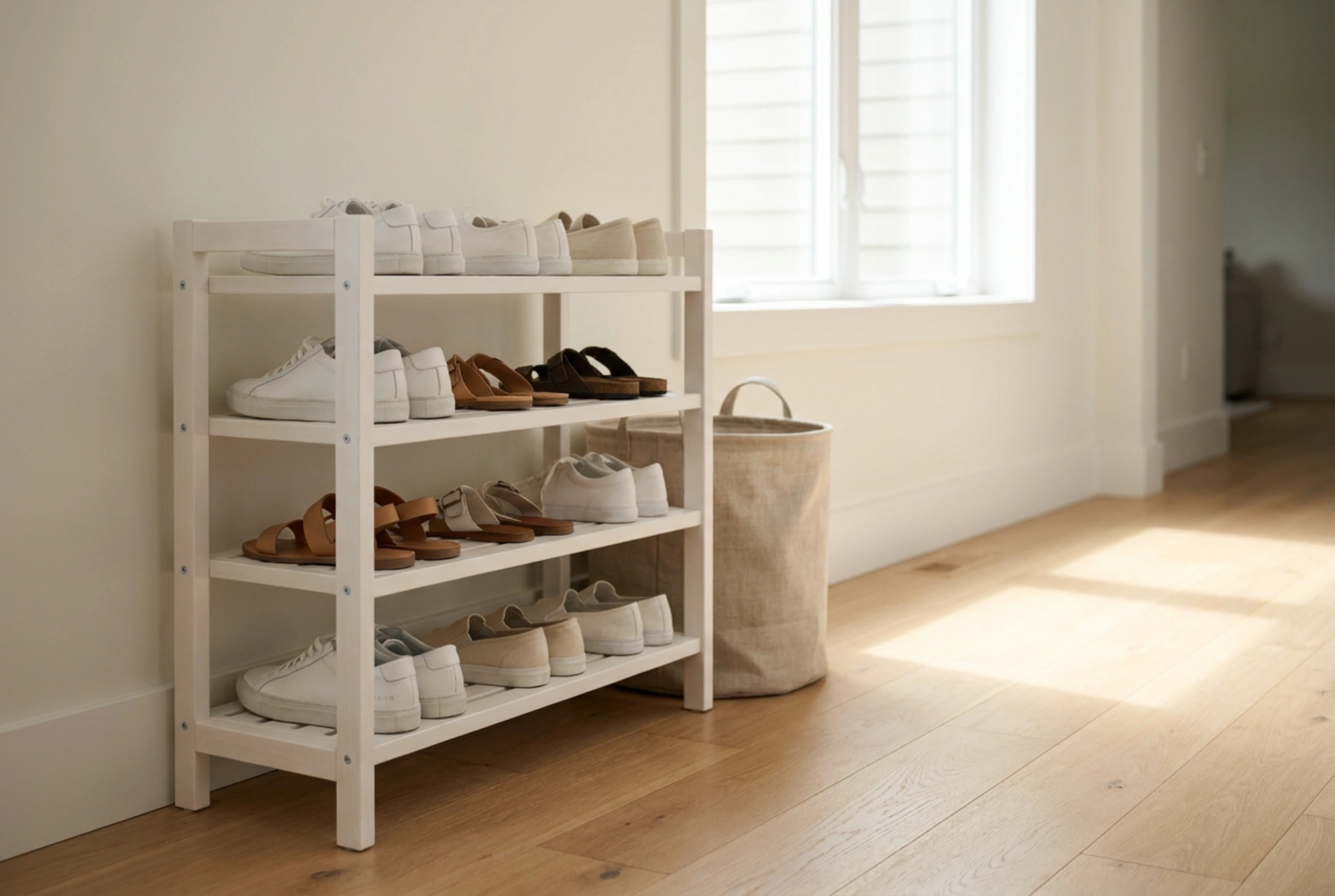


A bright entryway with a white shoe rack creates an immediate sense of light and space, but it also reveals every trace of outdoor dirt, moisture, and wear. Maintaining this pristine look requires understanding how materials interact with environmental elements and establishing systematic barrier methods.
The physics of entryway pollution and barrier zones
Dirt enters the home through mechanical transfer. Sole treads trap abrasive mineral particles like silica, moisture, and organic matter, which are then deposited onto floors and storage surfaces. To protect a white shoe rack, you must interrupt this transfer chain before footwear even touches the furniture.
- The primary scraping zone: An outdoor coir or heavy-duty synthetic mat with deep ridges physically scrapes larger dirt particles and gravel from shoe soles.
- The absorption zone: An indoor microfibre or cotton-blend runner directly inside the door absorbs moisture, fine dust, and oily residue from wet weather.
- The dry-only rule: Never place saturated footwear directly onto wooden or painted shelves. Implement a temporary drying zone, such as a low-profile tray filled with natural river stones, where wet shoes can drain and dry through evaporation before storage.
Material science of white surfaces and protective measures
White shoe racks are typically made of lacquered wood, medium-density fibreboard (MDF) with a melamine foil finish, or powder-coated metal. Each material reacts differently to friction and chemical exposure, requiring specific maintenance protocols.
Lacquered and painted wood
Painted wood is susceptible to mechanical micro-scratches from grit, which eventually trap dark soil and ruin the finish. Applying a thin layer of natural carnauba wax to the shelves creates a hard, water-repellent barrier. This sacrificial layer prevents moisture penetration and allows dust to be wiped away without scratching the underlying paint.
Melamine and laminate finishes
Melamine is highly resistant to water but can suffer from chemical yellowing when exposed to harsh cleaning agents or direct UV light. Avoid acidic cleaners or chlorinated bleach, which degrade the polymer surface. Instead, use a dilute solution of neutral surfactant (such as Castile soap) in warm water to lift oily dirt without stripping the gloss.
Powder-coated metal
Metal racks are highly durable but prone to scuffs from black rubber soles. These black marks are actually polymer transfers. They can be safely dissolved and lifted using a tiny drop of technical isopropyl alcohol on a soft microfibre cloth, which breaks down the rubber binders without affecting the cured powder coating.
Ergonomics of systematic shoe storage
The physical arrangement of footwear dictates how clean the storage unit remains. Store heavy, high-traction boots on the lowest levels or in dedicated bottom compartments to prevent loose soil from falling onto lighter shoes stored below. Keep lightweight trainers, canvas shoes, and indoor slippers on the upper shelves. For delicate materials like suede or light leather, consider using clear, breathable storage boxes that slide onto the white shelves, protecting both the shoes from dust and the rack from leather dye transfer.
A sustainable cleaning and restoration routine
Consistency is key to preserving bright surfaces. Wipe down the shoe rack weekly using a dry microfibre cloth to capture loose dust before it binds with ambient humidity. For deeper cleaning, moisten the cloth with warm water and a drop of neutral detergent, wiping in the direction of the material's grain or texture. Always follow a wet wipe with a dry waffle-weave microfibre cloth to eliminate moisture film, preventing water spots and swelling at the board edges.