

Organizing a child's wardrobe requires balancing rapid physical growth with changing developmental needs, requiring a system that adapts to both clothing sizes and toy collections.
The Physics of Child-Centred Ergonomics
Standard wardrobes are designed for adult proportions, which often leads to wasted vertical space and inaccessible storage for children. To create an efficient system, storage must be divided into three distinct height zones based on physical access and safety.
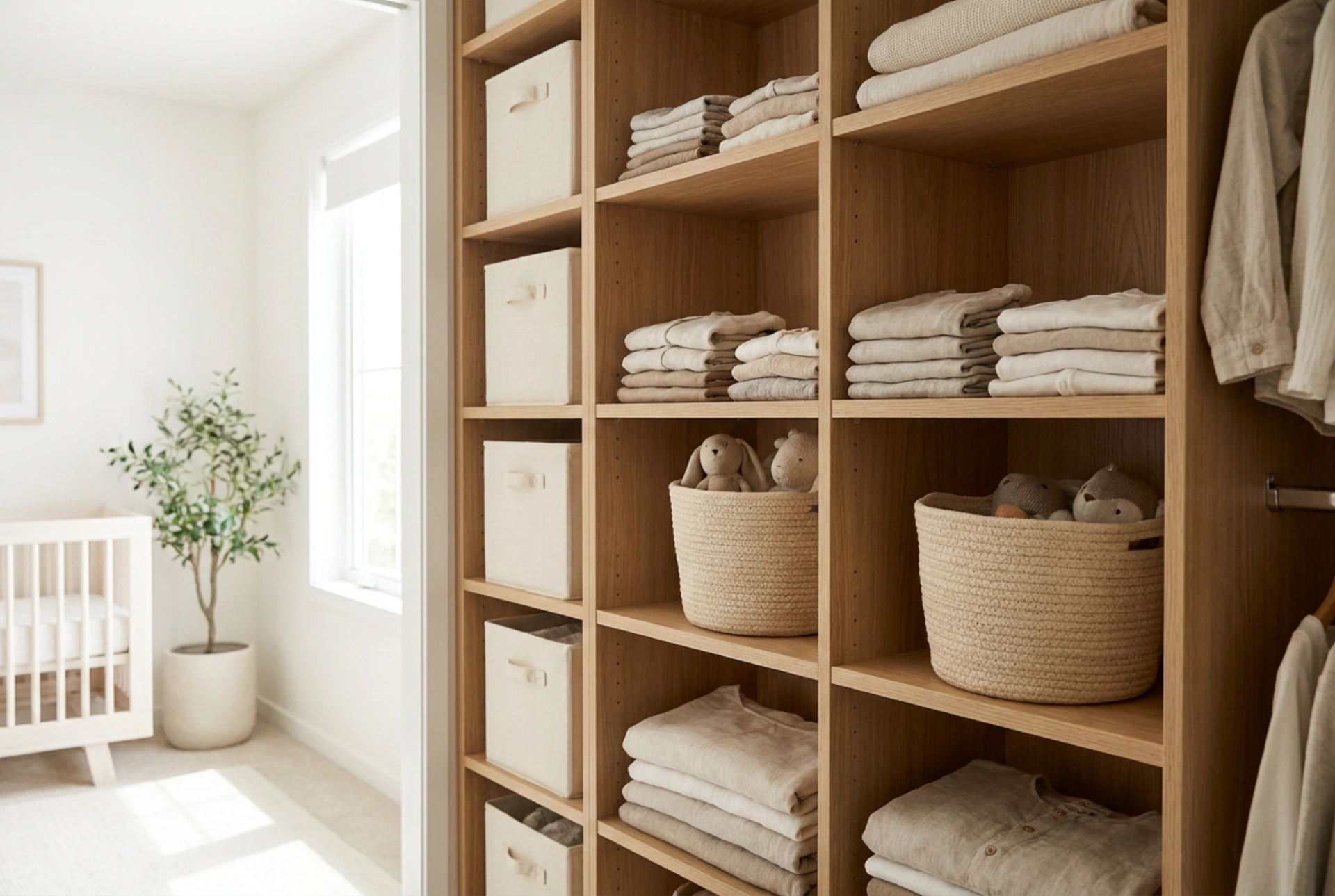
- The Active Zone (Floor to Waist Height): This area is easily reached by toddlers and young children. Store frequently used items here, such as daily-use toys, shoes, and basic clothing like socks and underwear. Using lightweight, open-front baskets allows children to retrieve and return items independently without risk of heavy drawers pinching fingers.
- The Transitional Zone (Waist to Eye Level): Accessible to older children or with adult assistance. This zone is ideal for everyday hanging clothes, seasonal wear, and educational games with small parts that require supervision.
- The Passive Zone (Above Eye Level to Ceiling): Strictly reserved for adult access. Use this space for out-of-season clothing, bedding, and rotation toys that are currently out of use to prevent sensory overload in the room.
Optimising Clothes Storage for Growing Bodies
Children outgrow clothing rapidly, making traditional folding methods inefficient. Implementing a high-density categorization system prevents clothes from becoming lost in the depths of deep shelves.
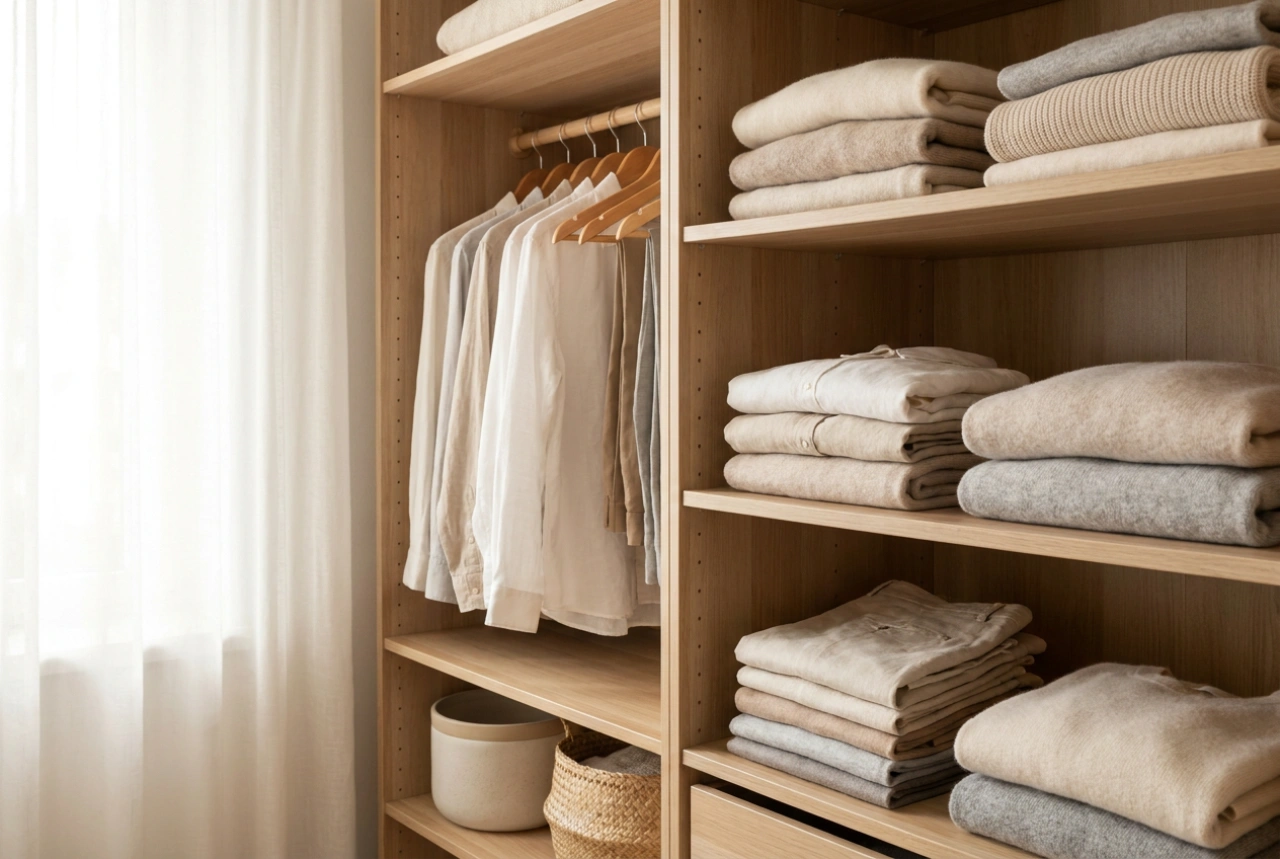
Instead of stacking t-shirts and trousers vertically, which inevitably leads to toppling piles when a lower item is pulled, use the horizontal filing method inside shallow drawers or fabric bins. Folding garments into compact, self-standing rectangles and placing them front-to-back allows the child to see every option instantly. Group clothes strictly by category and sub-category, such as short-sleeve tops, long-sleeve tops, and trousers, utilizing adjustable drawer dividers to maintain structure as garment sizes increase.
The Science of Toy Rotation and Containerisation
Clutter in a child's wardrobe often stems from an excess of visible stimuli. Toy rotation is a proven method to sustain focus and simplify tidying up. When selecting containers for toy storage, material science and container geometry play crucial roles.
Opt for modular, square-edged bins rather than round baskets, as square containers maximize shelf volume and prevent dust-gathering gaps. Transparent polypropylene bins are highly effective for older children who benefit from visual cues, while opaque canvas or woven paper baskets work best for younger children to hide visual noise. Avoid deep, oversized toy chests where items at the bottom are forgotten and crushed; instead, restrict toy bin depth to a maximum of 30 centimetres to ensure all contents remain visible and accessible.
Labeling Systems for Pre-Readers and Independent Clean-up
To ensure the organization system is sustainable, the child must be able to maintain it. For younger children who cannot yet read, text-based labels are ineffective. Implement a dual-labelling system featuring a simple, high-contrast silhouette icon of the object alongside the written word. This builds literacy skills while providing immediate visual instructions for where items belong during clean-up. Apply these labels directly to the front of bins and shelf edges using residue-free adhesive or clip-on tag holders.