

Removing carbonised, burnt-on sugar from baking trays requires understanding how sucrose molecular bonds change under extreme heat. Instead of resorting to harsh scraping that damages metallic finishes, you can dissolve the carbonised matrix using thermal shock, hydrolysis, and mild alkaline agents.
The Science Behind Carbonised Sugar Bonds
When sugar is heated beyond its caramelisation point, it undergoes thermal degradation. The hydrogen and oxygen atoms escape as water vapour, leaving behind a highly concentrated carbon network that adheres strongly to steel, aluminium, and enamel surfaces. This carbonised layer acts like a natural polymer, resisting standard detergents because it is no longer water-soluble in its hardened state. To break this bond, you must either reverse the dehydration through prolonged heat and moisture (hydrolysis) or break the polymer structure using chemical agents with a high pH, such as sodium bicarbonate.
Thermal Dissolution and Hydration
Before applying any abrasive cleaning techniques, you must exploit the thermal properties of the sugar layer. Sugar is highly soluble in water, and even carbonised sugar retains some capacity to absorb moisture if the water temperature is sufficiently high. High temperatures increase kinetic energy, speeding up the breakdown of the burnt crust.
- The Hot Water Bath: Place the affected baking tray in a sink or heatproof container. Pour boiling water directly over the burnt areas until submerged. The thermal shock helps expand the metal tray slightly faster than the brittle carbon layer, causing microscopic fractures in the sugar crust.
- The Steaming Method: For deeply stubborn patches, place the tray back into a cool oven, pour a thin layer of boiling water onto it, and turn the oven to 100 degrees Celsius for 15 minutes. The steam will continuously penetrate the hard carbonised matrix, softening it from the outside in.
- Initial Mechanical Clearing: While the water is still warm, use a wooden or silicone spatula to gently slide under the softened edges of the sugar. Do not use metal knives, as they will scratch the protective oxide layer of your tray.
Breaking the Carbon Grid with Alkaline Agents
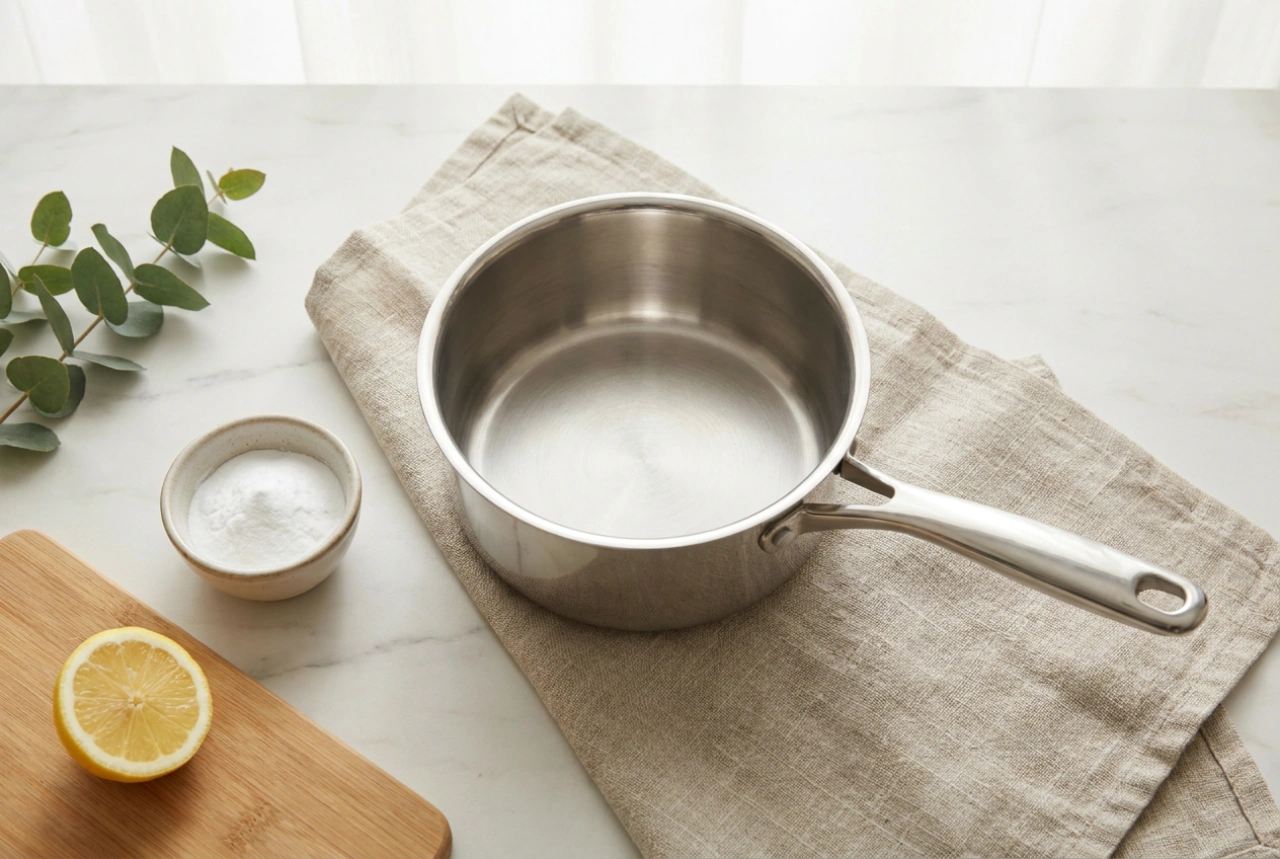
If a stubborn black residue remains after the hot water treatment, you must elevate the pH to disrupt the organic bonds. Sodium bicarbonate (baking soda) is a mild alkaline powder (pH around 8.1) that is highly effective at breaking down organic proteins and starches without corroding metal surfaces.
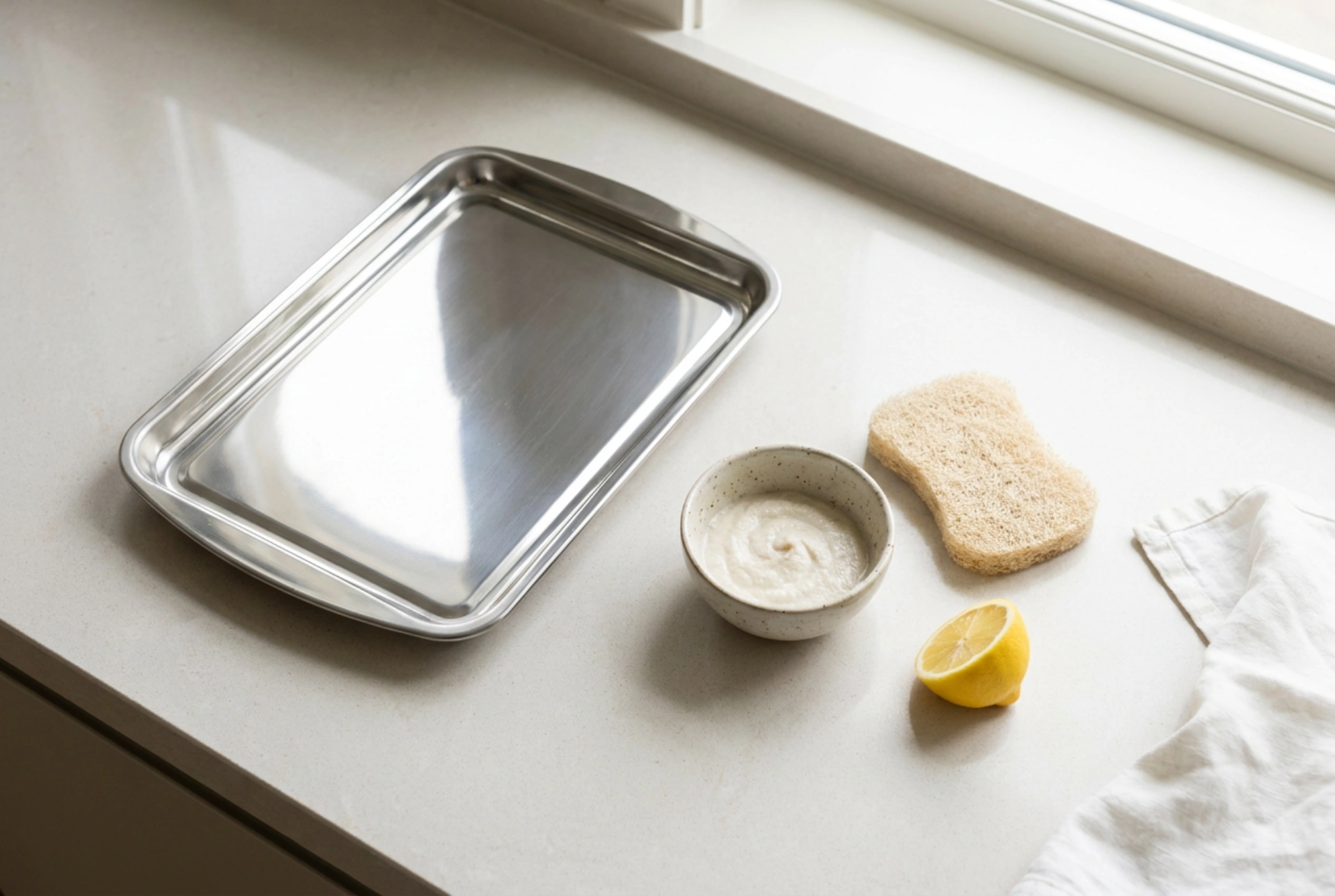
To apply this method, drain the excess water from the tray, leaving the surface damp. Generously sprinkle sodium bicarbonate over the burnt sugar patches until a thick layer covers the carbonised areas. Spray a small amount of warm water over the powder to create a dense paste. Let this paste sit undisturbed for at least two hours, or ideally overnight. During this contact time, the alkaline ions slowly penetrate and saponify any fats baked into the sugar, weakening the structural integrity of the crust.
Using Effervescence and Safe Mechanical Agitation
To lift the loosened carbon off the metal, you can introduce a mild acid, such as diluted acetic acid (standard white vinegar). When acetic acid meets the alkaline sodium bicarbonate paste, an acid-base reaction occurs, producing sodium acetate, water, and carbon dioxide gas.
The rapid release of carbon dioxide bubbles creates a mechanical micro-scrubbing effect directly beneath the burnt sugar layer. Pour a small amount of vinegar over the paste and watch the fizzing action lift the loosened flakes. Once the reaction subsides, use a non-scratch nylon scrubbing pad or a copper cloth (which is softer than stainless steel and will not scratch glass or enamel) to work in circular motions. The abrasive action of the undissolved baking soda crystals acts as a gentle polishing paste, polishing the metal clean without damaging the tray.
Preventing Future Polymerisation
To prevent sugars from fusing with your baking trays in the future, consider using physical barriers such as reusable silicone baking mats or high-density parchment paper. Additionally, ensuring that your trays are completely dry before storing prevents microscopic oxidation pits, which provide a textured surface for caramelized sugars to latch onto during future baking sessions.