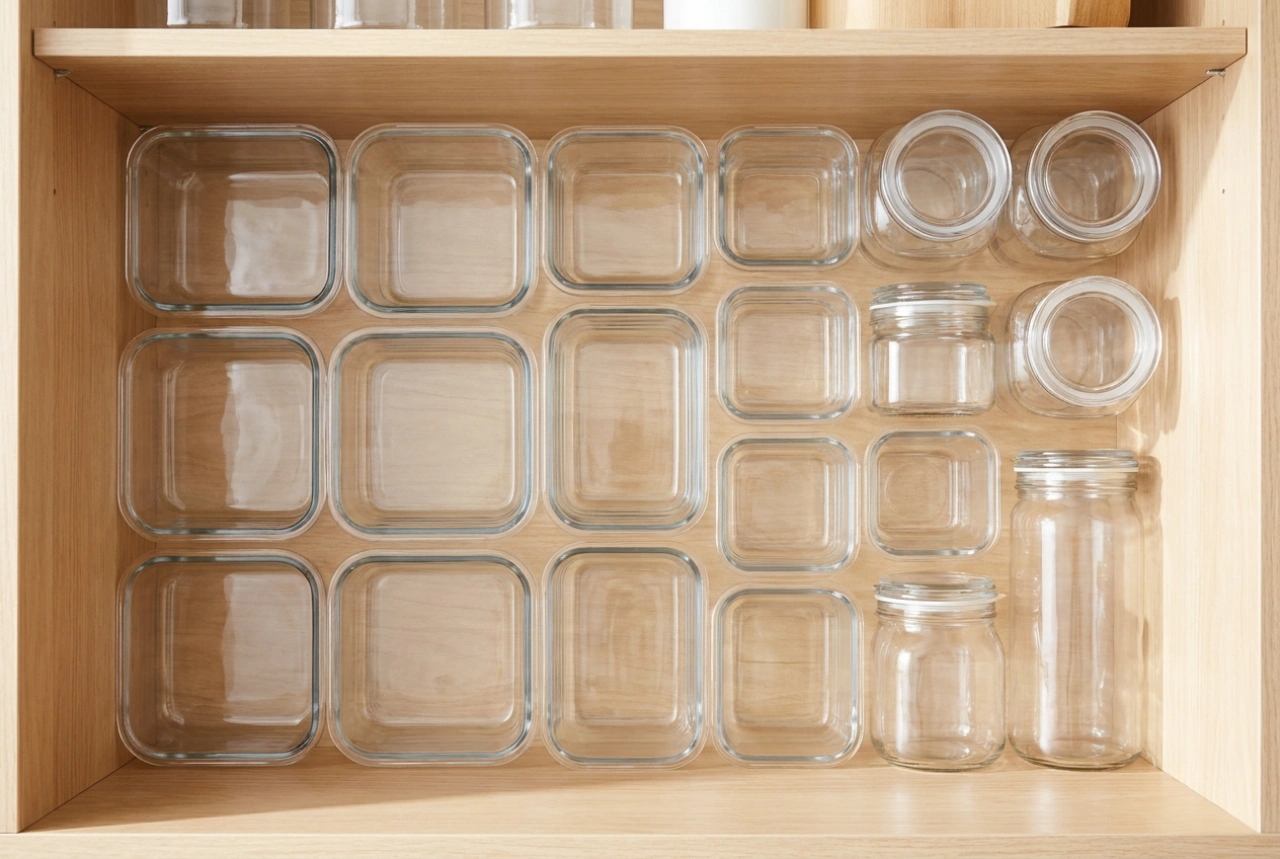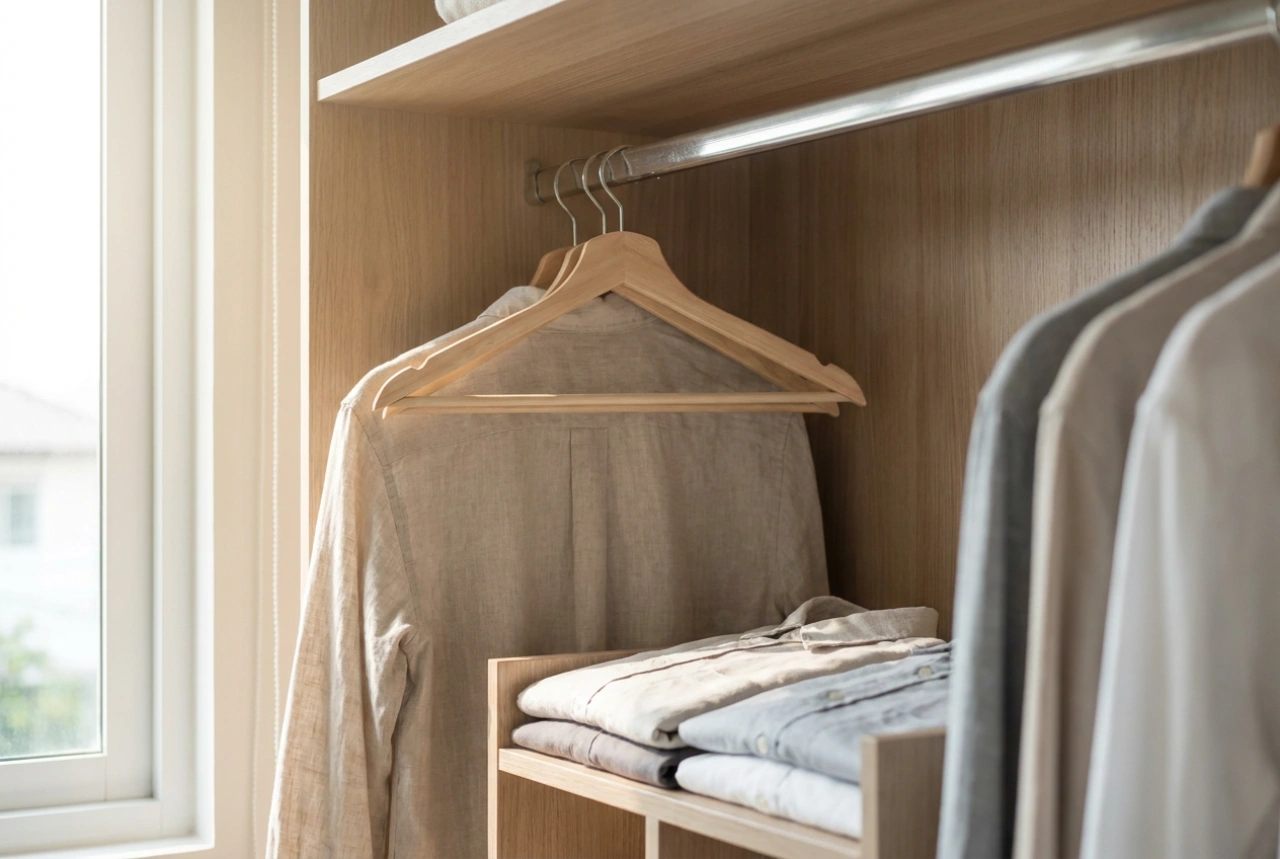


Organizing a bedroom chest of drawers efficiently relies on maximizing visible space and understanding the physical behavior of folded fabrics under gravity.
The Physics of Storage: Why Traditional Stacking Fails
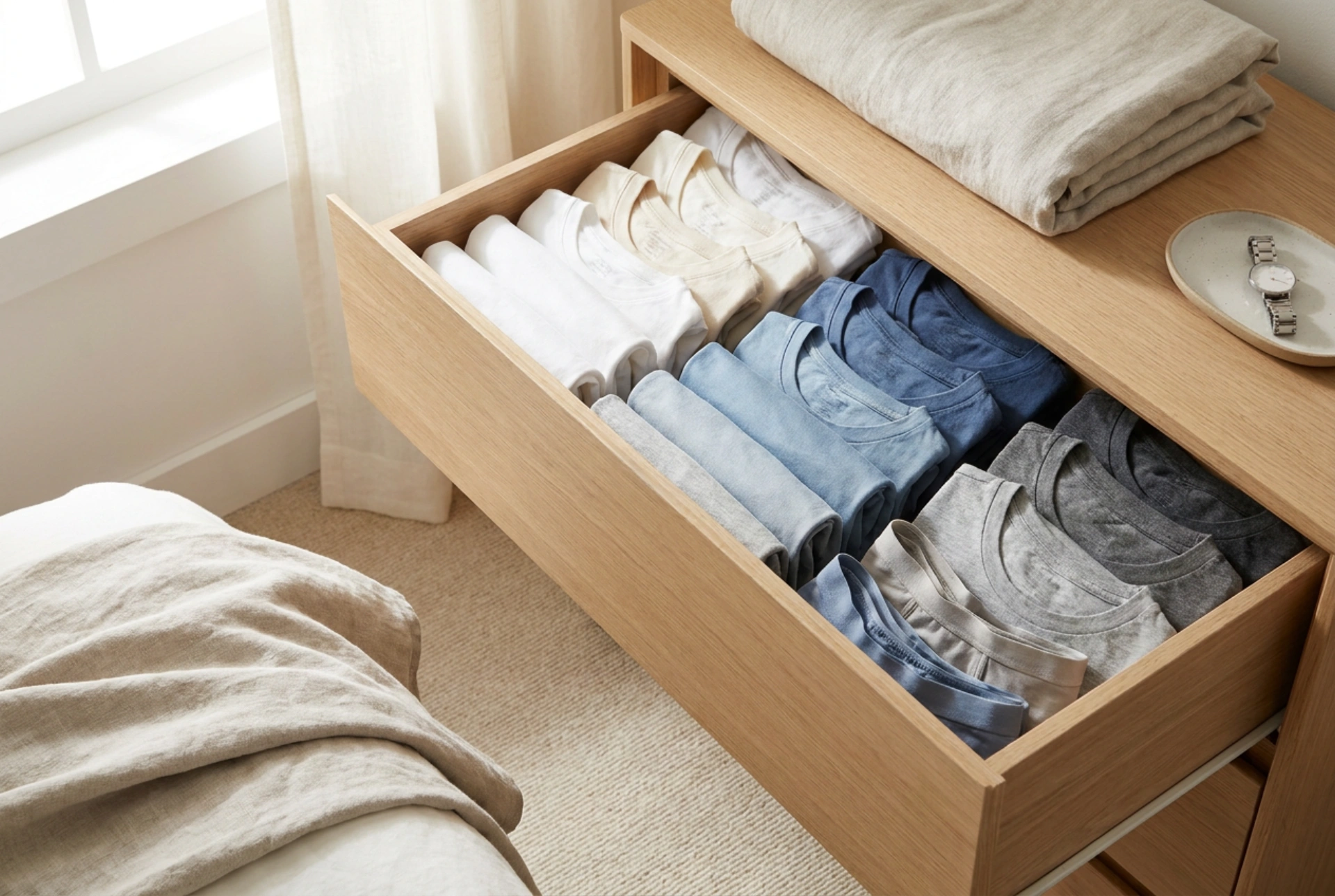
Stacking garments horizontally creates a structural weak point in your storage system. The weight of the upper layers compresses the lower items, leading to deep wrinkles and restricted airflow which can trap ambient moisture. Furthermore, retrieving an item from the bottom of a stack disrupts the entire column, causing friction that pulls adjacent garments out of alignment. By shifting from horizontal stacking to vertical filing, you distribute the weight of the garments evenly across the drawer floor, allowing each piece to remain independently accessible and structurally supported.
The Vertical Folding Technique Step-by-Step
To achieve a stable vertical file, garments must be folded into self-supporting rectangular packets. This method works best with cotton, linen, and synthetic blends.
- Lay flat and smooth: Place the garment on a clean, flat surface and smooth out any wrinkles to prevent setting creases during storage.
- Create a uniform boundary: Fold the outer edges of the garment inward toward the center line, creating a long, even rectangle. For shirts, fold the sleeves flat against the back panel first.
- Determine the drawer depth: The final fold height must match the depth of your drawer. Fold the rectangle in half lengthwise, then fold it into thirds from the bottom up to create a compact, self-standing packet.
Sorting by Material Weight and Usage Frequency
Organizing the contents of your chest of drawers requires a systematic approach based on physical properties and daily ergonomics. Heavy, dense knits should occupy the lowest drawers to maintain a low center of gravity for the furniture piece and prevent structural warping of the drawer slides. Lightweight items, such as undergarments and thin cotton shirts, belong in the upper drawers where they are easily reached. Within each drawer, arrange items from left to right, transitioning from light colors to dark colors, or from lightweight materials to heavier fabrics. This visual gradient speeds up selection and helps you quickly spot misplaced items.
Managing Friction and Maintaining Order
Wood and plastic drawers have smooth surfaces that allow folded garments to slide when a drawer is opened or closed. To counteract this momentum, utilize tension-based drawer dividers or shallow, breathable fabric boxes. These physical barriers create micro-compartments that hold the vertical folds upright, even when several garments have been removed for laundering. For delicate fabrics like silk or fine wool, avoid tight compression; instead, allow these garments sufficient breathing space to prevent fiber damage and static buildup.