

Managing incoming mail efficiently prevents paper clutter from accumulating and ensures critical documents are never missed or delayed. Establishing a structured daily routine and physical sorting system is the key to maintaining an organised entryway.
The Mechanics of Paper Accumulation and the One-Touch Rule
Paper clutter is a physical manifestation of delayed decisions. When mail is retrieved from the postbox and placed on a random surface, it creates a friction point in home organisation. From a behavioural science perspective, the most effective method to combat this is the "one-touch" rule. This principle dictates that once an envelope is in your hand, you must make an immediate decision regarding its destination before putting it down. This prevents the formation of transitional piles, which quickly attract more clutter due to visual habituation—where the brain stops noticing the growing stack of paper.
Furthermore, paper is highly hygroscopic; it actively absorbs moisture from the surrounding air. Storing loose, unorganised mail in damp entryways can lead to structural weakening of the paper fibres and the potential growth of microscopic mould spores. Processing mail immediately keeps your living space hygienic and your important documents structurally sound.
Designing a Functional Sorting Station
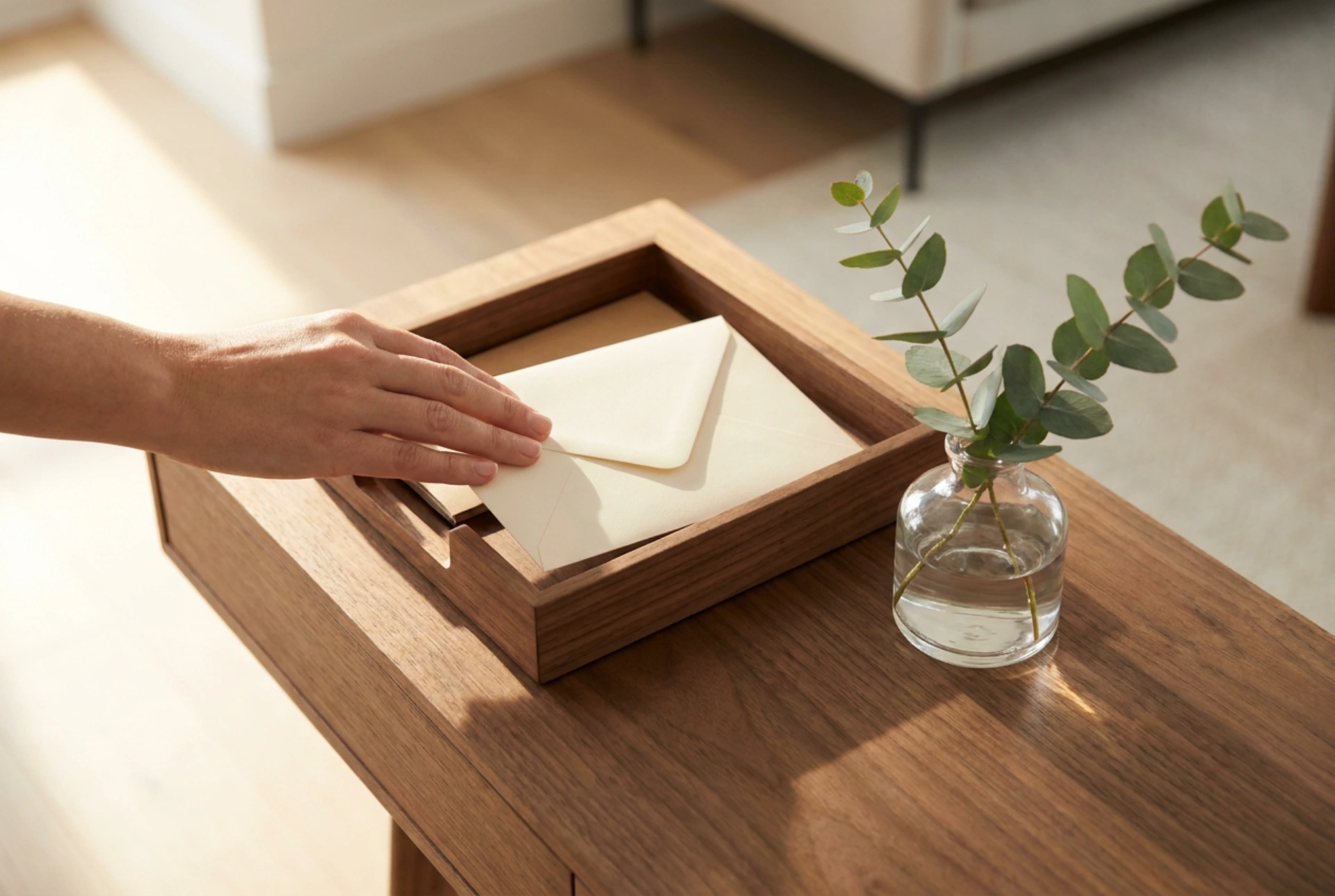
An efficient mail processing station should be situated as close to the primary entrance as possible, creating a physical barrier to prevent paper from penetrating deeper into the living areas. When selecting materials for sorting trays, opt for natural wood, ceramic, or powder-coated metal. Synthetic plastics accumulate electrostatic charges that attract airborne dust particles, making your sorting area harder to keep clean.
A minimalist, three-tiered sorting system is highly effective. The top tray should be designated for "Action Required" items, such as bills, invoices, or RSVP cards. The middle tray is for "To File" items that need to be archived in a permanent storage system. The bottom section should contain a secure box for sensitive documents awaiting destruction. Position a recycling bin directly beneath or adjacent to this station to filter out generic marketing material before it even touches the console table.
The Classification and Destruction Process
Incoming correspondence must be classified systematically. Divide your mail into three distinct categories based on urgency and retention requirements:
- Immediate Actions: Documents with fixed deadlines, such as invoices, official inquiries, or legal notices. These should be opened immediately, the envelopes discarded to reduce bulk, and placed in the action tray with the deadline clearly visible.
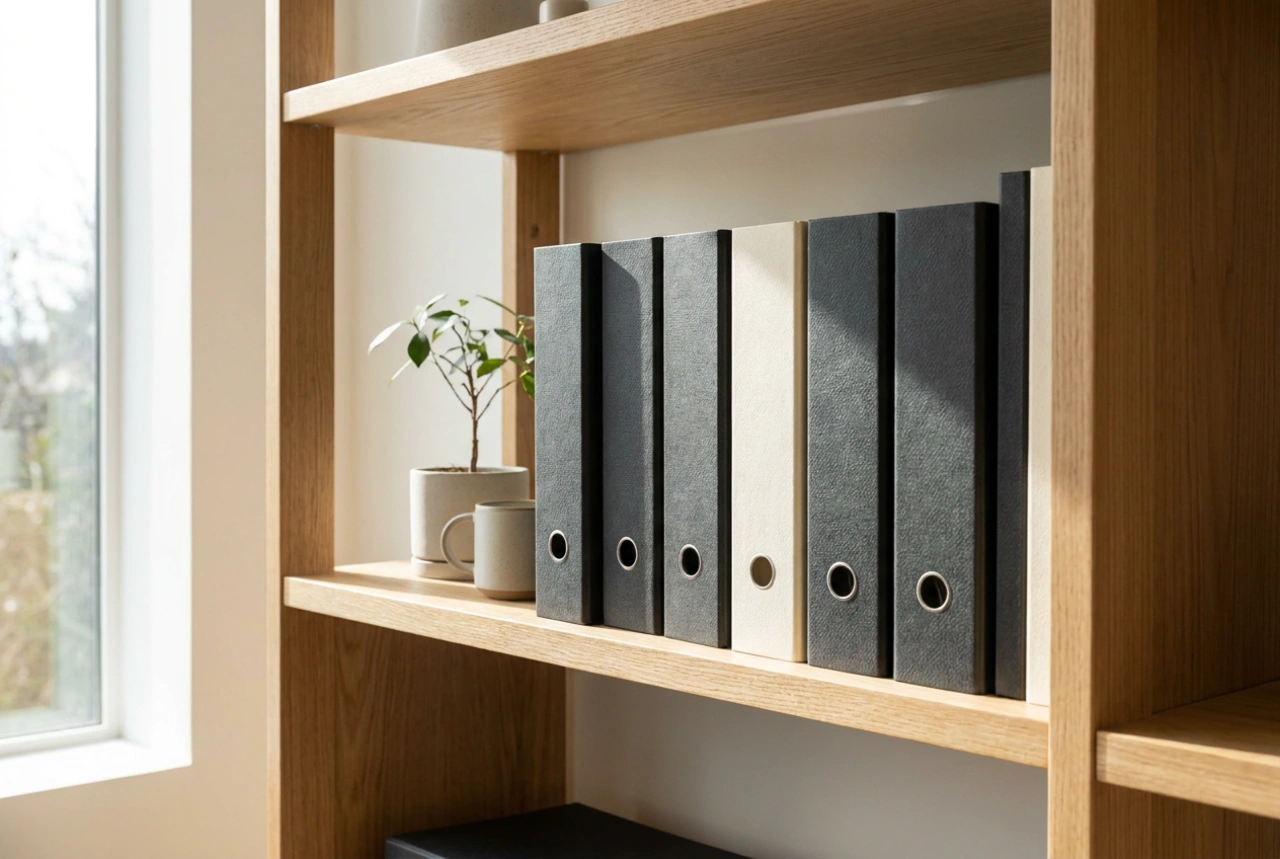
- Long-Term Archives: Vital documents, tax records, and insurance policies. To preserve these papers, store them in acid-free folders. Standard cardboard contains lignin, which degrades over time and produces acids that turn paper yellow and brittle.
- Destruction/Recycling: Any mail containing personal information, account numbers, or full names must be shredded. Cross-cut shredders are superior to strip-cut models, as they reduce paper to tiny confetti-like pieces, making physical reconstruction mathematically improbable and protecting your household from identity fraud.
Protecting Mail from Environmental Damage
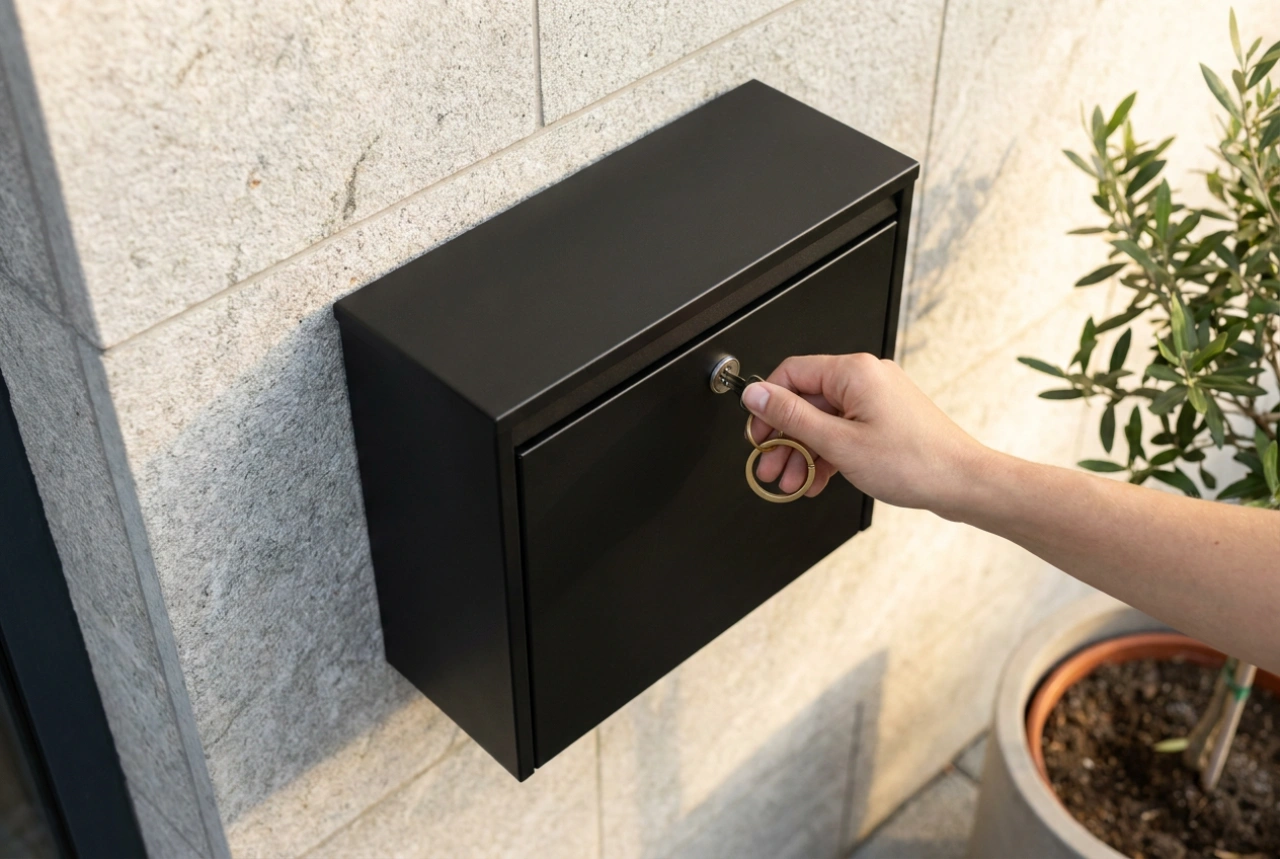
Outdoor postboxes are constantly exposed to temperature fluctuations and humidity. When warm, humid air contacts the colder metal walls of an external mailbox, condensation forms on the interior surfaces. This moisture transfers directly to your envelopes, potentially smudging water-soluble inks and rendering important text illegible.
To mitigate this, ensure your outdoor postbox has a functional rubber seal along the lid to prevent rainwater ingress. Placing a small, rechargeable silica gel canister at the bottom of the mailbox will actively absorb ambient moisture, protecting your correspondence until you retrieve it. Additionally, establishing a fixed daily retrieval schedule—ideally shortly after your local postal delivery window—minimises the time paper spends in these unstable environmental conditions.