

Managing a gate-mounted mailbox requires more than just retrieving envelopes; it demands an understanding of environmental physics to protect physical correspondence from humidity, moisture, and degradation. By establishing a systematic collection routine and optimising the mailbox microclimate, you can ensure your mail remains dry, intact, and secure.
The Microclimate of Gate-Mounted Mailboxes
Gate-mounted mailboxes are highly exposed to diurnal temperature fluctuations, which directly affect the relative humidity inside the enclosure. When warm, moisture-laden day air cools rapidly overnight, the water vapour condenses on the cold inner walls of the mailbox. This condensation is absorbed by paper through capillary action, leading to structural weakening, ink bleeding, and fungal growth.
To mitigate this, understand the material properties of your mailbox. Metal enclosures (such as stainless steel or powder-coated aluminium) conduct heat rapidly, accelerating condensation cycles. Plastic composites insulate better but can still trap moisture if ventilation is inadequate. Ensuring that your mailbox has small, gravity-assisted drainage holes at the lowest point allows liquid water to escape, while baffled ventilation slits promote airflow without letting rain penetrate.
Optimising the Physical Retrieval Routine
An efficient collection system minimises physical friction and ensures mail is processed before it piles up. The ergonomics of retrieval depend heavily on key management and accessibility.
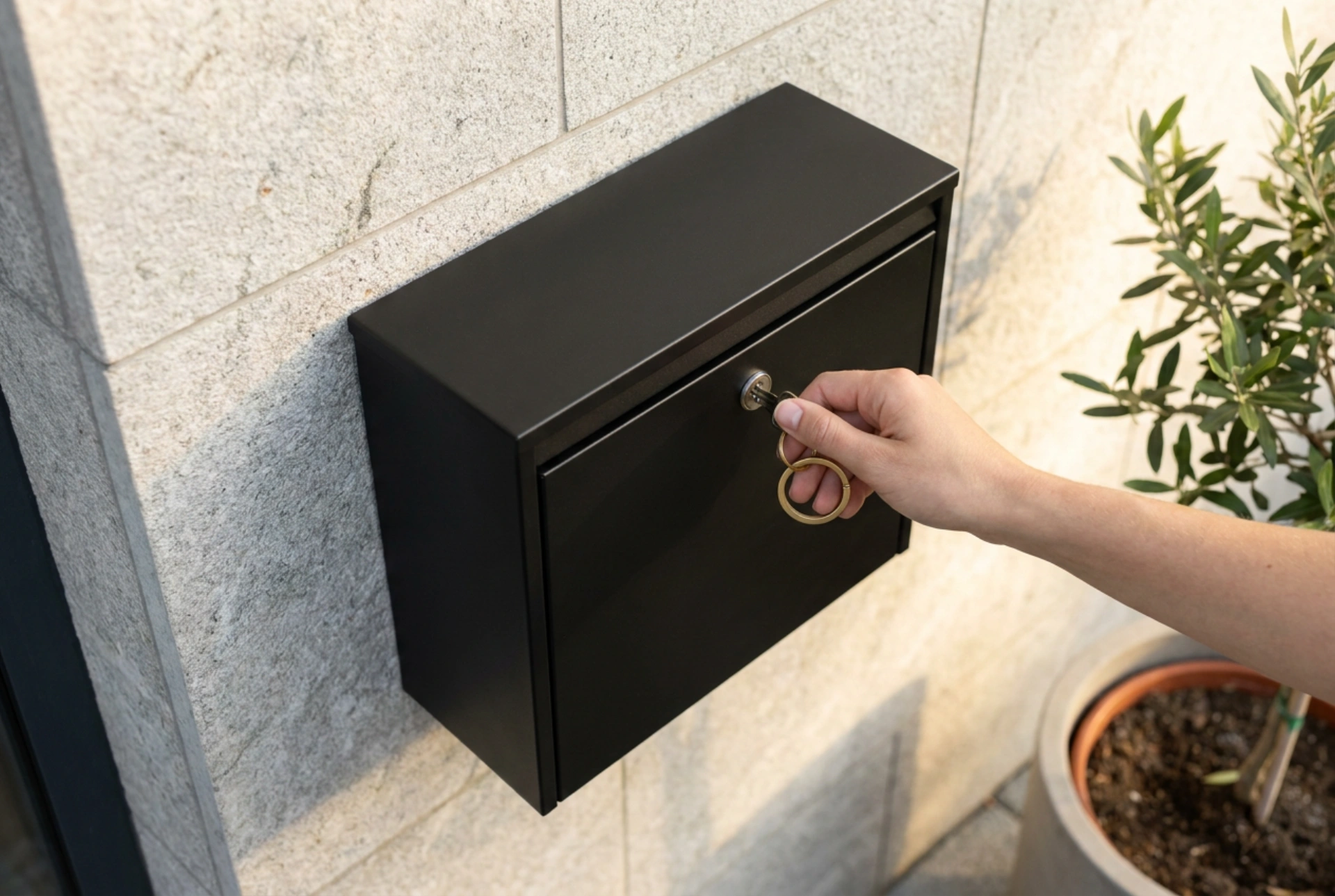
- Key Accessibility: Position a dedicated key hook near the primary entryway. Using a heavy brass or high-friction silicone fob makes the key easy to locate by touch and prevents accidental drops in wet conditions.
- The One-Touch Rule: Establish a protocol where mail is retrieved during a transition period—such as arriving home from work. This eliminates dedicated trips to the gate, reducing exposure to inclement weather.
- Physical Mechanics of Retrieval: Always open the mailbox door fully to prevent envelope edges from catching on the lock mechanism or sharp metal edges, which can tear delicate paper fibres.
Preventing Water Ingress and Paper Degradation
Paper is highly hygroscopic, meaning it readily absorbs water molecules from the surrounding air. When paper fibres swell with moisture, they lose tensile strength. To protect your mail between delivery and collection, physical barriers must be maintained.
Ensure the mailbox flap employs a spring-loaded mechanical tensioner. A weak hinge allows wind to lift the flap, letting rain enter. The flap should overlap the opening by at least ten millimetres, utilising a drip edge to channel rainwater away from the aperture. Inside the mailbox, placing a rigid, perforated plastic mesh at the bottom elevates the letters. This prevents mail from sitting directly in any pooled condensation or minor rain ingress that manages to penetrate the seal.
Establishing an Entryway Processing Station
The collection process does not end at the gate; it terminates at an indoor sorting station. Bringing damp or unsorted mail directly into the living space can spread moisture and dust.
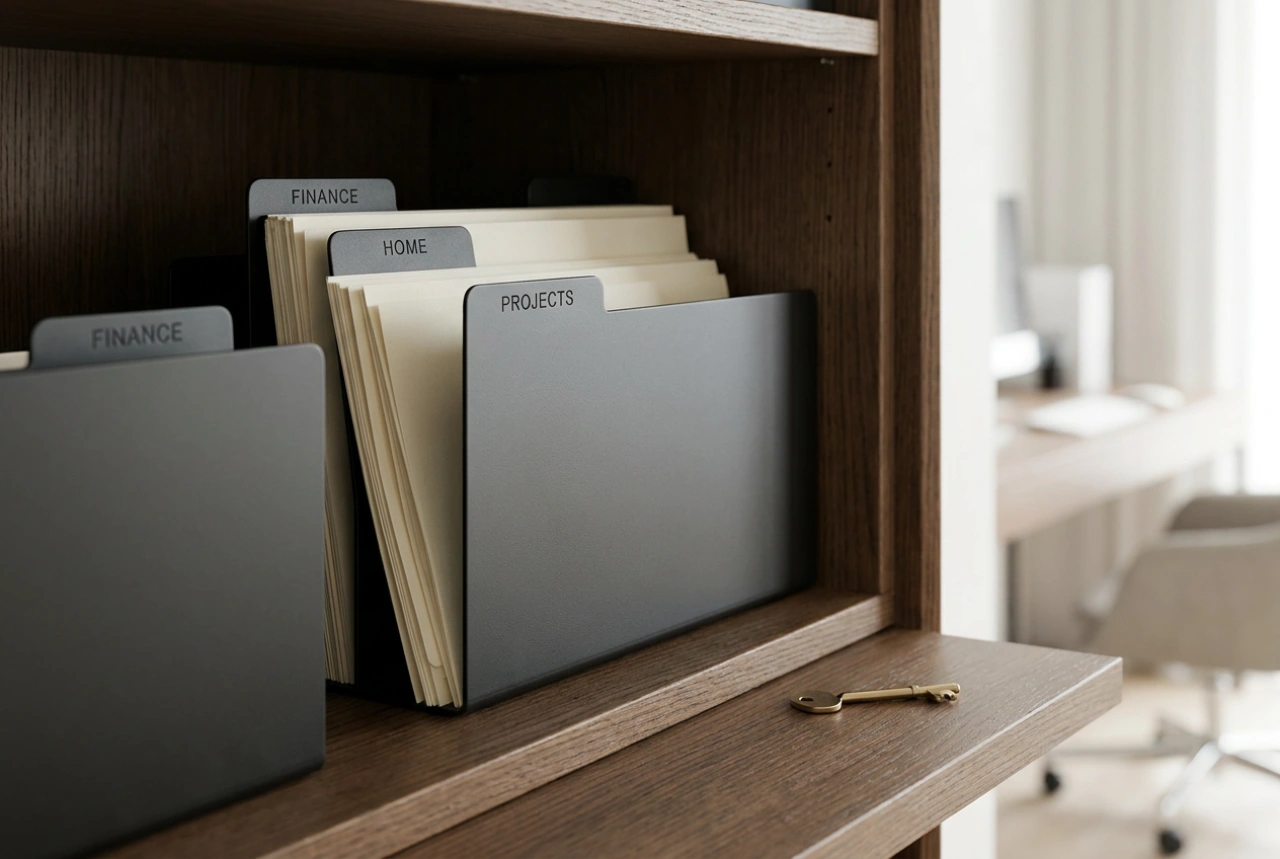
Set up a designated transition zone immediately inside the door. This station should feature a non-porous tray (such as powder-coated steel or sealed ceramic) to catch any residual external moisture from envelopes. Divide incoming items into three immediate categories: actionable correspondence, long-term storage, and recycling. Sorting immediately prevents the accumulation of paper clutter and ensures that sensitive documents are extracted from their damp outer envelopes to dry flat in a temperature-controlled indoor environment.