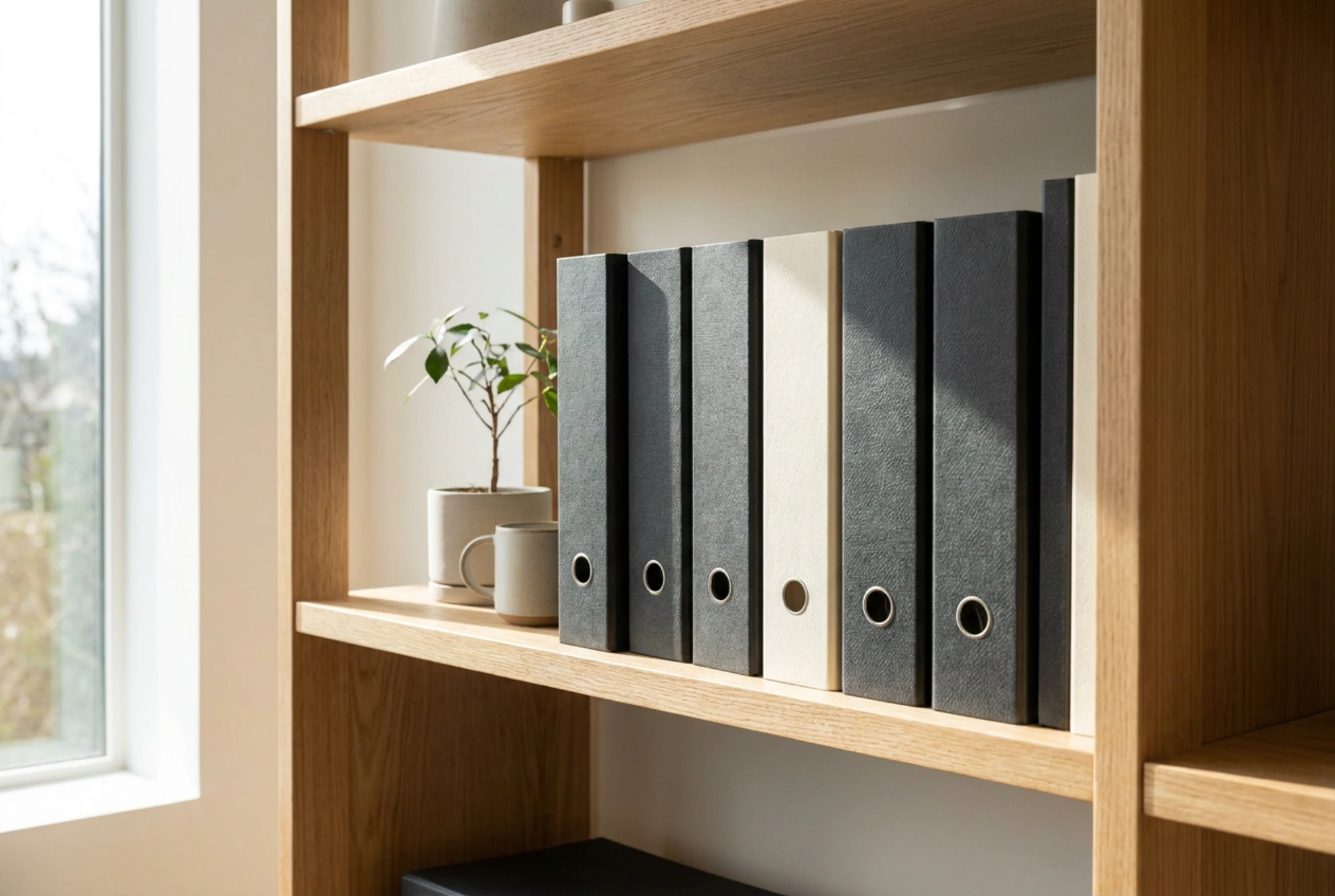


An efficient home archive relies on structural order and material preservation to protect sensitive paper records from degradation over time.
The physics of paper degradation and preservation
To understand why proper storage folders matter, one must look at the chemistry of paper. Standard wood-pulp paper contains lignin, an organic polymer that becomes acidic over time when exposed to oxygen, light, and moisture. This acidity causes paper to yellow, become brittle, and eventually disintegrate. When choosing folders for long-term storage, the chemical composition of the folder material is paramount. Acid-free folders, typically buffered with calcium carbonate, create a mild alkaline environment that neutralizes migrating acids from older documents. This halts the degradation process and ensures structural integrity for decades.
Selecting the right folder materials
Not all organizing materials are created equal. When building an elegant, functional archive, select folders based on their technical specifications:
- Alkaline-buffered board: Best for general paper documents, correspondence, and certificates. They maintain a pH level of 7.5 to 8.5.
- Unbuffered acid-free board: Critical for materials sensitive to high alkalinity, such as historical blueprints, original silver-gelatin photographs, and certain textiles.
- Polypropylene sleeves: Ideal for frequently handled documents. Unlike PVC (polyvinyl chloride), which releases damaging hydrochloric acid and plasticizers over time, chemically inert polypropylene does not react with inks or stick to document surfaces.
The mechanics of systematic classification
A beautiful archive is only as good as its retrieval system. Implement a hierarchical classification method based on frequency of use and logical associations. Start by categorizing documents into broad domains: legal, financial, medical, and personal history. Within these domains, use color-consistent, high-density folders to establish sub-categories. For instance, employ a strict chronological order for tax records, while using alphabetical sorting for medical files or property deeds. Labeling should be uniform, utilizing high-contrast, fade-resistant ink or thermal printed labels applied to the folder tabs at a consistent height to facilitate rapid scanning.
Optimal environmental conditions for home archives
The physical location of your home archive determines its lifespan. High humidity levels (above 60%) promote mold growth and weaken paper fibers, while extremely dry air (below 30%) makes paper brittle. Aim for a stable relative humidity between 30% and 50%, with a consistent room temperature below 21 degrees Celsius. Store your document folders vertically inside closed cabinets or on sturdy shelves. Vertical storage prevents the compression damage that occurs when documents are stacked horizontally, and it allows air to circulate freely around the folders, preventing localized microclimates of high humidity.
Maintenance and handling protocols
Preserving an archive requires proper physical handling techniques. Always wash and thoroughly dry hands before retrieving documents to prevent the transfer of skin oils, which attract dust and cause permanent staining. Avoid using metal paperclips or standard adhesive tapes within your folders; metal oxidizes over time, leaving rust stains, while adhesives decay into a sticky yellow residue that destroys paper fibers. Instead, use plastic-coated paperclips or acid-free paper enclosures to keep multi-page documents organized inside their folders.