

Burnt food residues on a stainless steel pot can seem permanently fused to the metal, but understanding the material science of cookware allows you to release these carbonized bonds without damaging the surface.
The Science Behind Stainless Steel and Scorching
Stainless steel is an alloy primarily composed of iron, carbon, chromium, and often nickel. The key to its corrosion resistance is chromium, which reacts with oxygen to form an invisible, self-healing layer of chromium oxide on the surface. When food burns, proteins and carbohydrates undergo thermal degradation and carbonization. At high temperatures, these organic compounds form strong covalent bonds with the metal surface. Attempting to scrape these deposits off mechanically with steel wool can scratch and strip the protective chromium oxide layer, leaving the underlying iron vulnerable to oxidation and rusting. Instead, the solution lies in thermal expansion and targeted chemical breakdown.
The Thermal Deglazing Technique
One of the gentlest and most effective methods to release carbonized food utilizes the principles of thermal shock and expansion. When metals heat up, they expand; carbonized food does not expand at the same rate. This differential expansion can weaken the bond between the burnt layer and the steel.
- Heat the pot: Pour enough room-temperature water into the pot to cover the burnt area by at least two centimetres. Place it on the hob and bring the water to a rolling boil.
- Introduce mechanical movement: While the water is boiling, use a flat-edged wooden spatula to gently scrape the bottom of the pot. The combination of heat, water penetration, and light physical agitation will lift a significant portion of the softened carbon.
- Cool gradually: Remove the pot from the heat source and let it cool naturally. Avoid pouring cold water into a scorching hot dry pot, as extreme thermal shock can warp the multi-ply metal base.
Harnessing Alkaline Power with Sodium Bicarbonate
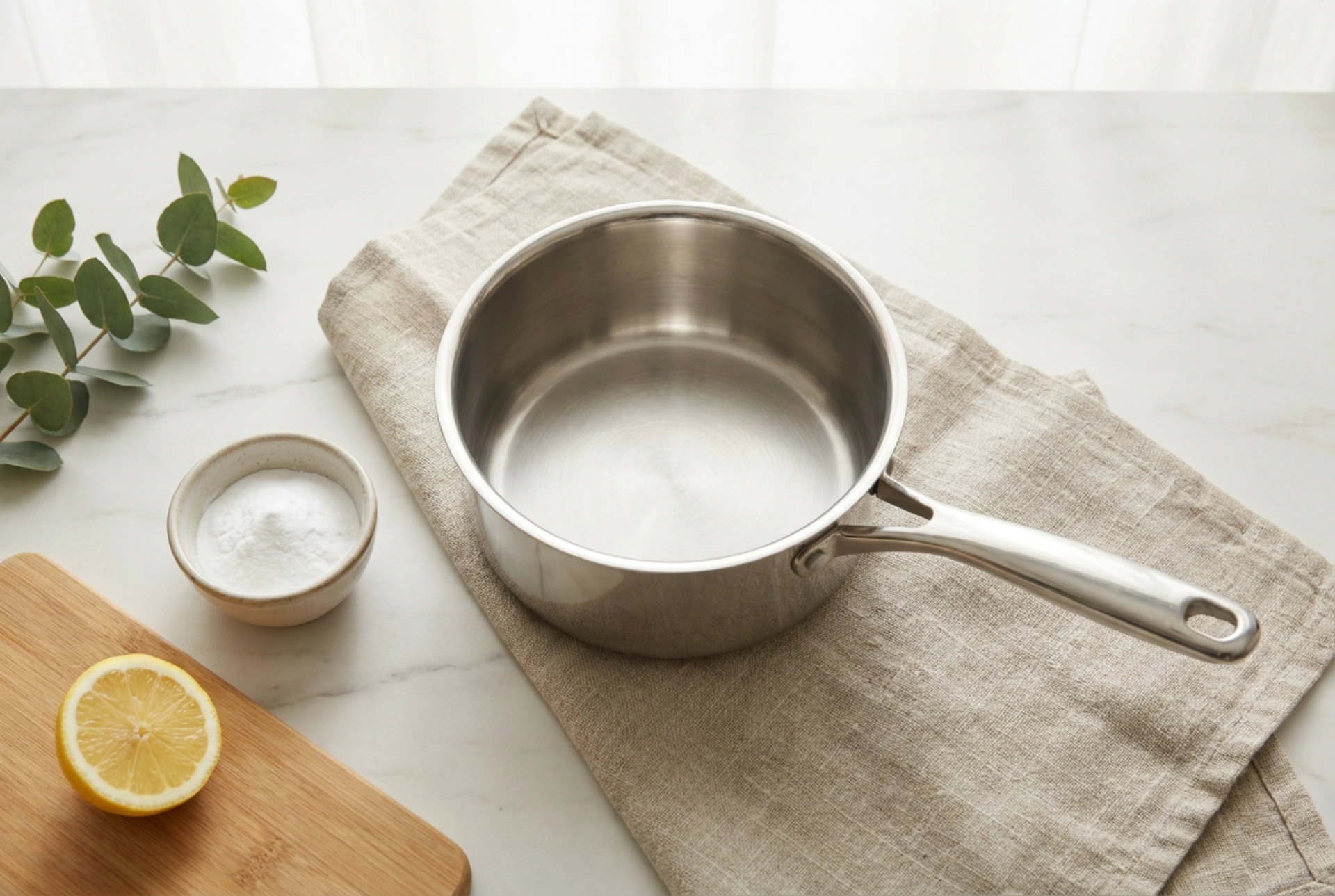
For persistent, caramelized sugars and fats that resist water alone, you need a mild alkaline agent. Sodium bicarbonate (baking soda) is ideal because it is slightly basic (pH around 8.3) and acts as a gentle, non-destructive abrasive.
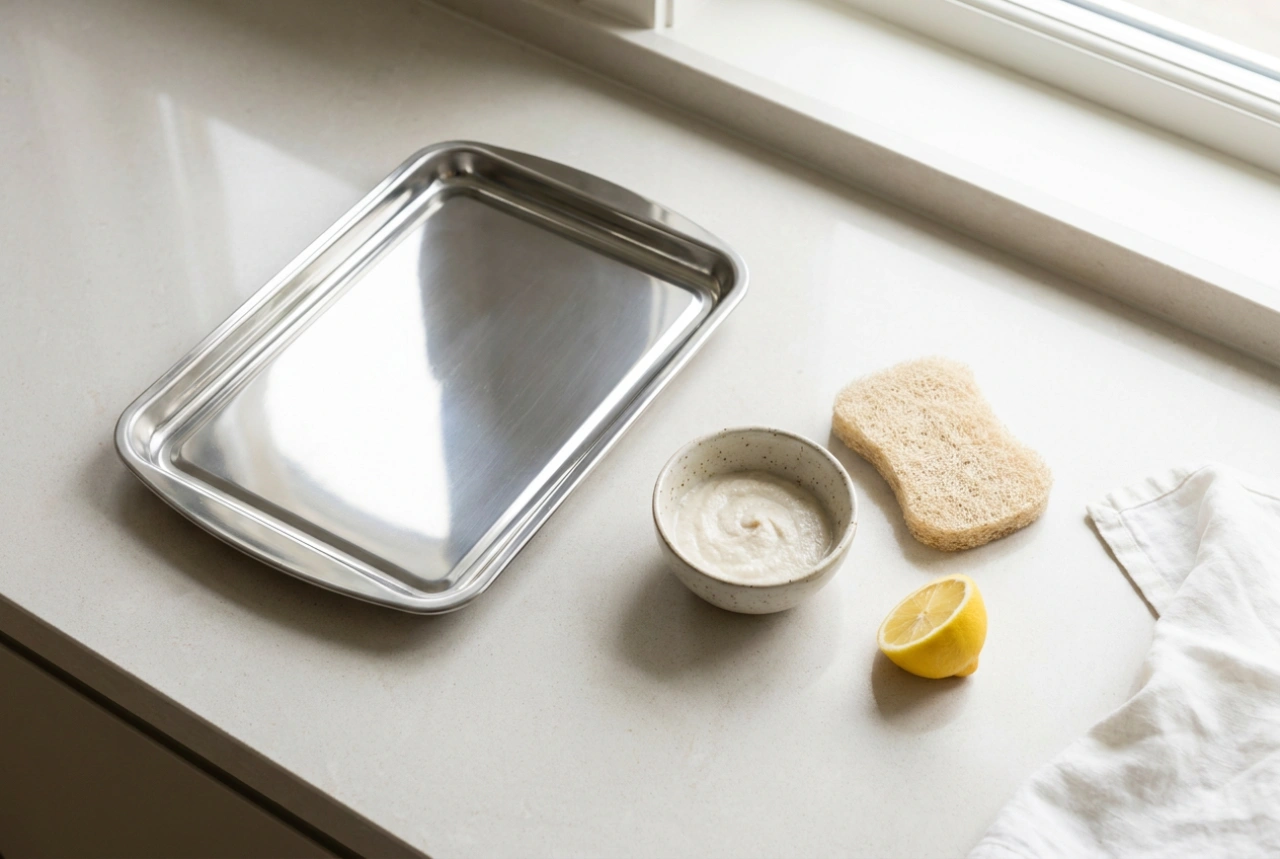
The basic nature of sodium bicarbonate helps saponify fats and break down complex organic polymers. To apply this method, empty the water from the pot, leaving the surface damp. Sprinkle a generous layer of sodium bicarbonate over the affected areas to form a thick paste. Allow it to sit for at least thirty minutes. During this time, the alkaline paste weakens the carbonized structure. Use a soft natural-fibre brush or a non-scratch sponge to work the paste in circular motions, applying even, moderate pressure. The mild abrasive action will lift the remaining residues without scratching the underlying metal alloy.
The Acidic Release: Acetic Acid Intervention
When carbonized food is combined with mineral deposits from hard water, an acidic treatment is highly effective. Acetic acid (found in household white vinegar) breaks down mineral scaling and disrupts the stubborn bonds of burnt protein.
Pour equal parts water and white vinegar into the pot, ensuring the burnt residue is completely submerged. Bring the solution to a boil on the hob, then immediately remove it from the heat. The elevated temperature accelerates the acid-base reaction, weakening the scale holding the carbon in place. Add two tablespoons of sodium bicarbonate to the hot liquid; this will cause a vigorous effervescent reaction. The rapid release of carbon dioxide bubbles physically helps to lift the loosened particles from the surface. Once the bubbling subsides and the liquid has cooled safely, scrub gently with a soft sponge and rinse thoroughly.
Restoring and Maintaining the Passive Oxide Layer
Once the pot is clean, it is essential to restore its protective barrier. Wash the pot with a neutral dish detergent and warm water, then dry it thoroughly with a clean cloth. Exposure to atmospheric oxygen will naturally regenerate the chromium oxide layer over the next few hours. To maintain this layer and prevent future scorching, always heat your stainless steel cookware gradually, add cooking fats before the pan gets too hot, and avoid dry-heating the vessel for extended periods.