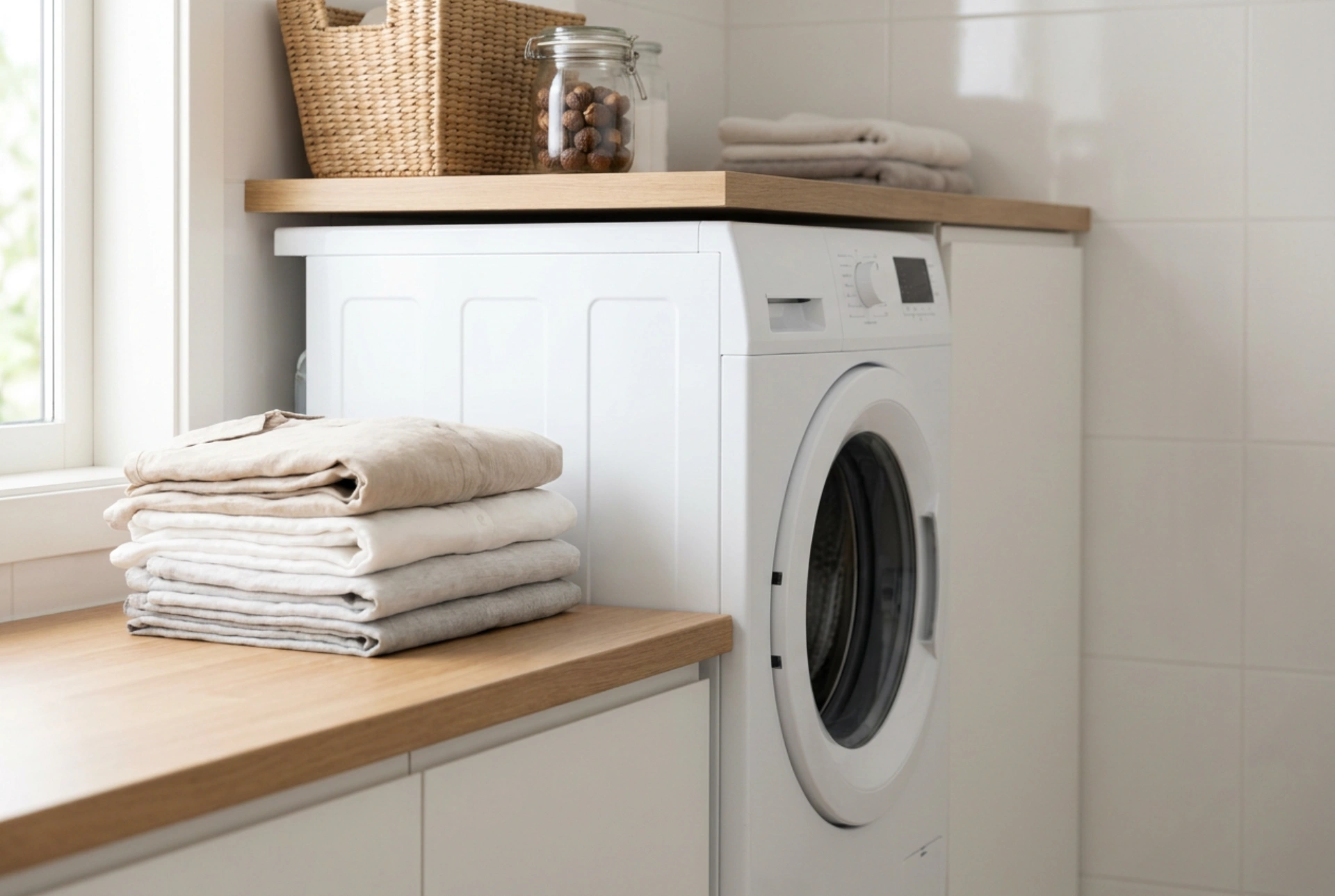


Compact tumble dryers are highly efficient space-savers, yet small laundry loads often fail to dry properly or end up damaged due to simple physical and thermal errors.
The physics of airflow and tumbling in small drums
In a standard-sized dryer, gravity and drum volume work together to lift, separate, and drop garments through a stream of warm air. In a compact dryer, the drum volume is severely limited. When you insert a load that is too small, a paradox occurs: instead of drying faster, the items often fail to tumble at all. Light fabrics can get sucked flat against the exhaust lint filter by the vacuum pressure of the fan, blocking the hot air exit. Conversely, heavier items like a single pair of jeans or a thick towel will simply slide along the bottom of the rotating drum rather than being lofted through the air stream. Without the mechanical action of falling through dry, moving air, moisture remains trapped within the fabric fibres, leading to damp spots and musty smells.
Why over-drying small loads damages fabric fibres
Running a compact dryer for a standard cycle with only one or two items leads to rapid moisture evaporation, followed quickly by dangerous overheating. Once the moisture level in the textile drops below its natural equilibrium (typically 5-8% for cotton), the thermal energy from the heating element directly targets the organic polymers of the fibres. This process, known as thermal degradation, makes threads brittle, causes shrinkage, and weakens the structural integrity of the weave. Synthetic materials like polyester and elastane are particularly vulnerable; excessive heat softens these petroleum-based polymers, leading to permanent warping, loss of elasticity, and static build-up. Always select a timed cycle rather than an automatic moisture-sensing cycle for very small loads, as moisture sensors require a minimum volume of tumbling laundry to register conductivity accurately.
The chemistry of static electricity and heat in small spaces
Static electricity is a direct result of friction between dry, dissimilar materials. In a small drum with minimal laundry, dry garments rub against the metal drum walls at high speeds, transferring electrons and creating a strong electrostatic charge. To mitigate this without relying on chemical-laden single-use sheets, introducing wool dryer balls is highly effective. Wool fibres naturally absorb and distribute kinetic energy, physically separating the garments to maintain airflow while gently absorbing excess static charge. Furthermore, ensuring that fabrics of different weights (such as a heavy cotton sweatshirt and thin synthetic gym shorts) are not dried together prevents the lighter synthetic material from reaching an over-dried, highly charged state while the cotton is still damp.
How to optimize small loads for perfect drying results
To get the best performance from a compact dryer without wasting energy or damaging your wardrobe, follow a systematic loading process:
- Balance the load weight: Never dry a single heavy item alone. Add two or three smaller, similar items (like lightweight cotton towels) to act as a buffer, helping to lift the heavy item and distribute the kinetic energy.
- Adjust the mechanical cycle: Use manual timed dry cycles of 20 to 30 minutes for small loads rather than relying on auto-dry sensors, which tend to miscalculate when fabric-to-sensor contact is infrequent.
- Clean the filters before every cycle: Because compact dryers have smaller exhaust pathways, even a thin layer of lint can restrict airflow, raising the internal temperature to damaging levels within minutes.
- Check the residual moisture: Remove clothes while they still retain a microscopic trace of moisture, then let them finish cooling on a flat surface to preserve fibre elasticity and prevent wrinkles.