

Positioning a top-loading washing machine in a confined space requires careful consideration of ergonomics, vertical clearance, and moisture dynamics to prevent mechanical wear and structural damage. By understanding the physical forces at play during operation, you can optimise your narrow bathroom layout without compromising on safety or appliance longevity.
Optimising Vertical Clearance and Lid Swing
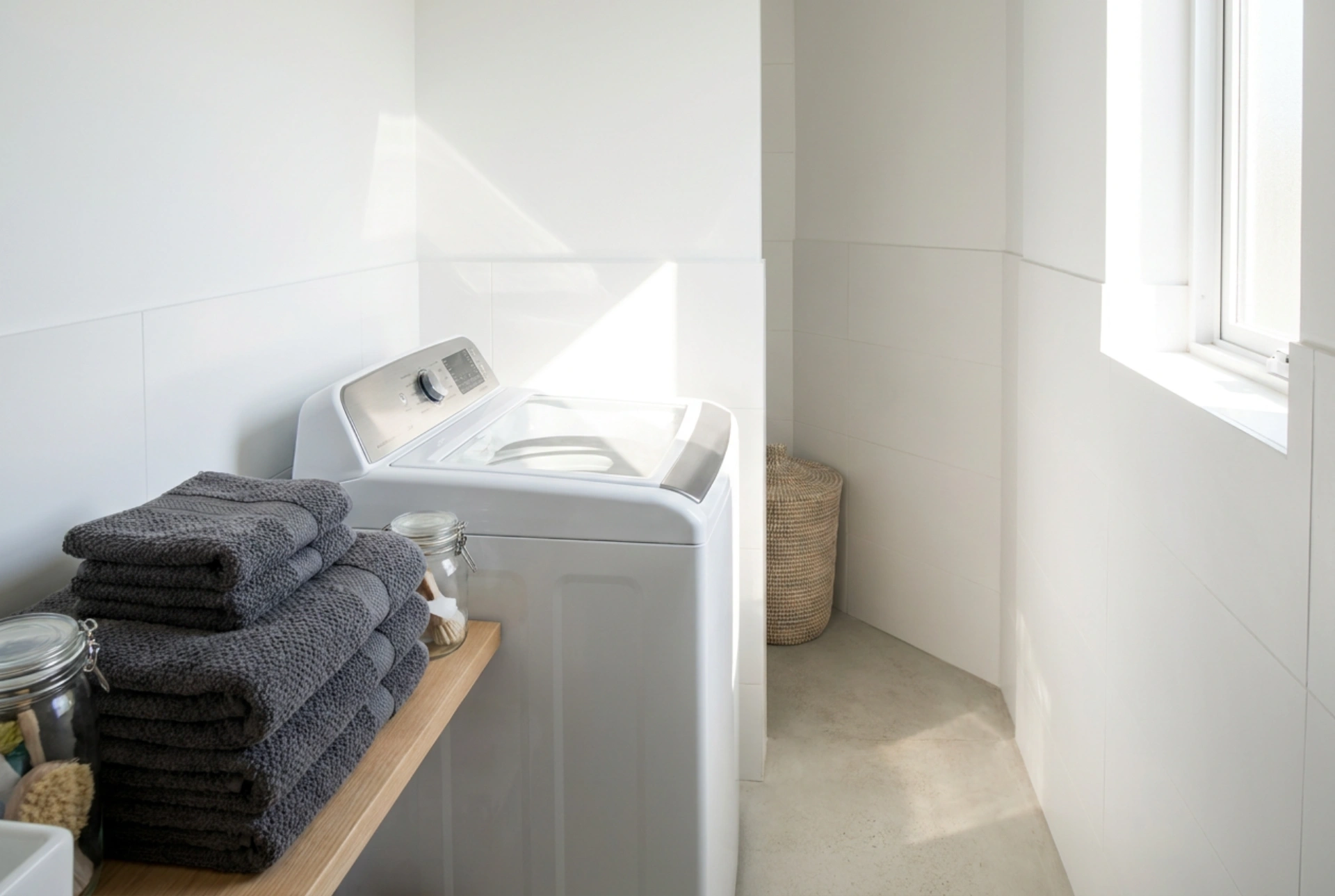
Unlike front-loading appliances, a top-loading washing machine demands vertical airspace rather than forward clearance. When positioning this appliance in a narrow bathroom, the primary physical constraint is the lid opening arc. Most top-loaders require between 40 to 60 centimetres of unobstructed vertical space above the machine's top surface to allow the lid to remain open without being held. Placing shelves, cabinets, or wall-mounted boilers directly above the unit restricts this movement, leading to repetitive impact damage on the hinges and lid switch mechanisms. To prevent kinetic strain on the hinge springs, ensure any cabinetry is installed at least 70 centimetres above the closed lid, providing comfortable clearance for loading and unloading cycles.
Managing Microclimates and Moisture Dissipation
Narrow bathrooms often suffer from poor air circulation, which accelerates humidity accumulation. Top-loading machines are particularly susceptible to internal moisture buildup because water droplets naturally pool in the drum and around the rubber seals after a cycle. To facilitate evaporation, the lid should be left slightly ajar when the machine is idle. In a confined layout, this means the appliance must not be tucked beneath a low hanging shelf or behind a tight curtain that traps humid air. Keeping a clearance of at least 5 centimetres between the machine's chassis and adjacent walls allows convection currents to carry warm, moist air away, preventing the formation of mould and reducing the risk of corrosion on the metal exterior panels.
Vibration Control and Kinetic Energy Transfer
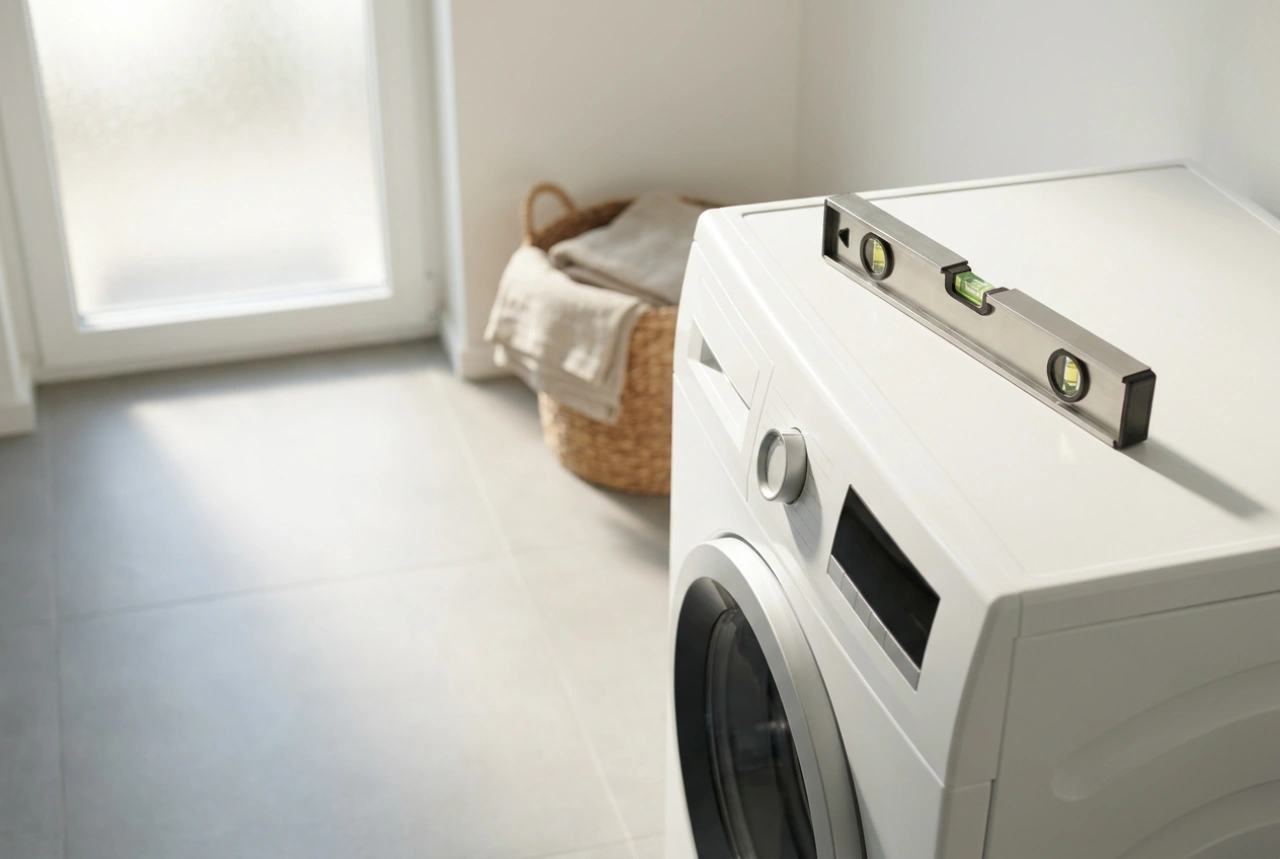
During the spin cycle, high rotational speeds create significant centrifugal forces. In a narrow space, a washing machine that is out of level will shift physically, risking structural damage to wall tiles or adjacent bathroom fixtures. Correct installation relies on absolute leveling. Use a spirit level placed across both the width and depth of the top panel to adjust the threaded leveling feet. Locking nuts must be tightened firmly against the chassis to prevent them from loosening under vibration. Placing a high-density rubber anti-vibration mat beneath the feet can absorb kinetic energy, preventing acoustic resonance from transferring through the floorboards and walls, which is especially pronounced in narrow, enclosed rooms.
Ergonomics of the Loading Workflow
The biomechanics of using a top-loader differ significantly from front-loaders. Instead of squatting, the user must bend from the waist and lift laundry vertically. To avoid lumbar strain, the machine should be positioned so that there is at least 60 centimetres of clear floor space directly in front of it, allowing you to stand with your feet hip-width apart for a stable base. Avoid placing laundry baskets directly in the access path; instead, utilise narrow rolling carts that can be pulled out during loading and tucked away afterward. This maintains an unobstructed workspace, ensuring that the process of transferring heavy, wet textiles remains safe and physically efficient.
Pre-Installation Checklist
- Verify that the vertical clearance above the machine is at least 70 centimetres to allow a full, self-supporting lid swing.
- Maintain a 5-centimeter gap around the perimeter of the appliance to support adequate ventilation and prevent wall friction during spin cycles.
- Level the appliance on both axes using a spirit level and lock the adjustable feet securely.
- Ensure the water intake hose and drain pipe have sufficient slack to prevent tension or kinking when the machine vibrates.