

Selecting the right food storage containers is a matter of material physics, thermal dynamics, and geometry rather than simple aesthetics.
Understanding the Chemistry of Storage Plastics
When selecting plastic containers, the chemical composition of the polymer determines its safety, durability, and temperature tolerance. The resin identification code, usually embossed on the bottom of the container, provides essential safety data. Polypropylene (PP, code 5) is the industry standard for food storage due to its high melting point of approximately 160 degrees Celsius. This thermal stability makes it safe for hot food transition and dishwasher sanitization cycles.
For cold storage, High-Density Polyethylene (HDPE, code 2) and Polyethylene Terephthalate (PET, code 1) are common, though PET is prone to structural degradation when exposed to heat and should never be used in a microwave or dishwasher. Always verify the presence of the food-safe glass-and-fork symbol. Avoid Polycarbonate (PC, often marked under code 7), which can leach bisphenol compounds when exposed to acidic food matrices or high temperatures.
Thermal Dynamics and the Refrigerator Environment
The primary function of refrigerator storage is to slow down bacterial proliferation by maintaining low temperatures. However, different plastics conduct heat at varying rates. Polypropylene acts as a mild thermal insulator; therefore, storing warm food in thick-walled plastic containers slows down the cooling process, keeping food in the danger zone (between 4 and 60 degrees Celsius) for too long.
To optimize thermal transfer in the refrigerator, opt for shallow, wide containers rather than deep, vertical ones. This shape increases the surface-area-to-volume ratio, facilitating rapid heat dissipation. Furthermore, ensure the container seals are airtight to prevent moisture loss through evaporation, which leads to food dehydration and the absorption of ambient refrigerator odors.
Pantry Organization and Geometric Efficiency
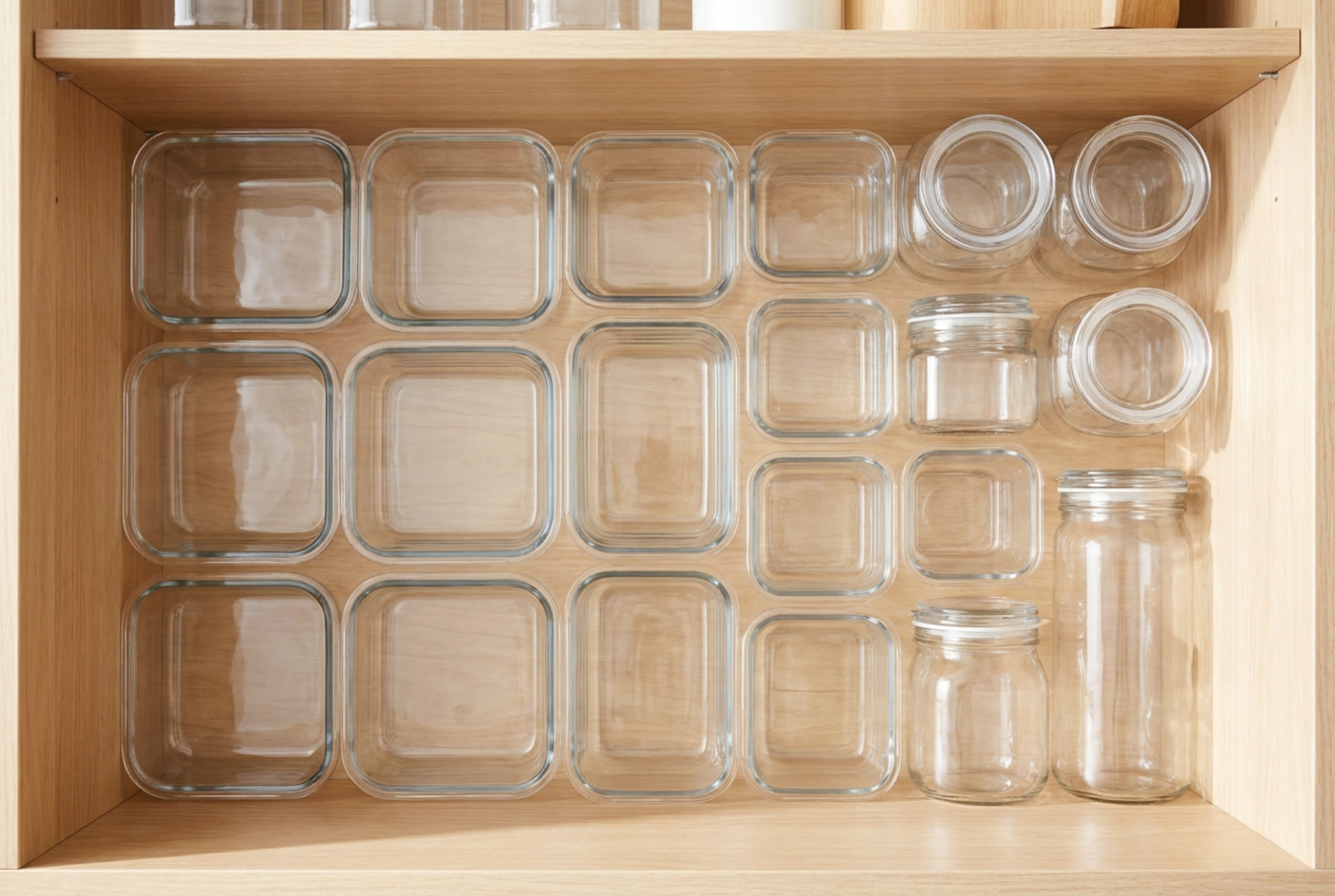
Pantry storage relies on space optimization and barrier properties. Square and rectangular containers are mathematically superior to round canisters, as they eliminate the unused interstitial spaces that occur when circular shapes are placed side by side. Utilizing modular, stackable rectangular containers can increase pantry shelf capacity by up to thirty percent.
For dry goods, the primary threat is atmospheric moisture and pests. The container must feature a mechanical seal, such as a silicone gasket paired with a latching lid. This creates a physical barrier that prevents moisture ingress, keeping hygroscopic ingredients like sugar, flour, and salt from clumping.
The Role of Seals and Ventilation
The lid design dictates the atmospheric environment inside the container. Hermetic seals, created by compressing a flexible elastomer gasket against a rigid plastic lip, are essential for preserving the crispness of vegetables and preventing dry goods from staling. However, active fresh produce requires a different approach.
Fruits and vegetables continue to respire after harvest, consuming oxygen and releasing carbon dioxide, water vapor, and ethylene gas. Placing fresh produce in a completely airtight container traps these gases, accelerating decay. For the refrigerator crisper section, choose containers equipped with adjustable ventilation slides. This allows you to regulate the internal humidity and gas concentration based on the specific respiration rate of the stored produce.
Maintenance, Cleaning, and Longevity
Plastic is a porous material on a microscopic scale. Over time, hydrophobic compounds found in fats, carotenoid pigments (like those in tomatoes), and spices can migrate into the polymer matrix, causing permanent staining and odor retention. To prevent this, apply a thin barrier layer of non-stick cooking spray before storing acidic, highly pigmented foods, or wash the container immediately after use with cold water first.
Hot water opens the microscopic pores of the plastic, locking in food odors and stains. Always wash stained containers with cool water and an alkaline detergent, or use a paste of sodium bicarbonate and water to draw out absorbed organic compounds through capillary action.