

Loose-leaf tea is highly hygroscopic and porous, meaning it readily absorbs moisture, volatile organic compounds, and ambient aromas from its surroundings, which rapidly degrades its delicate flavour profile.
The Science of Tea Degradation and Odour Absorption
Dried tea leaves are essentially dehydrated botanical structures with a high surface-area-to-volume ratio. This physical structure makes them act like natural sponges. When exposed to the air, tea leaves undergo oxidation, a chemical process where polyphenols and essential oils break down, leading to a flat, stale taste. Simultaneously, tea leaves absorb moisture from the air, which can raise their water activity levels and trigger micro-mould growth. Because volatile odour molecules in your kitchen (from cooking oils, spices, or cleaning agents) travel through the air, they easily bind to the lipid-rich surfaces of the tea leaves, permanently altering their taste.
Selecting the Right Storage Vessel
To shield loose tea from environmental contaminants, your choice of container is critical. The ideal vessel must satisfy three physical criteria: it must be airtight, lightproof, and non-reactive.
- Airtight Seals: Containers must feature a reliable sealing mechanism. Gaskets made of food-grade silicone or rubber combined with clamp lids or double-lid systems work best to prevent air exchange.
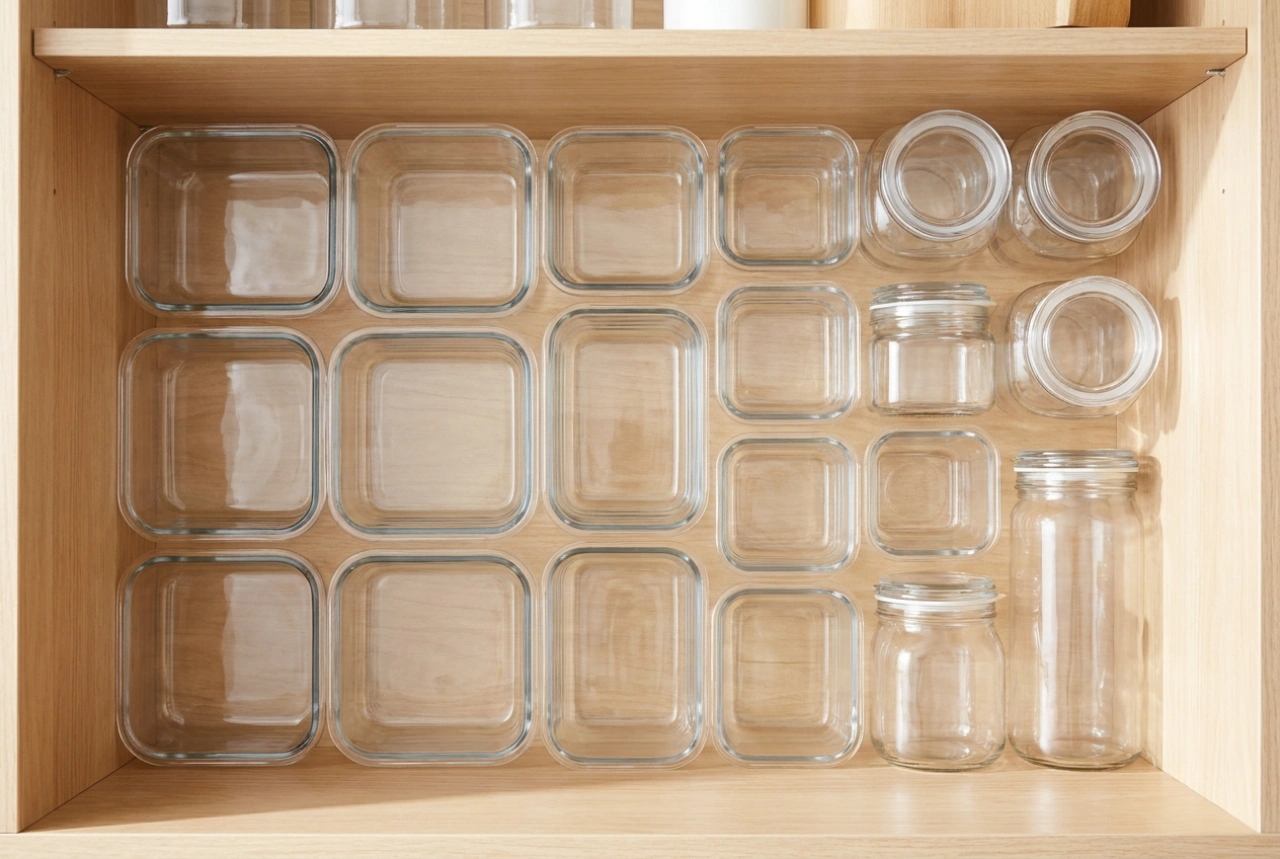
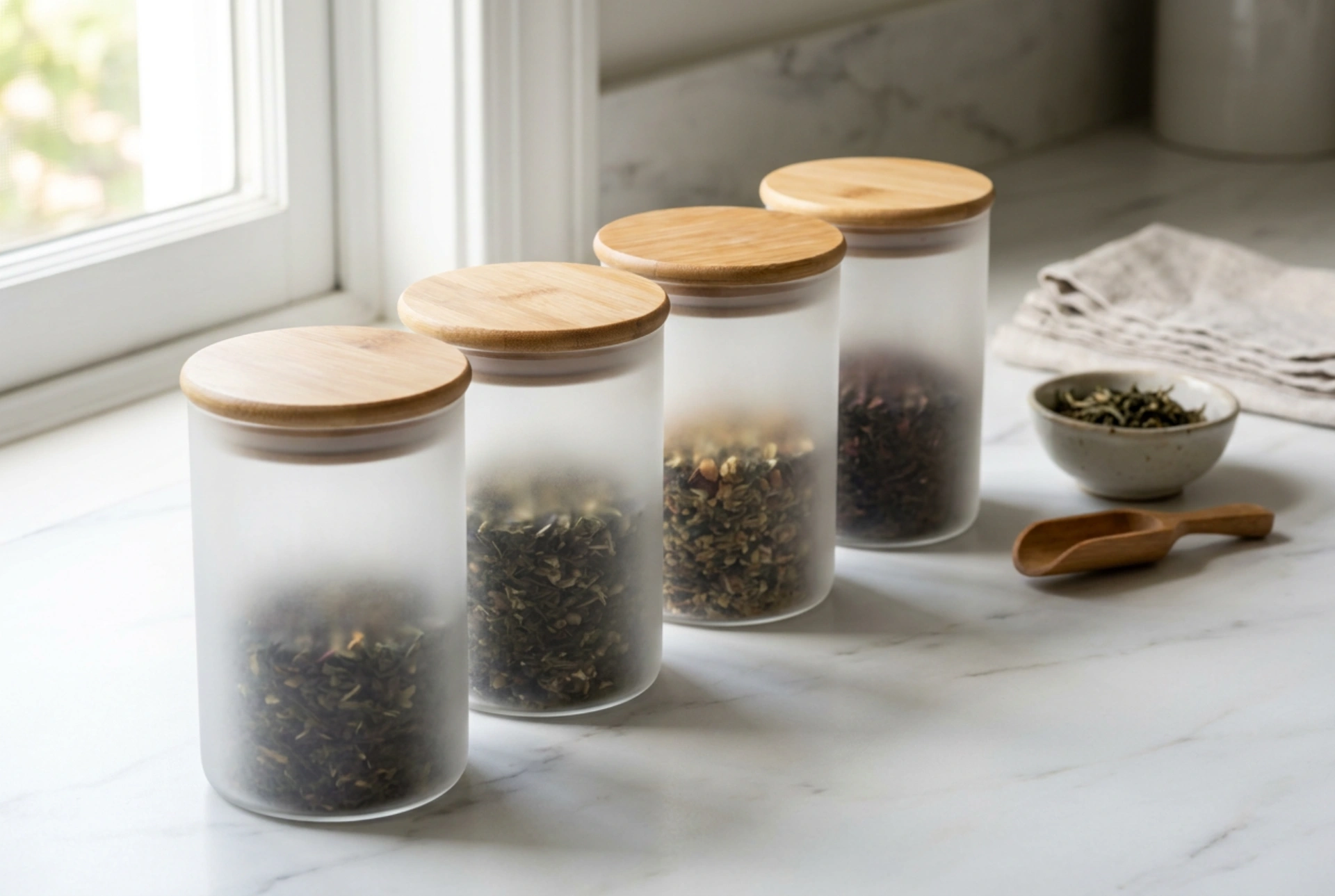
- Opacity: Ultraviolet (UV) light triggers photo-oxidation, which destroys chlorophyll and essential oils. Avoid clear glass jars unless they are stored inside a completely dark pantry. Instead, opt for opaque ceramic, high-grade stainless steel, or dark violet glass.
- Non-reactive Materials: Avoid cheap plastics, which can off-gas chemical odours into the tea, and unlined reactive metals (like iron or low-grade aluminium) that can chemically react with the tea's natural acids.
Optimising the Storage Environment
Where you place your tea containers is just as important as the containers themselves. Ambient temperature and relative humidity dictate the rate of chemical reactions within the stored leaves.
The Danger of the Spice Rack
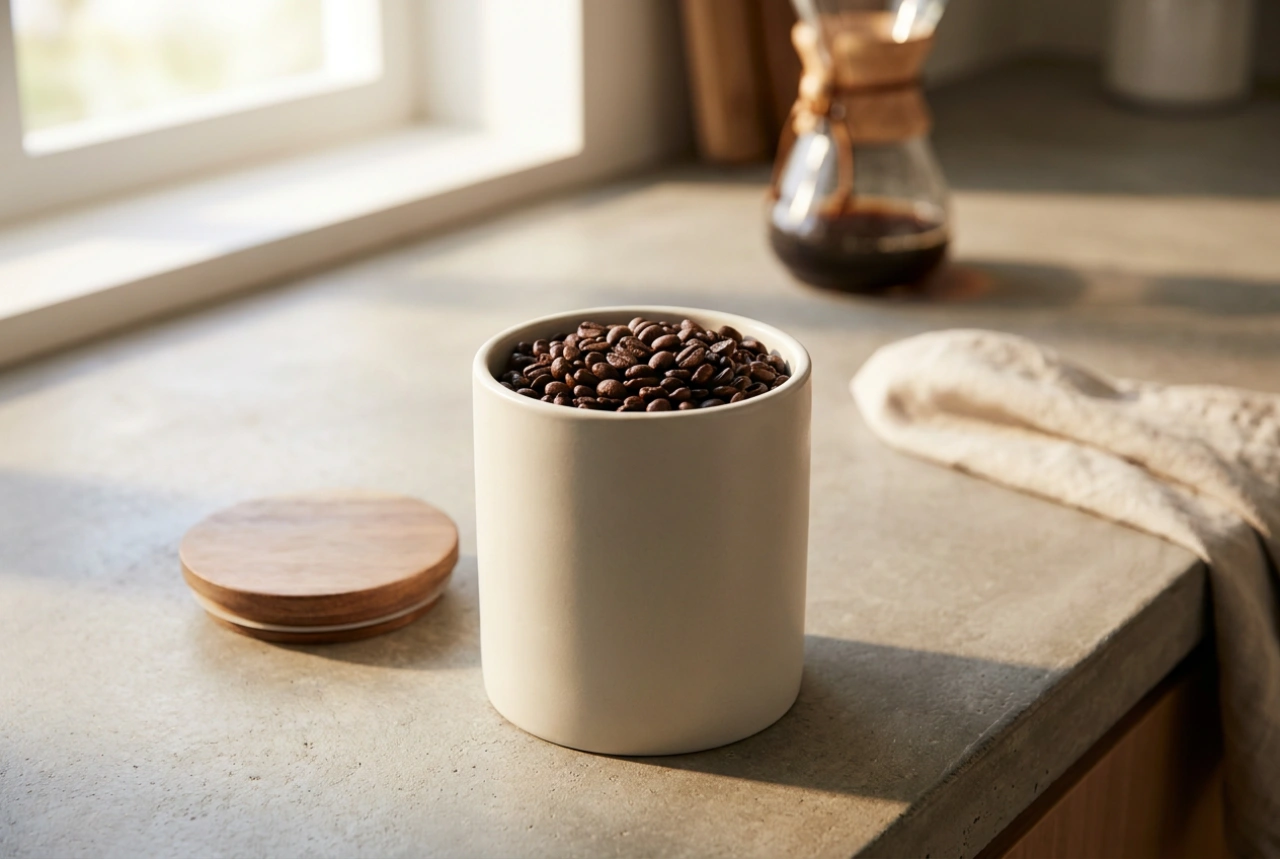
Never store your tea in close proximity to spices, coffee, or cooking areas. Even in sealed containers, microscopic leaks during opening can allow strong aromas like cumin, garlic, or roasted coffee beans to contaminate your delicate white, green, or oolong teas.
Temperature and Moisture Control
Keep your tea in a cool, dry place with a stable temperature, ideally between 15 C and 20 C. Fluctuating temperatures cause condensation to form inside the airtight container, which will ruin the leaves. Avoid storing tea above the oven, near the dishwasher, or close to heating vents where warm, humid air drafts are common.
The Correct Procedure for Handling Tea
Every time you open a tea canister, you introduce fresh oxygen and ambient moisture. To minimise this exposure, adopt a double-container strategy. Keep your bulk supply in a larger, tightly sealed master canister stored in a dark cupboard. Decant a smaller portion (enough for one to two weeks) into a secondary, smaller container for daily use. This simple physical separation ensures that the bulk of your tea remains undisturbed and fresh for months.